Crack dealing in Paris: 18 months' jail and territorial ban for XIXth arrondissement dealer
A man arrested on the banks of the Seine for crack dealing has been sentenced to 18 months' imprisonment by the 23rd criminal court of Paris.
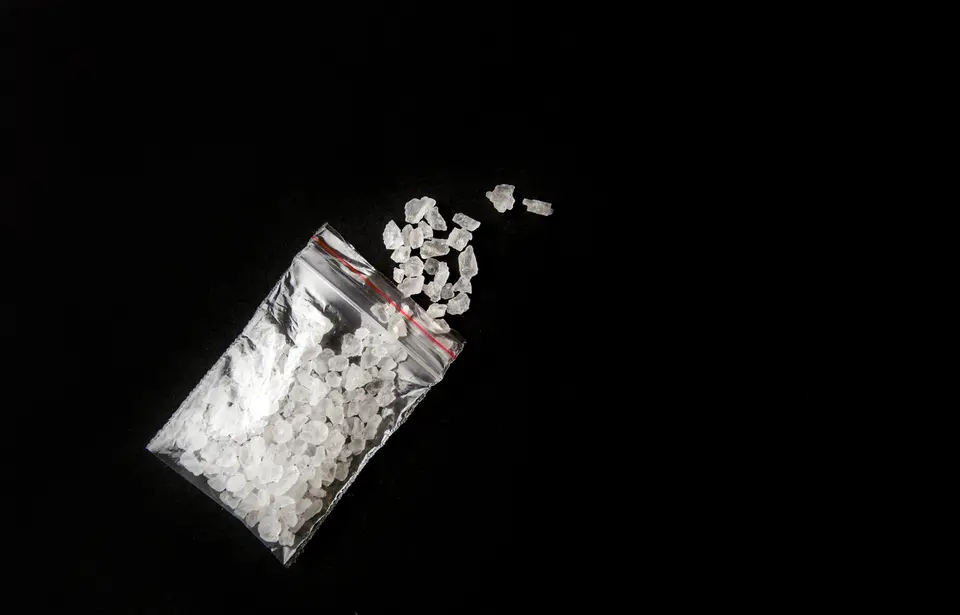
Immediate appearance hearing: denial before the XIXth arrondissement judges
As jss.fr reports, it was on the banks of the Seine, in the XIXth arrondissement of Paris, that police officers conducting surveillance spotted Saoudi D. carrying out two crack transactions with two separate buyers, in an area "well known to their services".
The facts, presented by the president of the 23rd criminal court — that of immediate appearances — as "fairly straightforward", nonetheless contain certain grey areas. The defendant, designated in underworld jargon as a modou — a term derived from Wolof — is said to have swallowed the heat-sealed sachets he was storing in his mouth, according to the standard operating procedure. The second buyer, who was also arrested, reportedly crushed his "galette" on the pavement, leaving whitish traces on the tarmac.
During the search of Saoudi D., officers found more than 200 euros in small change. A sum consistent with typical crack cases, but which the defendant attributed to begging carried out in the preceding days.
"You have never done anything": the judge becomes irritated
The magistrate makes no attempt to hide her irritation. This is not the first time Saoudi D. has been arrested for similar offences, even if the last occurrence dates back nearly three years — an interval during which he was incarcerated and spent time in Portugal. "Every case, it's the same, you have never done anything… so that really does amount to a lot of police errors, and tribunal errors for that matter, since you are convicted every time!", she tells him.
Saoudi D. maintains his account: "I didn't do anything, I went there to smoke, and I smoked, that's all. They found nothing on me, I had nothing!" He tested positive for cocaine, a component of crack.
The prosecutor requests three years' imprisonment and a permanent territorial ban
The prosecution representative shows no leniency. "We catch him red-handed, and we find a substance on the ground, I don't see what more we could have", she states. She characterises the defendant's position as "astounding bad faith" and believes that "he is afraid of the penalty, and he is right to be afraid". She seeks three years' imprisonment with a detention order, as well as a permanent ban from French territory (ITF), in addition to the ten-year ban already imposed in 2023.
The defence raises gaps in the police file
Saoudi D.'s lawyer acknowledges the "irritating" nature of this type of case, even for the defence, but points to shortcomings in the evidence against him. She first raises a question of identification: "You have a Black man, dressed in black, in the dark, that nonetheless raises questions about the police officers' ability to identify this person." She then notes that the arrest report mentions the handing over of "something", without mentioning any payment in exchange, which, according to her, does not allow a transaction to be established.
Regarding her client's refusal to undergo an X-ray, she points out that the doctor had advised police officers to monitor his stools — a form of surveillance she considers unpleasant but legally pertinent given the absence of material evidence.
More broadly, she contests the penal logic at work: "The only reason for his presence here is a punitive penal policy for consumers like him." She also argues against a new ITF, contending that, without it, the court could allow Saoudi D. to "get back on his feet in Portugal", whereas an additional ban would lead him directly to an administrative detention centre.
The court imposes 18 months' imprisonment
The court did not follow the prosecution's requests in their entirety. Saoudi D. has been sentenced to 18 months' imprisonment with a detention order, coupled with a second ban from French territory for a period of ten years.
Source: Google News FR — Crime (fr)