26,825 acts of violence against 3,209 women in Morocco over one year
Moroccan women's rights organisations have documented 26,825 acts of violence against 3,209 women over twelve months. Domestic violence now accounts for 82 per cent of cases handled.
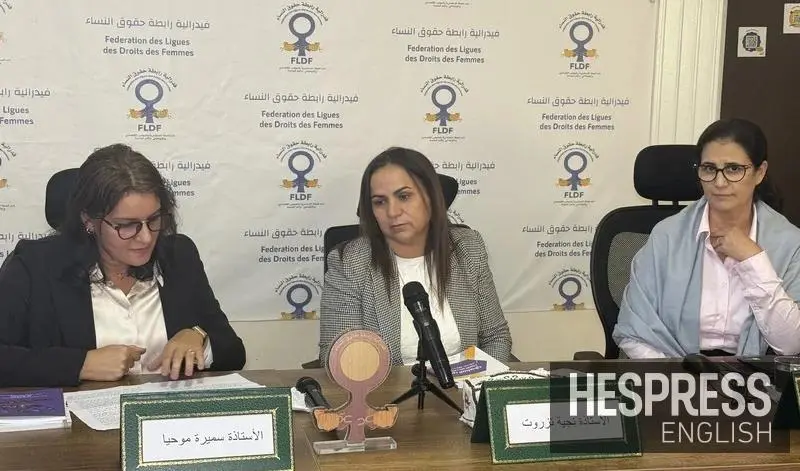
Domestic violence on the rise: 26,825 acts recorded in one year by Moroccan organisations
Moroccan women's rights organisations have documented 26,825 acts of violence committed against 3,209 women over a twelve-month period, according to a report published on Wednesday, 25 November. Hespress reports that the data was presented by the Federation of Women's Rights Leagues and its networks Injad and Solidarity Women, on the occasion of the International Day for the Elimination of Violence Against Women.
The cases covered extend from 1 July 2025 to 30 June 2026. Partner listening centres provided 13,686 services of a social, legal and medical nature, including support with judicial procedures.
Psychological violence predominates
Psychological violence constitutes the most frequent form, with 11,974 acts recorded, representing 45 per cent of the total. Economic and social violence follows with 5,970 cases (22 per cent), whilst physical violence accounted for 3,000 acts, including 1,445 incidents of assault and battery. The report also documents 118 attempted murders, 1,827 acts of digital violence and 1,239 incidents of sexual violence, among which 266 cases qualified as marital rape.
The family circle, the principal setting for violence
The proportion of cases linked to the family environment increased from 74 per cent to 82 per cent from one period to the next, representing 2,198 cases. Husbands constitute 61 per cent of identified perpetrators, ex-husbands 14 per cent and other family members 12 per cent.
The report contests the explanation that unemployment is the principal factor in domestic violence: approximately 80 per cent of identified perpetrators held employment. Financial dependency emerges instead as a major barrier to leaving: 67 per cent of the women concerned were married, 77 per cent were mothers and 52 per cent were homemakers. Only 7 per cent were owners of their accommodation; 39 per cent lived in property belonging to their spouse or attacker.
The report also records 46 attempted suicides and 248 cases of suicidal ideation among the women supported.
Digital harassment and calls for reform
Organisations also report increasing online harassment against female politicians, notably through manipulated images generated by artificial intelligence, despite increased female representation in Parliament.
The federation is calling for amendments to law 103.13 in order to explicitly criminalise marital rape and digital violence, and is demanding broader reforms of family law and the Penal Code. It is also calling on the authorities to develop emergency shelters, to guarantee free forensic medical examinations and to accelerate police and judicial intervention.
The figures published reflect only cases recorded by participating centres and do not constitute a nationally representative measure of violence against women.
Source: Hespress