Money laundering: Moroccan judges debate judicial obstacles in Rabat
Meeting in Rabat on 19 November, senior Moroccan judicial officials identified complex challenges linked to combating money laundering. International cooperation and burden of proof figure among the central issues.
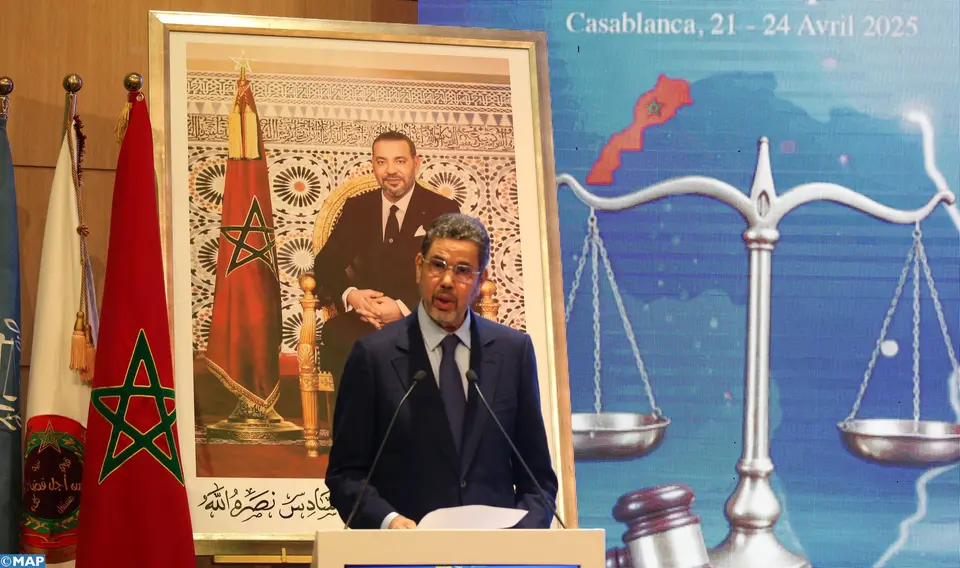
Financial justice: Rabat brings together its top institutions against money laundering
On 19 November, the principal heads of Moroccan judicial institutions gathered in Rabat for a study day dedicated to new provisions of the Code of Criminal Procedure. According to LNT.ma, discussions focused on the judicial handling of money laundering cases, within the framework of preparations for the third mutual evaluation cycle of the national system for combating money laundering and terrorist financing (AML/CFT).
The meeting, organised by the Office of the Public Prosecutor, brought together notably the Prosecutor General of the King at the Court of Cassation, Hicham Balaoui, and the First President of the Court of Cassation and delegated president of the Superior Council of the Judicial Authority (CSPJ), Mohamed Abdennabaoui.
A matter that goes beyond criminal prosecution alone
The fight against money laundering no longer limits itself to the pursuit of criminal offences. It has become an imperative for protecting the integrity of the financial system, preserving competition and securing the economic environment — this is one of the major findings presented at this study day.
Hicham Balaoui emphasised the central role of the judicial authority in this national system. The judiciary must, according to him, ensure rigorous application of the law whilst maintaining a balance between protecting society against financial crime and preserving fundamental rights.
Mohamed Abdennabaoui presented money laundering as one of the major challenges facing contemporary judicial systems, notably because of the growing complexity of the mechanisms employed by perpetrators of these offences.
Financial circuits that are increasingly opaque
The links between money laundering and various forms of organised crime, the interlinking of financial transactions, their cross-border dimension as well as the use of new technologies and digital financial services make it difficult to identify the origin of funds. The reconstitution of financial circuits used to conceal the proceeds of illicit activities constitutes, according to Mohamed Abdennabaoui, a recurring obstacle for judges.
Hicham Balaoui identified several concrete problems: the effectiveness of parallel financial investigations, establishing the link between suspect funds and the underlying offence, as well as the distribution of the burden of proof. Provisional measures for seizing and freezing assets, confiscation of the proceeds of crime and the protection of the rights of third parties acting in good faith also figure among the issues raised during the day.
Added to these are the difficulties linked to handling assets held by legal persons and cases involving virtual assets — a rapidly expanding domain that requires an adaptation of judicial practices.
Fundamental safeguards and legal certainty
The two senior officials emphasised the need to preserve fundamental safeguards in the handling of money laundering cases. Hicham Balaoui recalled that the Office of the Public Prosecutor advocates a balanced approach, aimed at protecting the national economy against risks linked to illicit capital without infringing the rights and freedoms of users of the justice system.
The adoption of adapted legal texts is not, in itself, sufficient to guarantee the effectiveness of the system, he concluded. Their application must be accompanied by stable judicial practice and convergent case law, allowing divergences in interpretation to be limited and legal certainty to be strengthened.
Mohamed Abdennabaoui, for his part, emphasised that the effectiveness of the judiciary cannot be assessed solely through the speed of case handling or the number of decisions delivered. It also depends on the capacity of the courts to guarantee fairness, ensure judicial security and deliver decisions based on correct application of the law.
International cooperation, an indispensable pillar
The international dimension of money laundering circuits represents another sizeable challenge for Moroccan judicial authorities. Mohamed Abdennabaoui stressed the importance of judicial cooperation between States, notably to obtain evidence, track the movement of capital abroad and identify assets that may be subject to seizure or confiscation measures.
This cooperation is based on mutual legal assistance mechanisms and conventional frameworks concluded between the States concerned. It constitutes an essential element for handling cases involving multiple jurisdictions and for facilitating the tracing and recovery of criminal assets.
The new provisions of the Code of Criminal Procedure were the subject of discussions regarding their contribution to strengthening this international cooperation and the practical difficulties that judges encounter in their daily implementation.
These exchanges form part of an active process of preparing Morocco for the third mutual evaluation cycle of the AML/CFT system, which will measure the solidity and coherence of the national mechanisms put in place to prevent and punish money laundering.
Source: LNT.ma