Tycoon acquitted in Malta for murder of journalist Daphne Caruana Galizia
Yorgen Fenech, one of Malta's wealthiest men, was acquitted on Wednesday by a jury in the case of the killing of journalist Daphne Caruana Galizia in 2017.
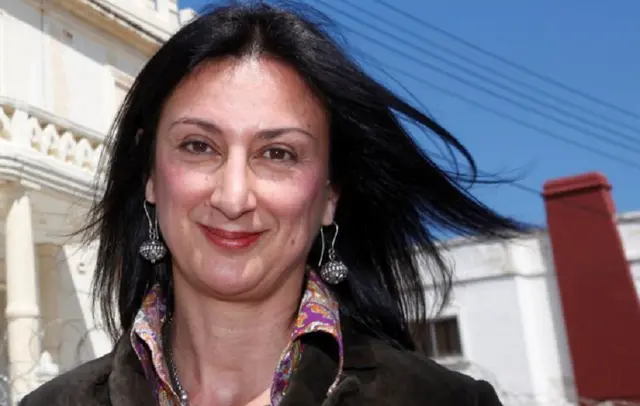
Maltese jury acquits Yorgen Fenech in journalist Caruana Galizia murder case
A jury consisting of six women and three men found businessman Yorgen Fenech, 44, not guilty on both counts related to the killing of investigative journalist Daphne Caruana Galizia, according to News.ro citing The Guardian. The verdict was delivered on Wednesday, almost nine years after the car bomb attack that killed the journalist in October 2017.
Fenech, considered one of Malta's wealthiest men, was accused of paying €150,000 through intermediary Melvin Theuma to order the assassination of Caruana Galizia, who was 53 at the time of her death. His family owns two Hilton hotels and a stake in a power station in Malta. Prosecutors had requested a life sentence.
The jury president announced the verdict in the presence of family members of the victim and the press, amid exclamations of surprise and applause. The jurors voted to reject both counts — complicity in intentional murder and conspiracy to commit an offence — with a majority of eight to one.
The prosecution intends to appeal the decision, according to the same sources. The verdict represents a blow to the victim's family, and also to politicians and activists who view the case as a landmark moment in the struggle for press freedom in Europe.
The trial and charges
The trial, which lasted two months, revealed the extent of Fenech's network of political contacts and raised questions about attempts to sabotage and interfere with the police investigation. Key witnesses, as well as the defendant himself, claimed that the former chief of staff to the prime minister had repeatedly divulged sensitive information to Fenech.
Prosecutor Anthony Vella argued that Fenech believed he could "buy justice", telling the jury: "You are asked to decide whether a man who had extensive contacts in politics and among leaders of public entities had sufficient power to pay for Daphne to be killed."
The defence argued that the chain of command lay at a higher level. Fenech and his lawyers indicated that the murder order would have come from Keith Schembri, the former chief of staff to Prime Minister Joseph Muscat, also claiming that the police had not sufficiently investigated allegations of his involvement.
"All roads lead to Keith, and all bridges to Keith have been burned," defence lawyer Charles Mercieca declared in his final submission.
In his testimony, Fenech denied any direct involvement: "I never ordered the killing of Daphne Caruana Galizia, nor anyone else. I had no role in her assassination." He claimed that he acted only as a messenger between Schembri and Theuma and that the taxi driver had blackmailed him. Schembri, who testified during the trial, denied any wrongdoing and stated that he was unaware of the assassination plan.
Major political consequences for Malta
The killing of Caruana Galizia, whose reports targeted both Fenech and prominent political figures, triggered the gravest political scandal in post-war Maltese history. The journalist had become a symbol of the anti-corruption struggle and press freedom in the island nation, the smallest member of the European Union.
The political consequences were immediate and profound: Prime Minister Joseph Muscat was forced to resign, along with two ministers and his chief of staff. The case sparked a wave of international condemnations and fuelled debates about the protection of journalists in Europe.
Three brothers, Georg, Paul and Alfred Degiorgio, had previously been convicted for carrying out the attack. Fenech's case, that of the man accused of standing behind the order, remained the last major piece of the judicial investigation — an investigation that Caruana Galizia's family and supporters consider far from being fully clarified.
Source: News.ro