Yorgen Fenech Murder Trial Day 48: Defence Launches Closing Address to Jury
Cross-examination of Yorgen Fenech concluded on Day 48, with defence lawyer Charles Mercieca beginning his closing address to jurors in the Daphne Caruana Galizia assassination trial.
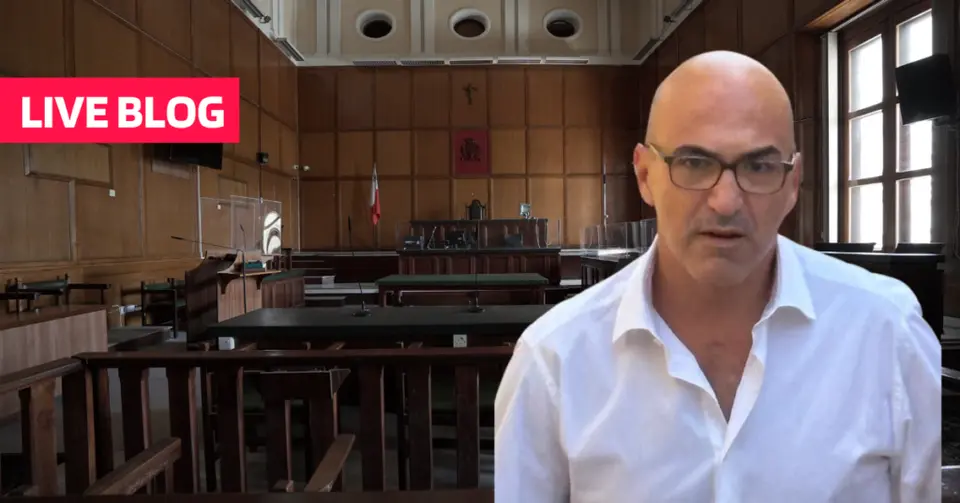
Fenech Trial: Defence Begins Jury Address After Cross-Examination Ends
Day 48 of Yorgen Fenech's jury trial over the assassination of investigative journalist Daphne Caruana Galizia concluded on Tuesday with two significant developments, according to Lovin Malta's live coverage: the end of prosecutor Godwin Cini's cross-examination of the accused, and the start of defence lawyer Charles Mercieca's closing address to the jury. The sitting was adjourned until 9am the following morning, when proceedings are set to continue before Madam Justice Edwina Grima.
Defence Challenges Investigation Integrity
Mercieca opened his address by telling jurors that a police investigation forms the foundation of any criminal case, and that a strong case cannot be built on a weak one. He referred to a separate investigation into leaks from the murder probe, arguing that evidence produced in that inquiry — including call profiles, a call involving former police commissioner Lawrence Cutajar and Edwin Brincat, and a Europol report — was not presented during this trial. That investigation, he said, pointed to the murder having been planned in 2016, and identified Keith Schembri and Chris Cardona as possible instigators.
Mercieca also drew the jury's attention to a note bearing the letters "DCG" and the date of the Degiorgio brothers' arrest, found during a search of Schembri's office. He told jurors that investigators had not treated the note as significant after Schembri said it was simply linked to meeting notes.
Missing Devices and Questions of Complicity
In a series of pointed questions directed at jurors, Mercieca asked why Keith Schembri's mobile phone and laptop had not been collected by investigators, why Daphne Caruana Galizia's own laptop was never obtained, and why the phones of Johann Cremona and Kenneth Camilleri were not seized. He asked jurors to imagine discovering a murder suspect at his home and choosing not to collect his phone.
"If you are an investigator who does not look at people's faces and bases yourself on the evidence, why would you not investigate and collect these things?" Mercieca said. He told jurors that the explanation was either complicity or incompetence.
He also noted the contrast between the hours the court spent examining Fenech's phone — which the accused had handed over voluntarily — and the claim that Schembri's phone could not be found.
Theuma's Pardon and the 'Cover-Up' Claim
Mercieca argued that Melvin Theuma's testimony was not credible enough to serve as the basis for a guilty verdict. He asked jurors whether Theuma's evidence left them sufficiently "serene" to convict, before stating: "I know the answer. It is no."
He claimed the state had "bought" Theuma by granting him a presidential pardon and forgiving everything he had done, in exchange for testimony that implicated Fenech. Mercieca further argued that the prosecution was asking jurors to give a "seal of approval" both to Theuma's pardon and to what he described as Schembri's lies. He told jurors that inconsistencies in Theuma's account suggested "there is something that has not come out."
Mercieca also pointed out what he described as a notable final act by Schembri as chief of staff: ensuring that Theuma received the presidential pardon before leaving office.
Jury Sovereignty and the Right to a Fair Trial
Addressing jurors on their role, Mercieca said their decision must be grounded in the facts and free from prejudice. He acknowledged that prejudice is unavoidable — "We all have prejudice," he said — but urged the panel to set aside media coverage and unrelated allegations raised during the trial, including references to drugs and infidelity.
He told jurors they were "sovereign" in their decision-making, and that Fenech's future would be decided by his peers. Mercieca reminded them of what he called an unjust situation: being asked to take the blame for someone else.
On the role of the prosecution, Mercieca argued that the Attorney General should be "the best friend of the accused" — because the duty to prosecute includes an obligation to present all available evidence, not only evidence that incriminates. He said the defence was not simply seeking justice for Fenech, but also justice for Daphne Caruana Galizia.
"There must be justice for Daphne Caruana Galizia, but also justice for Yorgen Fenech," Mercieca told the jury.
The trial is scheduled to resume before Madam Justice Grima the following morning at 9am.
Source: Lovin Malta