Lima and Callao extend state of emergency 60 days with military support to the PNP
The Government extended the state of emergency in Lima and Callao by supreme decree, with the Armed Forces supporting the National Police for 60 days.
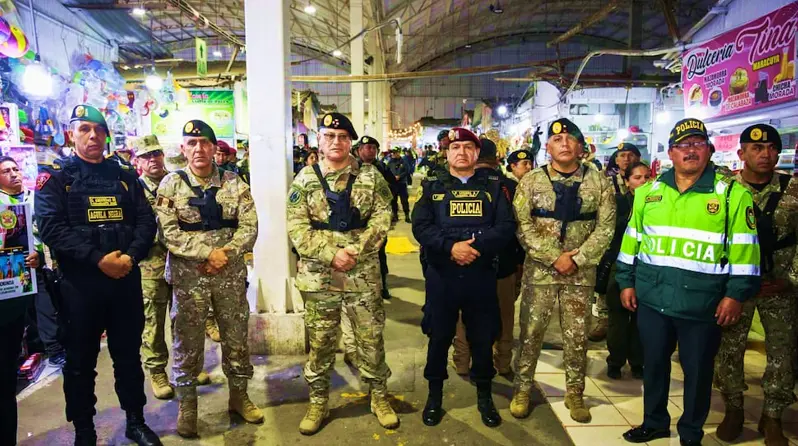
Decree extends emergency in Lima and Callao amid persistence of organised crime
The Peruvian Government extended the state of emergency in Metropolitan Lima and the Constitutional Province of Callao for a period of 60 calendar days, with the participation of the Armed Forces in support of the National Police of Peru (PNP). According to limagris.com, the measure was formalised through Supreme Decree No. 142-2026-PCM, published on 25 October in the official gazette El Peruano, with effect from 28 October.
The extension responds to the continuation of criminal acts in both jurisdictions, among which the decree identifies homicides, contract killings, extortion and other expressions of organised violence. The request for the extension was submitted by the General Command of the PNP through a memorandum dated 14 October 2026, supported by reports from the police regions of Central Lima and Callao, as well as from their planning units.
The PNP maintains control of internal order
A central aspect of the decree is that military support does not replace the constitutional powers of the National Police. The PNP retains responsibility for maintaining internal order and determines the points of intervention based on intelligence information, statistical indicators and crime maps.
Joint actions between police and military must be carried out within the legal framework governing the use of force. The decree refers to Legislative Decree No. 1186, which governs police operations, and to Legislative Decree No. 1095, which establishes the rules for the use of force by the Armed Forces on national territory.
Military support is aimed at strengthening the operational capacity of the PNP in areas identified as priorities, without displacing civilian direction of security operations.
Unified Command PNP-Armed Forces orchestrates operations against crime
The Supreme Decree keeps operational the Unified Command PNP-Armed Forces against Organised Crime, defined as an integrated, temporary and focused task force. Its objective is to strengthen the strategic and operational capacity of the Police through planning, coordination and execution of joint actions.
Operational command rests with the PNP, whilst the Armed Forces participate in accordance with their competencies and the current regulatory framework. The regulation also provides for the coordination of human and technological resources to maintain permanent coordination between both institutions, through the commands and coordination committees established for the execution of security measures.
Restriction of rights during the emergency
The extension contemplates the application of the constitutional provisions applicable during a state of emergency. The decree establishes the restriction or suspension of four rights: the inviolability of the home, freedom of movement, freedom of assembly, and personal liberty and security, in the terms provided for by article 137 of the Political Constitution of Peru.
Likewise, religious, cultural, sports and non-sports activities of a mass and public nature require prior authorisation from the competent authorities. Activities that do not have a mass character may be carried out without prior permission, in accordance with what is established in the regulation.
Accountability at the close of the period
The decree incorporates an accountability mechanism. Within five business days following the expiry of the extension, the Unified Operational Coordination Command shall report to the head of the Ministry of the Interior, through the General Command of the PNP, on the results obtained during the validity of the measure.
The final report will be submitted to the Presidency of the Republic and shall include the corresponding recommendations, so that the Executive can evaluate the impact of the actions executed during the period of emergency.
Regarding budgetary matters, the regulation specifies that the measures will be financed from budget credits already allocated to the institutions involved, without providing for additional resources.
Insecurity persists as a structural challenge in the capital
The extension of the state of emergency reflects the concern of the authorities at the persistence of crime in Lima and Callao. The effective impact of the measure should be evaluated on the basis of verifiable indicators of criminality and the effectiveness of the joint operations during the period in force.
Source: Google News PE — Lima