Peruvian police monitor social media accounts of left-wing artists for terrorism
Peru's Counter-Terrorism Police monitor the accounts of activists and artists seeking signs of terrorism. Two rappers were held for 15 days as part of an investigation criticised by the UN.
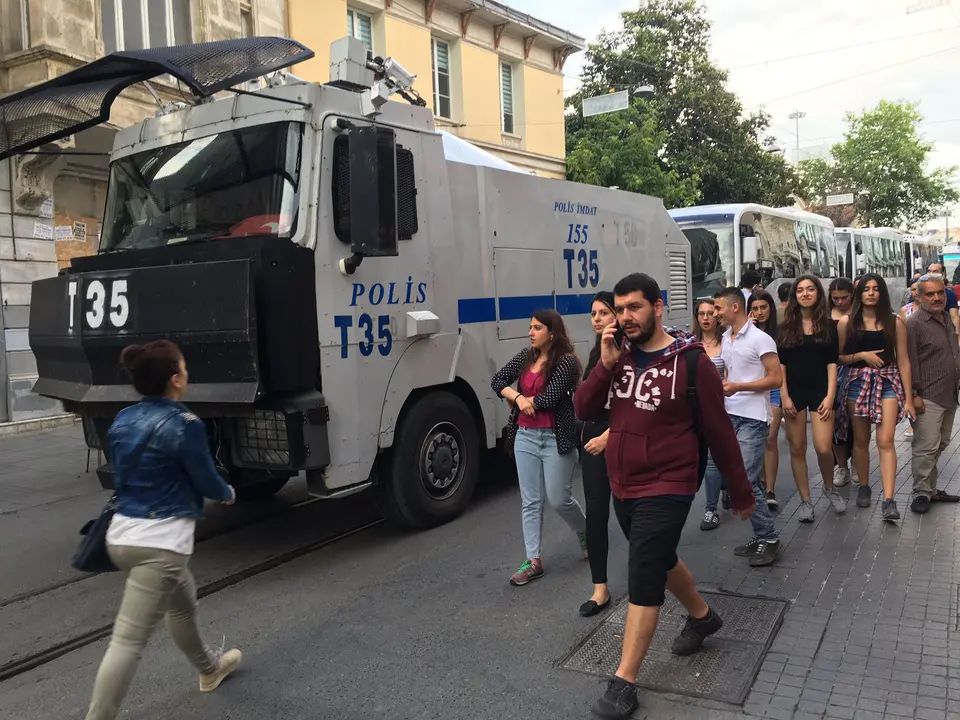
Virtual patrol against artists and activists in Peru
Peru's Counter-Terrorism Police systematically review Facebook, Instagram, X, TikTok and YouTube accounts of activists, artists and left-wing collectives to identify possible links with terrorist organisations, according to reporting by elpais.com based on a document from the Peruvian Public Prosecutor's Office. Official reports refer to this practice as "virtual patrol", which continues as extortion and murders rise in the country.
The operation is headed by the Metropolitan Terrorism Investigation Division (DIVTM). Since at least 2025, its agents have examined photographs, videos and comments posted on social media about protests, talks and cultural activities. A radical political slogan, a call for a march, or a reference to a former subversive group can be incorporated into police files as evidence of terrorist activity.
Two rappers held for 15 days
One of these investigations resulted in the 15-day detention of rappers Pedro Mosqueira and Brenda Mejía, known artistically as Pedro Mo and Brenda Jah. The Public Prosecutor's Office is investigating them as suspected members of a new organisation which it considers linked to the Túpac Amaru Revolutionary Movement (MRTA), the guerrilla group dismantled nearly thirty years ago during Alberto Fujimori's regime (1990-2000), father of current Peruvian president Keiko Fujimori.
Pedro Mo, 42, was detained in Cuzco. He has been making protest rap for over two decades against inequality, racism and corruption. Brenda Jah, 30, was arrested in Lima. A drama student and feminist, she participated in independent festivals and accompanied with her music the protests against the government of Dina Boluarte, which left around 50 dead from repression between 2022 and 2023.
The case rests on a single confidential witness
The case began in 2025 when a Facebook group called "Fuerza de Liberación Cahuide" posted a video of hooded figures with weapons in the Peruvian jungle. Police claim the images correspond to training sessions of an alleged organisation linked to the MRTA conducted between 2024 and 2025 in indigenous communities in the Amazonian region of San Martín.
To place Pedro Mo at those training sessions, the Public Prosecutor's Office relies almost entirely on a single confidential witness who operates under the pseudonym "Carlos Campos", who claims to have infiltrated the group. This witness said he recognised the rapper among the hooded figures in the video and provided seven audio recordings in which he says he identifies his voice. The arrest warrant was issued without expert analysis or independent evidence corroborating that account. Mosqueira's defence denies he was present and insists he has never used a weapon.
Agents also reviewed Pedro Mo's Facebook posts between 2022 and 2025 and concluded that disseminating calls by the Saturnino Huillca Rebel School—a cultural and political collective that champions peasant struggles—constituted "agitation and propaganda". To link the group with the defunct MRTA, they cited a 2023 television interview with a former Intelligence chief and highlighted expressions from the collective's bylaws such as "popular power" or "political autonomy outside the State". Even four letters in which the rapper offered artistic and environmental workshops to schools in Cuzco were interpreted as a subversive strategy of "local positioning".
"It is absurd. There is no behaviour that implies affiliation with terrorism in this case," said lawyer Julio Arbizu, who recalls that Saturnino Huillca (1893-1987) was a historic Quechua peasant leader who fought against landowners. "He was almost 90 years old when the MRTA was founded," he points out.
In Brenda Jah's case, police used as evidence her interactions on Facebook with Pedro Mo and other left-wing collectives. The Public Prosecutor's Office also links her to an attempted railway sabotage during a protest in July 2023 on the outskirts of Lima, a charge her defence rejects. The judge acknowledged there is no "objective evidence" of her participation in that act, but ordered her detention on suspicion of terrorist affiliation and cited flight risk because the rapper lacks fixed employment.
The investigation covers ten people, although the judge only authorised the detention of five for 15 days, including the two rappers and a Colombian artist.
"Red-baiting has become widespread"
The detentions have drawn criticism from human rights organisations, which denounce a new expression of terruqueo, as the practice of accusing protesters or defenders of left-wing positions of being terrorists is known in Peru. The term dates back to the conflict between Shining Path, the MRTA and the State, which left nearly 69,000 dead and disappeared between 1980 and 2000.
"Red-baiting has become widespread and is now used as a tool to generate fear, to assign to a citizen a label that does not belong to them, but whose purpose is to silence them," said Tania Pariona, executive secretary of Peru's National Coordinator of Human Rights.
Alert from three UN rapporteurs
The detentions also prompted a response from three United Nations rapporteurs. Gina Romero, rapporteur for the freedom of assembly and association, warned that "the closure of civic space" in Peru is taking on "alarming dimensions". Andrea Bolaños, rapporteur on human rights defenders, denounced the stigmatisation and criminalisation of artists and activists who support peasant and popular causes. Leopoldo Maldonado, rapporteur for freedom of expression, recalled that the freedoms of expression, association and assembly, as well as the right to defend human rights, "cannot be arbitrarily restricted".
Source: Google News PE — Crime