Shooting in Kraków: psychologist analyses witness behaviour
Following Saturday's shooting in central Kraków, in which at least 6 people were killed, psychologist Prof. Tomasz Grzyb comments on the markedly different reactions of witnesses. Some fled, whilst other people filmed the entire incident for social media.
Shooting in Kraków: psychologist analyses witness behaviour
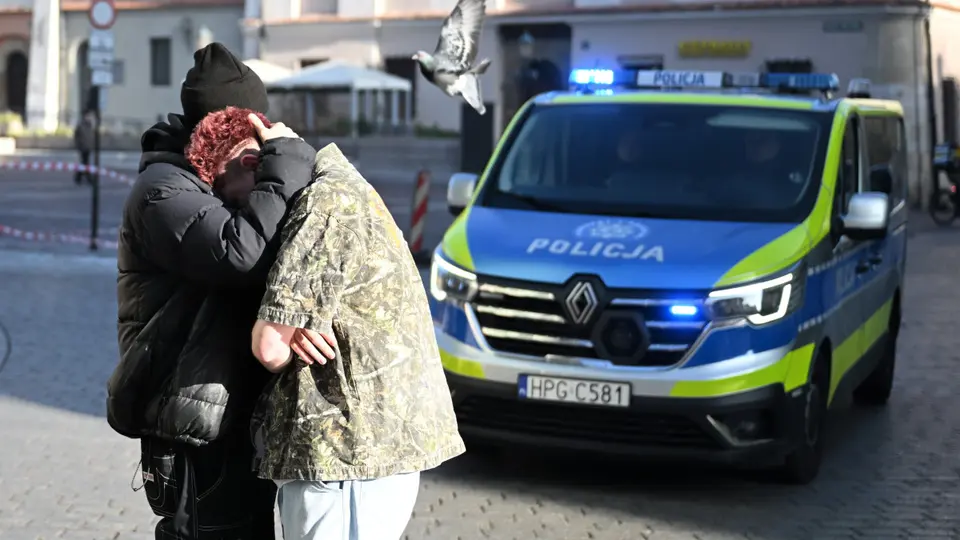
On Saturday after 3 p.m., a tragic shooting took place in central Kraków, including on the Main Market Square. A masked 24-year-old Michał O., driving a black Subaru, fired at random passersby. At least 6 people were killed and 15 wounded. The perpetrator was himself shot by police officers.
According to RMF24, Prof. Tomasz Grzyb, dean of the Faculty of Psychology at SWPS University in Wrocław, draws attention to the drastically different behaviours of people on the Main Market Square. Some fled and sought shelter, shielding children with their own bodies. Others remained on the scene and recorded dramatic moments on their phones.
Poland is a relatively safe country, and incidents of this type are rare here. "We do not have automatised response patterns for such situations, which is why people behave differently. Some give way to emotions, which in such difficult circumstances is natural," explains Grzyb.
Instinctively, people first save children and those for whom they feel responsible. Shielding them or seeking safe shelter is a reaction that is both understandable and rational. However, the psychologist criticises those witnesses who, instead of fleeing, pulled out their phones and recorded the course of the attack. Their materials subsequently reached social media.
"We live in a world of social media platforms and unfortunately some people behaved instinctively: they immediately began filming with the intention of posting this material on their profiles. As a society, we should think very carefully about this," says the expert.
The dissemination of such recordings can have consequences extending beyond the violation of victims' privacy. One of them is inspiring further perpetrators of violence. "Potential copycat offenders feed on such material; they want attention, they want their actions to be discussed and provoke a stir online. We should not provide them with such fuel," Grzyb emphasises.
In the specialist's view, the tragedy almost immediately became the subject of political disputes. Before all circumstances were established, conflicting information appeared regarding the perpetrator's views. Such incidents attract attention, but also people who want to gain something. "They want to make themselves known, to gain public attention and to exploit the situation to achieve their goals," he assesses.
Grzyb draws attention to the significance of radicalisation mechanisms and the influence of escalating hostility in public debate. He suggests deep reflection: what is happening to society, given that it allows itself the language of hatred towards another person merely because of differing views. It depends on information recipients whether they allow themselves to be drawn into a cycle of mutual accusations or whether they reflect on how to help those who have lived through this event.
Source: RMF24