Beatriz murdered at 22: mother transforms grief into book and alerts to violence
Paula Lebre lost her daughter Beatriz in May 2020, murdered by a college classmate in Lisbon. More than six years later, she has transformed her mourning into a book and a cause.
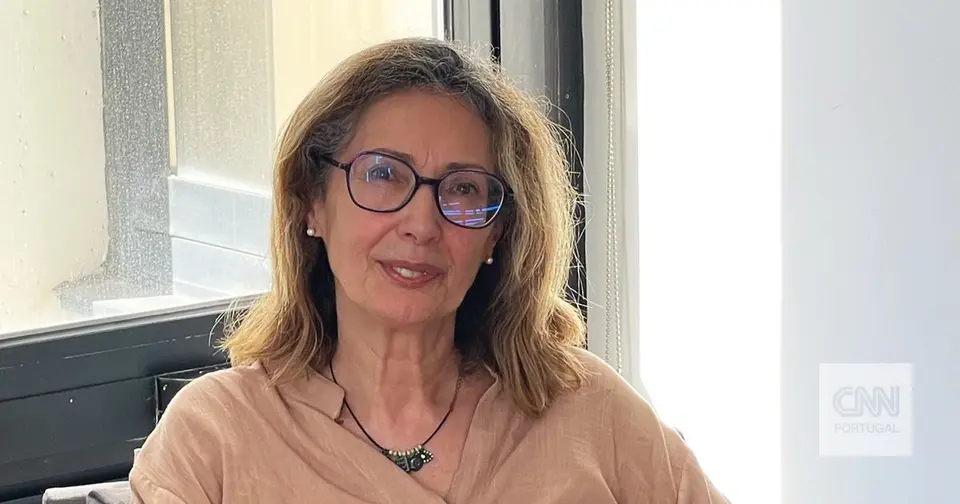
"Grief is like the sea, it has no end": Beatriz Lebre's mother six years after the murder
On 22 May 2020, Beatriz Lebre, 22 years old, was killed by a fellow student from her psychology degree. The man visited her at her home in Chelas, Lisbon, bringing with him an iron bar with which he attacked her to death. After committing the crime, he cleaned the house and threw her body into the River Tejo. In the days following Beatriz's disappearance, he befriended her parents and participated in the search. He was quickly detained by police and confessed to the crime, admitting he felt hatred because Beatriz had rejected him. "She was the only woman I couldn't dominate," he allegedly said. When the suspect took his own life in prison, Paula Lebre surprised observers by leaving a message of solidarity with his family: "A death is always a death".
More than six years later, Paula Lebre spoke to CNN Portugal about the scars that remained. "Grief is a condition of life," she said. "There is talk of the stages of grief, but recently I read something different: that grief is not the programmed stages, as psychologists say, but waves. I agree more with this. They are waves. In my case it is like the sea, it has no end. I think it is like that for everyone who loses a child."
A book born from the need to keep Beatriz alive
Part of the grieving process involved gathering testimonies from those who knew Beatriz. "When I read the testimonies, it felt like she was coming back to life and it felt so good that I decided to compile them and have them preserved," Paula explained. When she began to write her own testimony, the words came without stopping. Upon presenting the text to musician Filipe Melo, a friend of Beatriz, she heard: "Look, this is not to be added to our testimonies, this is a separate book." That is how Beatriz — an interrupted melody came into being, published in October, authored by this "mother bereaved of her daughter".
"I hadn't even understood what was happening and they were already making up stories"
In the book, Paula revisits the confusing days of her daughter's disappearance and the confirmation of her death, and does not spare criticism of how the case was handled by the media and on social networks. "I hadn't even understood what was happening and the media was already making up stories that I knew were not true," she said. "Even if they corresponded to the truth, there should have been caution before publishing, let alone when you don't know if it's true."
What shocked her most was the attempt to blame Beatriz for what happened. "When the victims are women it seems like they are the ones being judged. It shouldn't be necessary for me to go and defend that my daughter should not have been murdered," she said. "When the victim is a woman there is an attempt to say that she was killed because she did something that made the man lose his mind. That cannot be. There is nothing that justifies it. Beatriz was beautiful, she was cultured, she was sweet, she was fragile, she was small, but even if she were ugly, a prostitute or a bad person, she should not have been killed."
It was this outrage that drove her to act. "That is what gave me the impetus. I have to defend her. I will defend her. Ultimately, that also helped me. I learned a lot in this process," she acknowledged.
Reading philosophy, theology and psychology to try to understand the incomprehensible
In an attempt to make sense of what happened, Paula immersed herself in a series of readings. "I wanted to understand our human condition and what allows such an improbable, unusual and brutal tragedy to befall such an ordinary person. Nothing suggested that this could happen, there were no warning signs, there were no prior aggressive behaviours. It was all very unexpected, absurd," she described. She read works of theology, philosophy and psychology, including academic studies and doctoral theses, not always accessible, but which she considered urgent.
At the same time, she sought to draw closer to Beatriz through the world she inhabited. "I followed her lists. I went to see the films she wanted to see or that she had seen, I listened to the music, all the music that we already shared and others, I immersed myself in her world to meet with her and to feel her." Going to the cinema or to a concert became ways of honouring her daughter, who was passionate about all the arts, and of continuing life with her present. One of these memories remained marked forever: Paula wrote to musician Nick Cave, of whom Beatriz was a fan, and in 2024, at the concert in Lisbon, Cave dedicated the song Into My Arms to Beatriz.
"A woman dies today and tomorrow nobody remembers who she is"
The book is, in Paula's words, a way of preserving Beatriz's memories and keeping her daughter close. But it is also an appeal for attention to violence against women. "Society has an impressive greed for atrocities. And then it discards them straightaway, that's one down, let's move on to the next. There is all this commotion in today's world, where everything is consumable and fast, becomes outdated quickly, even the news. A woman dies today and tomorrow nobody remembers who she is, she becomes a statistic," she lamented.
The figures concern her. "In 2025 there were 26 women killed, two a month. It is a striking figure, but it tells us nothing anymore. So, this matter of telling stories creates bonds of affection to the person who died and maybe we will remember" that behind each statistic there is a life — like that of Beatriz, who was 22 years old and had a whole future ahead of her.
Source: CNN Portugal