Former president Santiago Peña arrested at his home following dismissal in Paraguay
Paraguay's Senate removed Santiago Peña through impeachment over the collapse of Ueno Bank, and the Public Prosecutor's Office ordered his house arrest in Asunción.
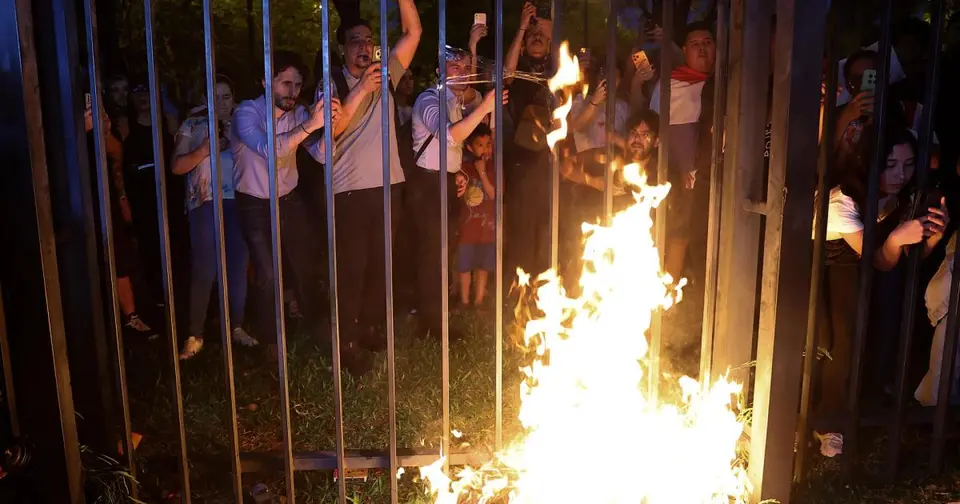
Peña under house arrest in Asunción following dismissal by impeachment trial
Former Paraguayan president Santiago Peña was placed under arrest on Friday at his residence in Asunción, hours after the Senate removed him through an impeachment trial linked to the collapse of Ueno Bank, according to elespectador.com.
The National Police executed an order issued by the Public Prosecutor's Office. "He is now officially detained, he has just been notified and informed that he will officially be placed under house arrest," a Police officer told journalists gathered outside the former leader's home, according to the EFE news agency.
The arrest order establishes house arrest for Peña "until he is made available to the Public Prosecutor's Office in the Unit for Economic and Anti-Corruption Crimes" in the capital. Prosecutor Silvia González, a member of the team investigating the handling of public funds at the bank and state supervision of the entity, confirmed that Peña "is at his home and has been placed at the disposal of authorities".
Impeachment trial and Senate dismissal
On Thursday, Peña submitted his resignation, but the congressional session convened to process it failed to achieve quorum and the Senate continued with the dismissal proceedings. The 44 senators present voted for his removal from office.
"Santiago Peña Palacios is declared guilty of misconduct in his functions and consequently is removed outright from his office," announced Senate president Basilio Núñez.
In Paraguay, former presidents receive a lifetime seat in the Senate which grants them broad immunity. By removing him, the chamber stripped him of that protection at the moment the Public Prosecutor's Office was advancing its case against him. Vice-president Pedro Alliana will assume power until August 2028.
The Public Prosecutor's Office also ordered the arrest of Carlos Carvallo Spalding, who led the Central Bank until this week, when he resigned amid the scandal.
The collapse of Ueno Bank and its victims
Ueno Bank had 2.94 million customers in a country of 6.1 million inhabitants, equivalent to approximately 48 per cent of the population. On Tuesday, the Central Bank intervened in the entity due to solvency problems and froze deposits. Among those affected are 32,000 retirees from the Social Welfare Institute (IPS), one of the country's main pension funds.
The entity also received substantial public resources during Peña's term. According to Bloomberg, government deposits in the bank rose from zero in 2023 to over USD 800 million at the beginning of this year. Peña held shares in Grupo Vázquez, the parent company of Ueno Bank, until he sold them in 2025, and appointed a former executive of the same entity to lead the Central Bank. Miguel Vázquez, owner of the bank, was already arrested this week.
Protesters demand imprisonment
Outside Peña's house, images from local television showed around twenty officers guarding the residence. Several protesters demanded that the former leader be transferred to prison that same night.
"The people demand that he go to prison, we are going to remain in vigil so that he does not leave, does not stay in his home, so that he sleeps behind bars," Andrea Salazar, one of those present at the gathering, told EFE.
Source: Google News CL — Santiago