Paraguayan Prosecutor's Office attempts to open reinforced vault in residence of former president Peña
Investigators discovered a secret compartment behind a false wall in the summer home of Santiago Peña. The vault has a double door and an Israeli biometric iris recognition system.
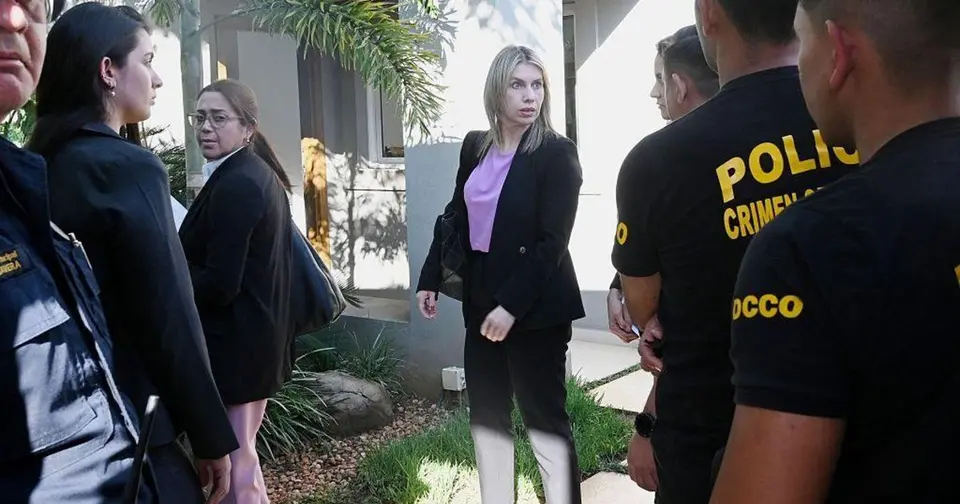
Double-door vault halts search at Peña's summer home
Paraguay's Prosecutor's Office failed to gain access to the interior of a hidden vault discovered behind a false wall in the summer residence of former president Santiago Peña, located in San Bernardino, approximately 50 kilometres from Asunción. According to El Deber, citing Paraguayan newspaper ABC Color, agents managed to pass through a first door, but a second gate with high-security mechanisms blocked their progress. The property was sealed and placed under guard whilst authorities seek the technical means to proceed.
The search took place on Sunday, two days after Congress removed Peña from office for his alleged responsibility in the Ueno Bank crisis. The former president, replaced in office by his vice-president Pedro Alliana, remains in preventive detention and has denied committing irregularities.
Israeli iris recognition system
The vault's security device is reportedly of Israeli origin and would include identification through ocular iris recognition, according to ABC Color. Given these circumstances, the Prosecutor's Office is studying the possibility of requesting collaboration from relatives of the former president who could be registered in the system, amongst them his wife, former first lady Leticia Ocampos. The prosecutors clarified, however, that these individuals would not be obliged to cooperate.
Prosecutors Silvia González and Nancy Salomón explained at a subsequent hearing that they expected to have the necessary technical means to open the vault, without specifying what method would be employed. For now, transferring the former president himself to the residence has been ruled out.
The Prosecutor's Office has also raised the possibility of a controlled explosion using explosives to force the second gate, an option that specialists will need to assess given the risk of structural damage to the property. The authorities do not rule out, moreover, that the compartment might actually be a secure room intended to protect its occupants from a threat, rather than necessarily a space for storing valuables.
Simultaneous searches in Asunción
On Monday afternoon, another prosecutorial team began the search of a second Peña residence, located in the Mbocayaty neighbourhood of Asunción. In parallel, investigators began inspecting the home of Carlos Carvallo, former president of Paraguay's Central Bank, also charged in the Ueno case.
The banking crisis broke out last week when the Central Bank intervened in Ueno Bank due to solvency problems, leaving approximately three million customers without access to their accounts. The institution also held hundreds of millions of dollars belonging to public entities, including funds from the pension system.
Paraguayan legislators accused Peña—who had been a shareholder in a company linked to the bank's owning group—of having used his influence to favour the entity during his term in office.
Bank loans to finance construction
The San Bernardino residence is also under investigation for the loans Peña received from Ueno Bank itself to finance its construction. According to the prosecutor's accusation, the bank granted the then president two simultaneous loans in May 2024 for a total of 3,548 million guaraníes—approximately 577,000 dollars. Monthly instalments amounted to approximately 239 million guaraníes, equivalent to around 39,000 dollars, a sum representing roughly six times the presidential salary, according to the document.
For the construction, Peña allegedly signed a contract for 900,000 dollars with the company Gómez Abente SA, with a planned timeframe of 23 months. The works were completed in less than a year, according to newspaper Última Hora. In a property declaration, Peña listed a total value of approximately 7,750 million guaraníes—1.24 million dollars—for the property, including land, building, equipment and furnishings.
The property had already generated questions before the banking crisis broke out: in January 2025, Peña responded to publications about his assets, stating that both he and his wife had worked throughout their lives. "I consider myself an honest, hard-working person," he declared at a press conference.
International cooperation to trace assets abroad
Paraguay's Prosecutor's Office announced on Monday that it maintains active contacts with authorities in the United States, Argentina and Luxembourg to locate possible assets of Peña and other persons and companies under investigation in the Ueno case. The prosecutor for International Affairs reported that the efforts include all those involved who could have assets outside the country, without providing details about specific persons or companies.
United States authorities have offered to cooperate in the identification of assets related to the case within their financial system, the prosecutor specified. He clarified, however, that in his conversations with the United States Department of Justice, the question of whether the United States government plans to pursue its own investigation into Ueno Bank was not addressed.
Source: El Deber