Santiago Peña removed from office and detained in Paraguay following Ueno Bank collapse
Paraguay's Senate voted unanimously to remove Santiago Peña on 6 November 2026, following the collapse of Ueno Bank. Hours later, the Public Prosecutor's Office ordered his house arrest.
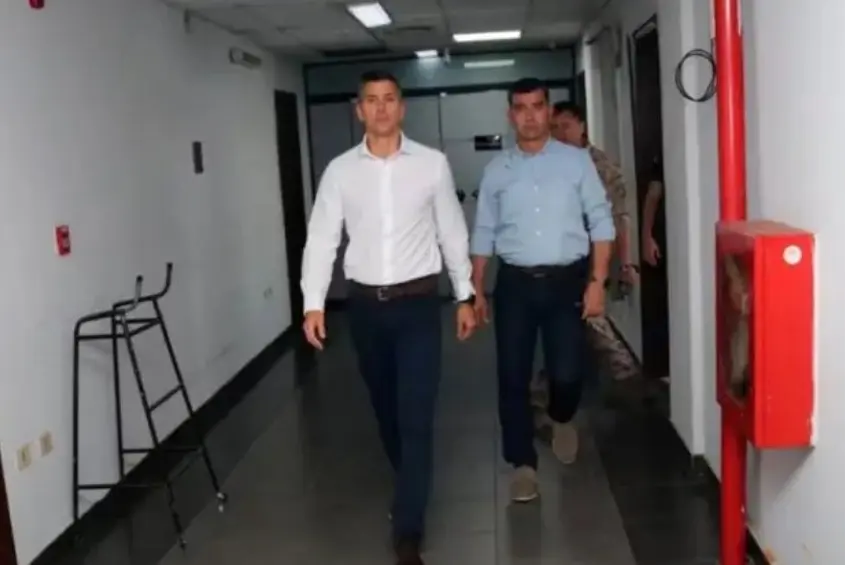
Paraguayan Senate removes Peña unanimously and Public Prosecutor's Office orders his arrest
Paraguay's president, Santiago Peña, was removed from office and subsequently detained by order of the Public Prosecutor's Office on 6 November 2026, amid a serious political and financial crisis caused by the collapse of Ueno Bank, according to billieparkernoticias.com. The digital financial institution left millions of customers without access to their savings and raised questions about the handling of public resources during his administration.
The 44 senators present voted unanimously for the removal of the head of state for poor performance of his duties, in a procedure that took place in the absence of the governing official himself. With this decision, Peña, aged 47, became the second Paraguayan president removed through impeachment since the end of the dictatorship of Alfredo Stroessner in 1989. The first precedent was Fernando Lugo, who lost office in June 2012 following a controversial parliamentary process.
Pedro Alliana immediately assumed the Presidency of the Republic.
The collapse of Ueno Bank, origin of the crisis
The trigger for the conflict was the intervention of Ueno Bank, a digital financial entity that had grown rapidly to hold approximately 2.9 million customers in a country of around 6.1 million inhabitants. After facing severe liquidity problems, its users were unable to withdraw cash, carry out card transactions or access their deposits normally.
The impact was especially serious because among the compromised funds were resources from public bodies and savings linked to the social security system. During Peña's administration, various state institutions deposited more than 800 million dollars in Ueno, according to information released during the crisis. Lawmakers questioned whether public assets were concentrated in an entity that was subsequently intervened.
One of the most sensitive points was the presence of funds from the Institute of Social Security (IPS), the body responsible for managing resources allocated to pensions and social security for thousands of Paraguayan workers. The situation generated a crisis of confidence in the banking system and the Government, with pensioners and workers demanding explanations about the destination of their contributions.
The impeachment that resignation could not stop
The Chamber of Deputies approved on 5 November initiating impeachment proceedings against Peña with 78 votes in favour and none against, also designating the prosecutors bringing charges. Under pressure, the head of state announced that he had submitted his resignation from the Presidency, arguing that he did not wish to become a factor of further instability for the country.
However, the resignation procedure was not completed through the legislative channel and the Senate continued with the process. On 6 November, senators analysed the charges and the arguments of the defence, represented by lawyers Adolfo Ferreiro and Ricardo Preda. Following deliberation, the 44 senators present found Peña guilty of poor performance of his duties and approved his immediate removal from office.
The removal also had consequences for his constitutional status: by being removed through impeachment, Peña lost the opportunity to access the status of lifetime senator that the Paraguayan Constitution grants to elected former presidents, with the exceptions provided for those declared guilty.
House arrest and ongoing criminal investigation
Hours after the removal, the Paraguayan Public Prosecutor's Office ordered the detention of Santiago Peña and former Central Bank president Carlos Carvallo, as part of an investigation into alleged financial irregularities. Peña was placed under house arrest at his residence in Asunción, whilst Carvallo was placed in police custody at facilities determined by the authorities.
The conduct being investigated includes possible offences of breach of trust, abuse of influence and administration in personal gain. The authorities also seek to determine whether decisions were made to favour Ueno through the handling of state resources and possible failures in supervision of its operations. Carvallo had been appointed head of the Central Bank during Peña's administration and was previously connected to the financial entity that gave rise to Ueno.
On Saturday 7 November, the former president appeared before the Public Prosecutor's Office to answer questions from investigators. The criminal investigation remains open and the authorities must still determine the specific charges that could be brought against him. Peña has denied committing irregularities.
Source: Google News CL — Santiago