Călin Georgescu, house arrest with electronic bracelet: what is forbidden him
The Bucharest Court of Appeal has definitively decided to place Călin Georgescu under house arrest, with permanent electronic monitoring and strict prohibitions.
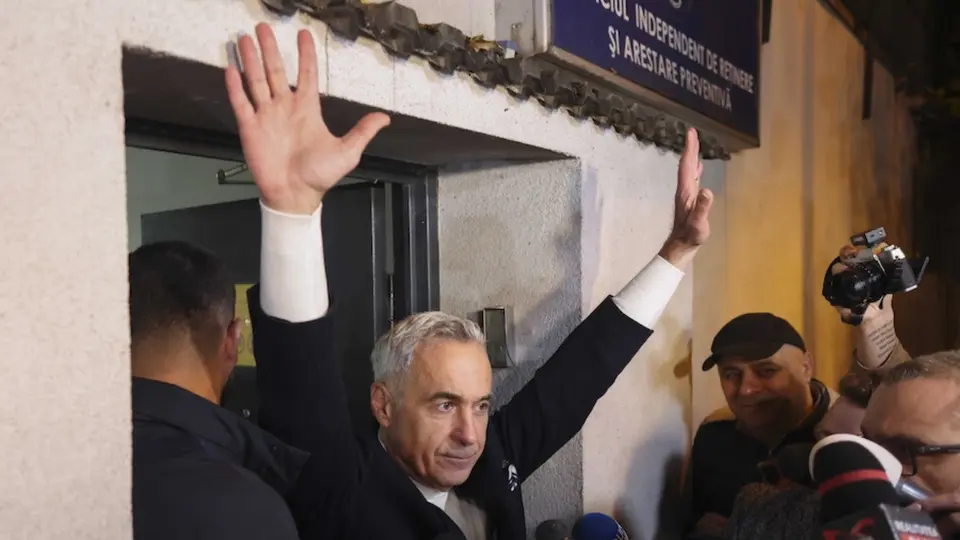
Georgescu leaves Central Prison, but remains under 24/24 electronic surveillance
Former presidential election candidate Călin Georgescu will be released from Central Prison following a final decision by the Bucharest Court of Appeal, and is to be placed under house arrest with an electronic bracelet, reports Romania TV - Justice.
The monitoring device must be worn permanently, and Georgescu cannot leave the property where he lives without written approval from the judge of preliminary investigation or from the court.
Prohibitions imposed by the court
During the period of preventive measure, Georgescu is not permitted to participate in public gatherings, sporting events or cultural events. Additionally, he is forbidden to possess, use or carry weapons.
The judges have also prohibited him from any communication, direct or indirect, with businessman Răzvan Liviu Leu and with members of his family, with the accused Ionel Rusen, as well as with witnesses in the case.
Georgescu has the obligation to periodically inform the court regarding his means of livelihood and to present himself before the judge whenever he is summoned.
When he can leave home
Under article 221 of the Code of Criminal Procedure, a person under house arrest may leave their home only with written approval from the judge, on the basis of a reasoned request — to go to their place of work, to training courses, to procure necessities of life or in other duly justified situations.
The only exception concerns emergencies, in which case Georgescu must immediately notify the supervisory authority and the court. Police officers designated to carry out supervision may conduct periodic inspections and may enter the home without the consent of the accused or of persons living with him.
If he wilfully breaches the imposed obligations or if he is investigated for a new offence committed intentionally, house arrest may be replaced with preventive detention.
DIICOT case: fraud of 1.1 million euros
The preventive measure was ordered in the case in which DIICOT prosecutors have sent Georgescu and businessman Ionel Rusen to trial for forming an organised criminal group and fraud with particularly serious consequences.
Investigators claim that the two persuaded businessman from Buzău Răzvan Leu to pay 1.1 million euros as a guarantee for obtaining financing of six million euros — a sum which was not granted, and the money paid was not recovered. Part of the prejudice would, according to prosecutors, have been directed towards financing Georgescu's presidential campaign.
Co-accused Ionel Rusen remains in preventive detention.
Source: Romania TV - Justiție