George Simion summoned to General Prosecutor's Office as suspect in public incitement case
The AUR leader will be questioned as a suspect in a case opened after he called for the "flaying in the public square" of Electoral Bureau members. The Prosecutor's Office rejects any political connotation to the summons.
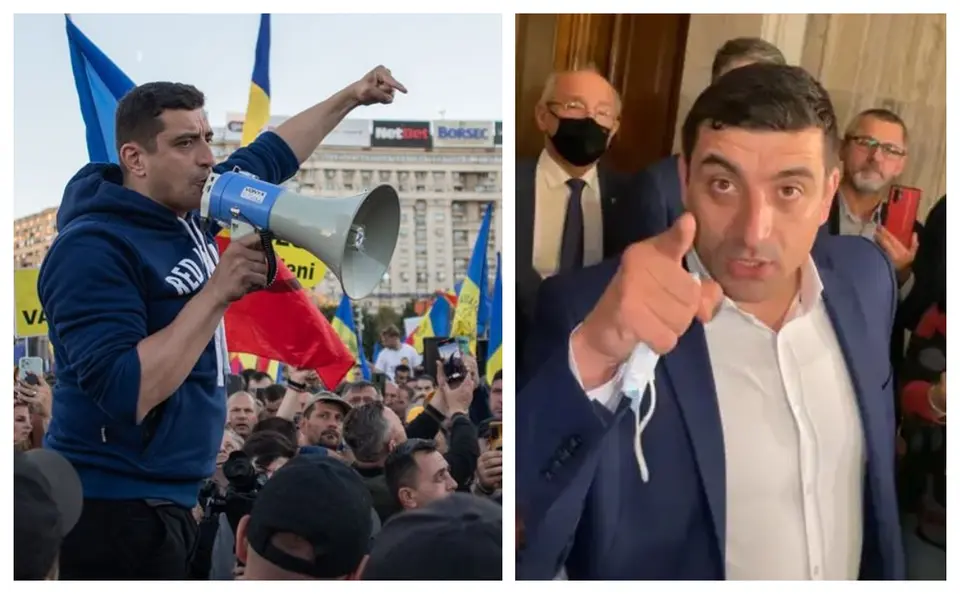
AUR leader questioned as suspect following statements about "flaying in the public square"
According to Romania TV - Justiție, George Simion, leader of the AUR party and deputy in the Romanian Parliament, has been summoned to the Prosecutor's Office attached to the High Court of Cassation and Justice to be questioned as a suspect in a public incitement case.
The case was opened ex officio on 10 March 2025, one day after the Central Electoral Bureau invalidated Călin Georgescu's candidacy in the 2025 presidential elections. On the evening of 9 March 2025, Simion posted a video clip on Facebook filmed in a car, in which he declared: "Given how furious people are, I can no longer assume anything. Those who committed the coup d'état should be flayed in the public square for what they did. They are making a mockery of democracy."
The General Prosecutor's Office then announced that it had seized itself ex officio concerning the offence of public incitement, provided for by Article 368 paragraphs 1 and 2 of the Penal Code, specifying that criminal investigation is being conducted in rem. The institution made no further communication regarding the case until the summons was issued.
Summons transmitted before AUR report
Simion announced on Facebook that he received a summons on Friday, 20 November, and was subsequently called by a criminal investigation officer on his wife's telephone. "I thought it was another case, but it seems to be the same one: public incitement!! We will see on Thursday what I did wrong in the face of the regime," wrote the AUR leader.
He claimed that his summons represented a political response from the "Nicușor Dan/PSD regime" to AUR's presentation of a 436-page report concerning the annulment of votes of 9.4 million citizens in the 2024 presidential elections. On Monday, 23 November, AUR made public the document entitled "How the votes of 9.4 million citizens were annulled".
The General Prosecutor's Office categorically rejected this interpretation. According to a statement from the institution, the summons procedure was carried out on Friday, 20 November, and confirmation of receipt was sent by email on the same day — three days before AUR publicly presented the report. "The Prosecutor's Office attached to the High Court of Cassation and Justice categorically rejects any interpretation intended to attribute a political connotation to the judicial proceedings undertaken in this case, the activity of prosecutors being governed exclusively by the principles of legality, impartiality and objectivity," the statement reads.
"Metaphor" or incitement to violence
The day after posting the video clip, Simion explained at a press conference that it was a "metaphor" and "political expression", specifying that he was referring to the "flaying" of privileges and special pensions, not physical violence. He also invoked an earlier statement by former president Traian Băsescu, who had said "We will see each other at the gallows in Victory Square".
The National Audiovisual Council had meanwhile decided to remove the post from social networks, considering that it incited violence against members of the Central Electoral Bureau who had invalidated Călin Georgescu's candidacy.
Prosecutor's Office silent for over a year
Between the opening of the case on 10 March 2025 and the issue of the summons, there was no public communication from the General Prosecutor's Office regarding the status of the investigation — a period of approximately one and a half years. Simion is due to appear on Thursday at 11:00. "We do not betray, we do not give up!", wrote the AUR leader on his Facebook page.
Source: Romania TV - Justiție