Minister of Justice on sanctioning of judges who convicted Chițoiu: "Fine nuances that must not be distorted"
Radu Marinescu analysed the CSM decision to sanction judges in the Chițoiu case, warning that sanctioning a magistrate for convicting a politician would be "very serious".
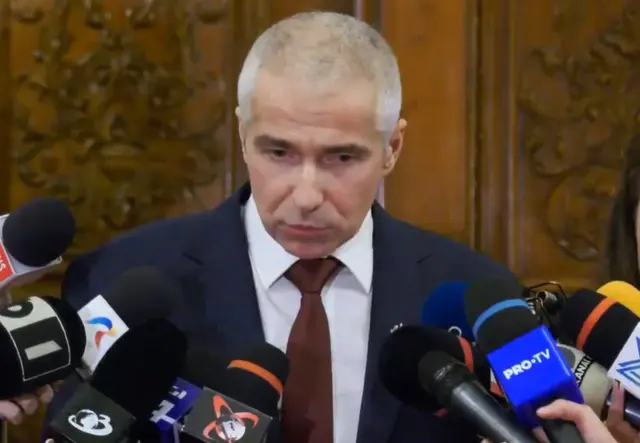
Minister of Justice explains CSM sanctions against judges in Chițoiu case
The Minister of Justice, Radu Marinescu, commented on Sunday on B1 TV on the decision of the Superior Council of the Magistracy to sanction two judges who convicted former Finance Minister Daniel Chițoiu to four years in prison with execution. According to News.ro, Marinescu emphasised that the situation involves "very fine nuances that must not be distorted".
The two magistrates in question are Andrei Stancu and Ion Fundătureanu. Stancu received a 10% reduction in gross monthly salary for a period of one year, while Fundătureanu was demoted from the professional grade of court of appeal to that of tribunal. The ruling is not final and may be challenged at the High Court of Cassation and Justice.
CSM grievance: conduct of lawyers invoked in sentence individualisation
The CSM Judges Section found that, in increasing the sentence from first instance, the two judges also cited the behaviour of Chițoiu's lawyers: repeated recusal requests, threats to report to the Judicial Inspection, and requests for evidence considered abusive. The Council ruled that "the lawyer's conduct cannot constitute a reason for aggravating the sentence of his client" and held that the judges acted in bad faith. The CSM explicitly clarified that it did not analyse whether the sentence increase was justified or whether the criminal ruling was lawful.
According to Stancu, four members of the section considered that there was no disciplinary breach.
Marinescu: "Unacceptable" for a judge to be sanctioned for professional decision
The Minister of Justice drew a distinction between two scenarios. "If that is the reality and what was actually evaluated there was the way the judge related to the lawyer's attitude, and not to the issue of the person in question, then it is something entirely different," Marinescu said.
He added that "it is absolutely unacceptable for a magistrate to be sanctioned for his professional decision if there are no other elements that place the magistrate outside the legal limits".
At the same time, Marinescu explained that a judge cannot use against a defendant the manner in which his lawyer behaves. "If you have a problem with the lawyer and he is behaving improperly, you fine him, you sanction him, but you individualise a sentence only in relation to the circumstances of the person you are judging, not those of the lawyer," the minister stated.
Two distinct questions with different consequences
The Minister of Justice explicitly formulated the central distinction in the case: "Was he sanctioned because he convicted a politician? Then it is very serious. Was he sanctioned because in applying the law he used criteria that are not in the law? Then it is a responsibility of the magistrate, because he violated the law."
Marinescu insisted that this very distinction in the nature of the sanction must not be confused or distorted in public debate.
Timeline of the Chițoiu case
On 27 December 2019, on Dealul Negru in Argeș, an Audi driven by Daniel Chițoiu entered the oncoming lane and collided head-on with a Dacia Logan. The driver of the Logan, aged 82, and a passenger aged 73 died, and two other people were injured.
On 8 January 2026, Stancu and Fundătureanu converted the sentence of three years suspended, handed down at first instance, to four years in prison with execution. On 2 June, the ICCJ rejected as unfounded Chițoiu's cassation appeal, with the former minister remaining in detention.
As early as June, when he learned that he was under disciplinary investigation, Stancu wrote that he was living "the saddest day of my career as a judge" and wondered whether judges "still have the right to interpret the law".
Source: News.ro