Psychiatrist: 45% of adolescents know drug users, Romania without treatment centres
Psychiatrist Eugen Hriscu warns that Romania has no prevention programmes and almost no treatment centres for minors dependent on drugs.
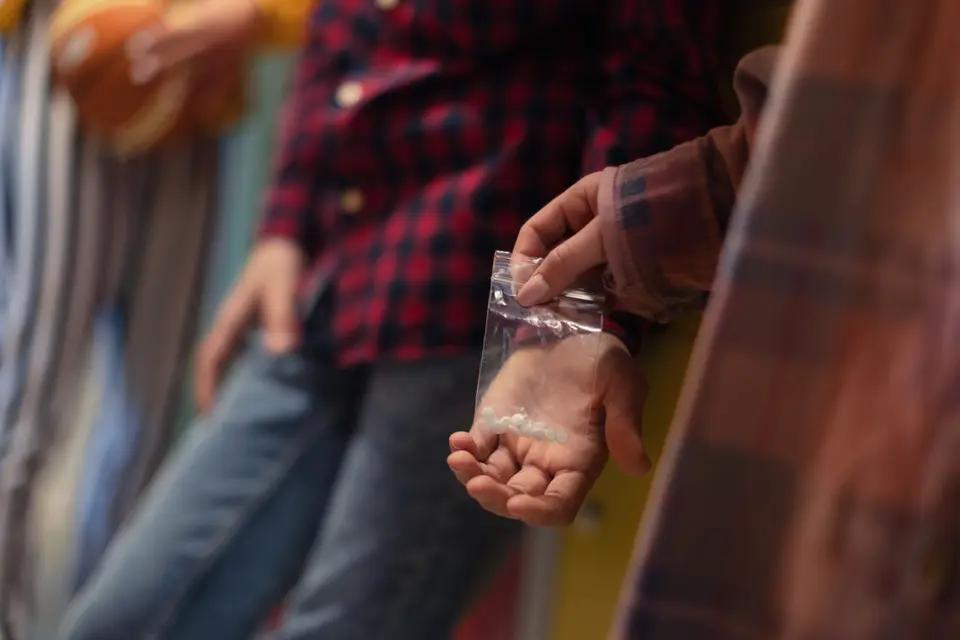
Romania lets young people become dependent, without prevention and without treatment
Up to 45% of secondary school pupils in Romania know drug users, according to a study cited by psychiatrist Eugen Hriscu in an interview given to hotnews.ro. The specialist describes a country that does not invest in prevention, does not ensure access to treatment and criminally penalises even minute quantities of substances.
"The drug crisis is a crisis that will not pass," says Hriscu. Until two years ago, Romania had no treatment centre for minors with addictions. Currently there is just one, created by an NGO, with free access.
---
Prices of 10–20 lei per dose and social networks facilitating access
Hriscu rejects the idea that financial barriers would limit consumption. New synthetic drugs cost 10–20 lei per dose, placing them within the reach of any adolescent. The real problem, he says, is access to sources — and this has grown dramatically with the expansion of digital platforms.
The data come from a study carried out as part of the "Prevention Begins in Relationship" project, implemented by the Zi de Bine Association with the support of the World Health Organisation and the Ministry of Health. Adolescents from years nine to twelve were asked how many users they know — a direct risk indicator, according to the psychiatrist. The result: percentages of up to 40–45%.
"Now, 'knowing' in 2026 is something quite different from 'knowing' in 2006," explains Hriscu. TikTok, Snapchat and groups formed around video games create communities in which contact with a user becomes mundane.
---
Blurred boundary between user and small-scale trafficker
Hriscu draws attention to a legal problem with serious consequences for young people: Romanian legislation makes no significant distinction between a user who shares a substance with a friend and a professional trafficker.
"If someone organises a collection in a group, goes and buys and then brings it for everyone, according to the law, that person is a dealer," says the psychiatrist. An 18-year-old caught in such a situation risks a minimum of one to one and a half years' imprisonment to be served, alongside, as Hriscu emphasises, "organised crime figures, rapists".
The psychiatrist describes this situation as "extremely destructive" both from a humanitarian and social point of view.
---
32,000 DIICOT cases, 80% for under 5 grammes
The judicial system feels the pressure of this approach. DIICOT has reported 32,000 cases in the drugs field, of which 80% concern quantities under 5 grammes of substance. Hriscu says that the courts are "blocked with tens of thousands of consumption cases", including cases for 0.2 or 0.3 grammes.
"Whilst the prosecutors chase children in parks smoking a joint, large-scale trafficking flourishes, large-scale tax evasion and large-scale corruption," says the psychiatrist. He points out that other areas within DIICOT's remit — migrant trafficking, currency counterfeiting, corruption — remain "crushed" under the volume of consumption cases.
---
Decriminalisation of consumption: principle, not project
In October, a legislative project on the decriminalisation of drug consumption was tabled in the Senate, which generated public controversy. Hriscu avoids commenting on the specific project, but defends the principle behind it.
"The idea of bringing criminal cases against any person, regardless of quantity, is absurd and completely dysfunctional," he says. An increase in sentences has not reduced consumption, the psychiatrist observes: "Drugs continue to increase, even though sentences have only increased. We have no centres, we have no prevention."
---
"On the same level as the orphanages from the Ceaușescu era"
Hriscu extends his criticism beyond drug policy. He describes a visit to a secondary school on the outskirts of Bucharest, in sector 4, where pupils have been taught for three or four years in containers, whilst an office and residential block is being built nearby.
"The way we treat adolescents within the education system and within the health system seems to me to be on the same level as the orphanages from the Ceaușescu era," says the psychiatrist. He describes what he calls "the violence of the state against its own citizens" — manifested through laws that criminalise users, through the absence of psychological assistance in schools and through poor living conditions.
"I believe the Romanian people have a problem of cruelty and lack of empathy. At the level of the population, we care only about our small group of family, of acquaintances, but what happens outside is completely ignored," says Hriscu.
Romania, he concludes, has remained in the paradigm of "America in the 1980s and Romania in the 1990s" — convinced that more severe punishments will eliminate the drug problem, whilst psychological and psychiatric intervention is systematically ignored.
Source: Google News RO — Crime (ro)