Esmeralda, the girl who never reached four years old – a society's betrayal
Expressen publishes a book extract about Esmeralda, who was found dead in Norrköping in 2020. Her fate led to legislative changes to strengthen the child's best interests in LVU processes.
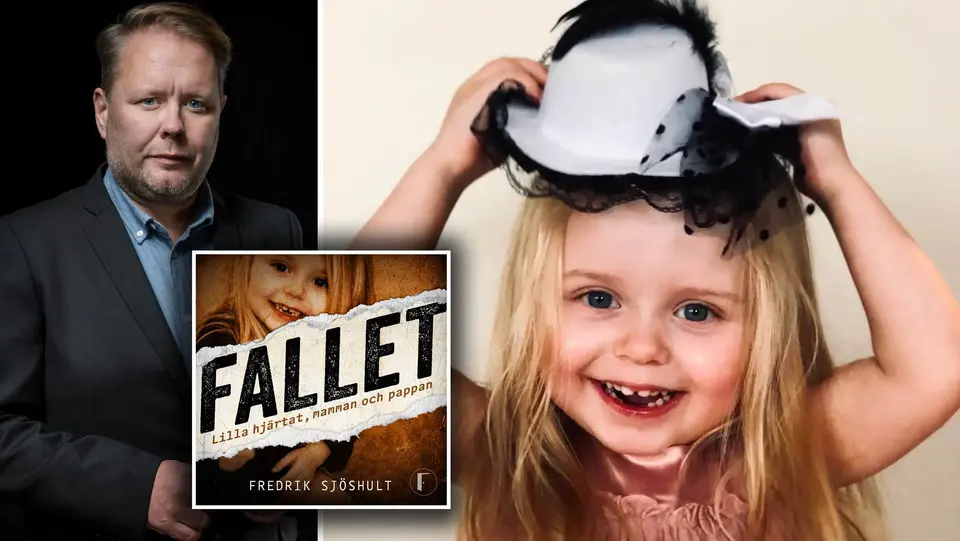
Esmeralda's final time: an extract from a new book about the betrayal of "Little heart"
Expressen publishes an extract from "Little heart, mum and dad" – a new book by the newspaper's crime columnist Fredrik Sjöshult. The book draws a full picture of how Esmeralda was betrayed by society and killed by her biological parents, drugged and malnourished, before she had even reached her fourth birthday.
There is a film of Esmeralda that Melinda Jacobs in the autumn of 2026 does not have the strength to watch when she and Sjöshult meet outside Vadstena. Melinda filmed it towards the end of Esmeralda's time in the care home. In the film, the little girl stands in the hall – sad, unwilling to leave – with no possibility of staying.
Esmeralda was found dead at her biological parents' home in Norrköping in January 2020. The parents were arrested and remanded in custody immediately. She had been forced to leave Melinda's family home following a court of appeal ruling on LVU and placed in her parents' drug-ridden circumstances. At the time of death, she was malnourished and drugged. The father died in custody. The mother was later sentenced to eight years in prison for manslaughter.
Melinda Jacobs and the fight for justice
Melinda lives with her husband Martin and nine children in a rural idyll outside Vadstena, with a view over Östgötaslätten. In the barn goats and donkeys crowd together, and in the garden there are apple trees and play houses. But when Sjöshult now sees her – six years after Esmeralda's death – he notices traces of sorrow and an emptiness that had not been as apparent before.
Melinda explains that in the immediate aftermath she was full of hate. She emotionally shut herself off in order to focus on securing justice for Esmeralda and on giving a voice to children who had not received one – the forgotten children who need parents other than their biological ones.
It was at that point she emailed Sjöshult, immediately after he had highlighted the fatal court of appeal ruling days after Esmeralda's death. In the email, which begins with words about snow falling heavily, she writes:
"Hello! The snow is falling heavily in Vadstena. I have been sitting in the same place since Thursday evening. Petrified, desperate, bewildered … My name is Melinda. Esmeralda has grown up in my family and was so incredibly loved. I want to thank you for the article you wrote yesterday. Everything was correct and this is how we must continue to push this, to secure justice for her. That legal certainty for children in Sweden is not functioning. A change must happen. No more children should have to lose their lives."
The parents' background and society's system failures
In working on the book, Sjöshult has examined the biological parents' background and drawn the lines further back. According to him, the contours of society's betrayal become even clearer in doing so:
Dad Stefan's substance abuse began early, continued with heroin smoking in his teens and ended with his death in custody. Mum Sara's substance dependence was well documented and ended in drug seeking on the dark net. The parents' hatred of society meant that they did not accept help when they needed it. They lived in constant denial of their problems, deceived those around them and built up a façade that cracked on the day Esmeralda was found wrapped in a package in the home where she had spent her final months in misery.
Furthermore, Sjöshult emphasises, Esmeralda's attachment to Melinda and her family was unambiguous – documented by both child health services and the social services during the years. Despite this, the court of appeal did not take account of Esmeralda's needs, nor did her own representative or, ultimately, the social services.
Legislative changes in the wake of "Little heart"
The betrayal of Esmeralda has, thanks to Melinda Jacobs's fight, led to several legislative changes with the child's best interests in focus. The former Social Democratic government drew up a first "Lex Little heart" that strengthened the child's perspective in LVU processes and gave the social services the possibility of requesting drug tests from parents.
Over the past four years the Tidö government has worked on further tightening of the legislation, which will shortly come into force. What Sjöshult describes as the most far-reaching – and what Melinda has driven based on her own experiences – is that the child's attachment should carry more weight when decisions are made about the child's future in an LVU process.
But one question remains, writes Sjöshult: What do the court of appeal, Esmeralda's representative and the social services think now that more than six years have passed? When he begins to search for them, Stig Dagerman's words ring in his ears:
"Life is so merciless to one who has killed a child that everything afterwards is too late."
Esmeralda's fate, concludes Sjöshult, must not be forgotten.
Source: Expressen