Key evidence in Satak Zovka murder case excluded – trial faces collapse
Ljubljana High Court has confirmed the exclusion of key evidence against the accused in the Satak Zovka murder case. Conviction is becoming increasingly unlikely.
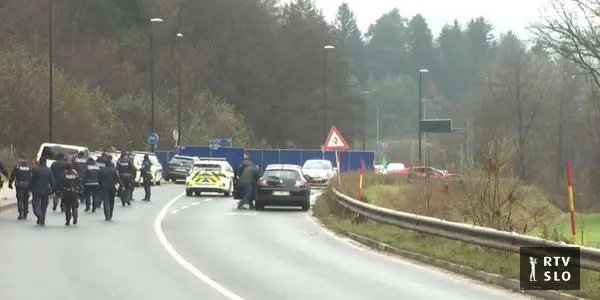
High court confirms evidence exclusion in Zovka murder case
According to unofficial reports, Ljubljana High Court has entirely rejected the appeal by the specialised state prosecution and thereby definitively confirmed the exclusion of key evidence from the court file in the Satak Zovka murder case. As reported by RTV SLO, the court simultaneously partially upheld the defence's objections to several additional pieces of evidence. Practically all key evidence that was meant to connect the accused to the murder has thus been removed from the file.
Error in investigation order brings trial to its knees
Zovka's body was found on 29 November 2024 in a car on Brdo in Ljubljana, as he was reportedly returning from a casino there. He was a former witness in an investigation against members of the Škaljarski klan criminal association, and according to TV Slovenija, he is said to have incurred enmity with a person with the nickname Cezar through the theft of drugs worth hundreds of thousands of euros. Six days after the murder, three suspects were arrested in Črnuče in Ljubljana.
Due to alleged involvement in the murder, Dino Muzaferović, Jaka Bergant, Roland Cretu, Osman Kostić and Vili Sušnik were detained, whilst the sixth detainee Boban Stojanović is accused by the prosecution of drug trafficking. The indictment became final in summer 2025, and the case remained at the stage of a preliminary hearing, when the defence sought to have part of the evidence excluded.
The root of the problem lies in an error in the issuance of the investigation order. Dino Muzaferović's lawyer, Miloš Zarić, explained in August last year that the covert surveillance was unlawful because police officers proceeded on the assumption that Jaka Bergant had placed a GPS device on Zovka's car. "At the start of covert surveillance, according to the defence's assessment, the police officers already knew that this was not the same person, yet in our assessment they continued to monitor the second accused because of interest in the first accused," Zarić said at the time.
Večer journalist Damijana Žišt described for RTV SLO how the error occurred: the first prosecution order related to an unknown person who was supposed to be limping, but a subsequent review of camera footage showed that the person was not limping. "What is problematic, of course, is that these two orders with different descriptions ended up in the court file and that it was ultimately established that the person, one of the accused, Jaka Bergant, does not limp and that the first order was thus issued for the wrong person," Žišt said.
When it became clear that Bergant had not placed the tracking device, the prosecution immediately informed the court, but the first order remained in the file. It was the surveillance of Bergant that led investigators to where Muzaferović and Cretu were hiding – and these very pieces of evidence have now been excluded. "It is clear that in the rush to obtain perpetrators, the prosecution made a decisive error," Žišt assessed.
Prosecution: conditions for orders are unrealistic
The specialised state prosecution (SDT) appealed against the ruling by circuit judge Gorazd Fabjančič, who excluded the evidence at the end of May. In the view of the SDT, the decision of the court of first instance was based on an erroneous finding of the factual state and a violation of provisions of the Code of Criminal Procedure. The prosecution noted in its response that the covert investigative measures were ordered and carried out in accordance with the law, which was confirmed at various stages by investigating judges, the Supreme Court and the out-of-court senate. At the same time, they pointed out that in a phase when rapid response from the bodies of investigation is essential, they are being asked to meet unreasonable and unrealistic conditions for ordering covert investigative measures. The police also called for consideration of amendments to the legislation.
The High Court nonetheless entirely rejected the appeal.
Legal expert: "the prosecutor now has nothing left"
Criminal law expert Miha Šepec commented in the programme Odmevi that this was a serious error on the part of the prosecution and police cooperation. "They had an order for the wrong person, so they then observed and tracked the wrong person, the one who was not in the order, and then all the results of that tracking became unlawful," Šepec explained. "The court decided that it would remedy the unlawfulness of police action by excluding the evidence. And the prosecutor now has nothing or very little with which he could continue to prove guilt for this criminal offence."
Šepec also highlighted a broader legal question: "There are two camps of lawyers here. Some will say that in the end the result matters and we should leave the evidence. Others prefer a bit more legal protection. The moment we start to erode legal protection and the rights of individuals, we could all lose as a society in the end."
What now?
Damijana Žišt reported for RTV SLO that the trial is expected to continue in the form of a preliminary hearing before a different judge, unless the prosecution withdraws the indictment beforehand. "If it persists with the indictment, then I would expect that there might be only one or two hearings and the accused would probably be released, as the key evidence connecting the alleged perpetrators to the Satak Zovka murder has been struck from the court file," she said.
The case, which attracted considerable public attention when arrests were made in 2024, thus faces the possibility of ending without convictions – not because of lack of operational work by the police, but because of a procedural error at the very beginning of the investigation.
Source: RTV SLO