Court excludes evidence in Zovko murder: prosecution on brink of collapse
Ljubljana High Court has, according to Dnevnik, rejected the public prosecutor's appeal and confirmed the exclusion of key evidence in the case of the murder of Satko Zovko.
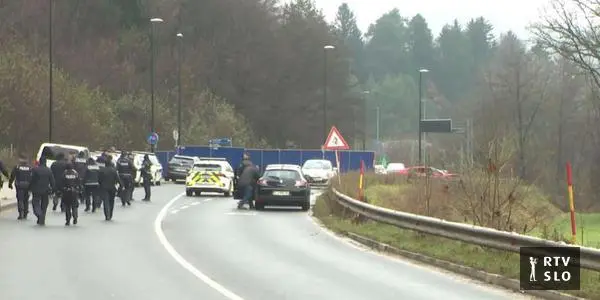
Zovko murder case on verge of collapse due to unlawfully obtained evidence
Ljubljana High Court has, according to unofficial sources, entirely rejected the appeal of the specialised state prosecutor and confirmed the exclusion of key evidence in the criminal case against the alleged perpetrators of Satko Zovko's murder, reports RTV SLO. The higher-court judges reportedly partly granted the defence's objections to additional evidence as well. Consequently, almost all key evidence that allegedly connected the accused to the murder has been definitively struck from the court file.
Zovko's body was found on 29 November 2024 in a car on Brdo in Ljubljana, when he was allegedly returning from the local casino. He was a key witness in an investigation into the Škaljaric clan, and he had also allegedly fallen out of favour with clan leaders through the theft of drugs worth hundreds of thousands of euros. Six days after the crime, police arrested the first three suspects in Črnuče. In custody were Dino Muzaferović, Jaka Bergant, Roland Cretu, Osman Kostić and Vili Sušnik; the prosecutor charged the sixth detainee, Boban Stojanović, with drug trafficking. The indictment became final in summer 2025.
Error in secret surveillance order
The core of the problem lies in the first prosecutor's order, which referred to an unknown person suspected of limping. When police later reviewed DARS and other surveillance camera footage, they established that the person was not limping — and that the order had been issued for the wrong person. Večer journalist Damijana Žišt explained that the problem was that both orders, with different descriptions, ended up in the court file.
The prosecutor informed the court of the error as soon as it became clear that it was not Bergant who had installed the tracking device on Zovko's car, but the first order nonetheless remained in the file. The defence exploited this skilfully. "It is evident that in this haste to find perpetrators, the prosecutor made a crucial error," Žišt said.
Lawyer Miloš Zarić, who represents Dino Muzaferović, requested in August last year that evidence obtained through secret surveillance of Jaka Bergant be excluded. "The secret surveillance was unlawful because the police officers proceeded from the assumption that the second accused, Jaka Bergant, had installed the GPS device. At the beginning of the secret surveillance, according to the defence's assessment, the police officers already knew it was not the same person, but in our view, owing to interest in the first accused, they continued to monitor the second accused," Zarić explained. It was precisely while following Bergant that criminalists discovered the hideout of Muzaferović and Roland Cretu.
Prosecutor: conditions are unreasonable and unrealistic
The Specialised State Prosecutor (SDT) appealed against the decision of investigating judge Gorazd Fabjančič, who at the end of May decided on the exclusion of evidence. In the prosecutor's view, the decision was based on an erroneous finding of fact and a breach of provisions of the criminal procedure act. The SDT emphasised that the covert investigative measures were not unlawful — a fact confirmed at various stages by investigating judges, the Supreme Court, and the out-of-session panel of Ljubljana's district court.
In an initial response, the SDT stated that, in the phase when rapid response from investigative bodies is necessary and when they have limited data at their disposal, unreasonable and unrealistic conditions are being imposed for ordering covert investigative measures — conditions which, in their view, make the effective detection of perpetrators of the most serious criminal offences impossible. The police force also called for consideration of changes to legislation.
Šepec: error in link between prosecutor and police
Legal scholar and criminal law expert Miha Šepec assessed the case in the Odmevi programme on RTV Slovenia as a serious error in the connection between the prosecutor and the police. "They had an order for the wrong person, so they then observed and followed the wrong person, the one who was not in the order, and then all the results of that surveillance became unlawful," Šepec explained. According to him, the court remedied this unlawfulness by excluding the evidence, and the prosecutor now has almost nothing with which to prove guilt for the murder.
Šepec warned of a fundamental dilemma facing criminal law: "There are two camps of lawyers here. Some will say that in the end the result matters and we should allow the evidence. Others prefer rather more legal protection." He cited as an example a house search that had been carried out on the wrong person: "As soon as we start reducing legal protection and individual rights, we may all lose as a society in the end."
What follows: perhaps only one or two hearings before release
Večer journalist Damijana Žišt predicted for RTV SLO that the trial would presumably continue with proceedings before a different judge — unless the prosecutor withdraws the indictment beforehand. "If it insists on the indictment, I expect that there would be perhaps only one or two hearings and the accused would probably be released, since the key evidence that allegedly connected the alleged perpetrators to Satko Zovko's murder has been struck from the court file," Žišt explained.
The case thus remains uncertain: the prosecutor must decide whether to continue the prosecution with diminished evidence or to withdraw the indictment. The outcome will be crucial both for the course of the trial and for the future of the detainees, who have been in custody since December 2024.
Source: RTV SLO