Organised crime overwhelms Latin American and European democracies
Organised crime is no longer merely a problem for weak states: countries such as Uruguay, Chile and Sweden face unprecedented levels of violence. nuso.org analyses the expansion and diversification of illegal markets.
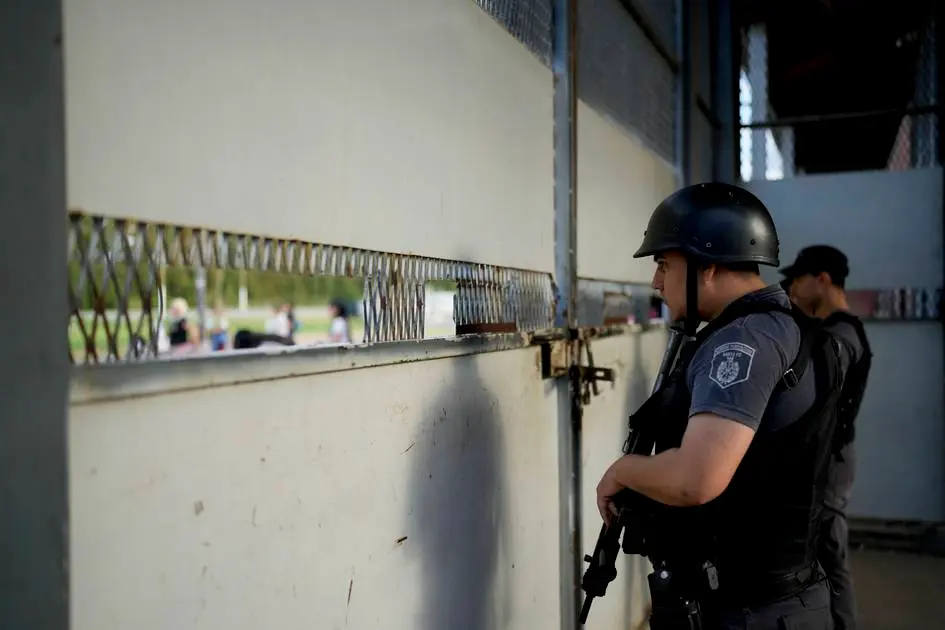
Beyond narcotics: how organised crime transforms democracies
According to nuso.org, the expansion of organised crime has established itself over the past decade as one of the most urgent challenges facing Latin American states and their democratic systems. It is no longer a phenomenon exclusive to nations with weak institutions: countries considered solid in the region—Costa Rica, Chile and Uruguay—have seen their levels of criminal violence grow notably. The same pattern repeats itself in First World nations associated with social democracy, such as Sweden, the Netherlands and Belgium, where violence of narco origin reaches unprecedented levels.
Visible violence is not the best indicator
A first premise worth reconsidering, the nuso.org analysis points out, is the automatic association between organised crime and high homicide rates. In reality, violence proves counterproductive for criminal organisations: it generates public exposure and attracts the attention of public opinion and authorities. The most prosperous organised crime is, precisely, that which remains invisible.
The second habitual association—organised crime equals drug trafficking, drug trafficking equals large Mexican or Colombian cartels that control the entire value chain—does not reflect the actual complexity either. That image of a vertically integrated organisation that produces, distributes, exports and launders money coexists with much more fragmented and adaptable structures, which compete and cooperate with each other, and which exploit a diversity of illegal markets. Drug trafficking is only one of those businesses.
Horizontal and vertical integration: keys to reading the criminal map
Criminal structures can achieve horizontal integration—diversifying activities—or vertical integration—controlling different stages of the same business—but they can also operate in a more atomised manner. Understanding the degree of integration present in a given territory is essential for understanding the type of organisation operating in each country and its relationship with state agents and political actors.
Illegal markets are broad and varied. They include human trafficking, sexual trafficking, labour exploitation, contract killing, illegal microcredit, extortion in various forms—from the collection of "protection money" from local shops to extortion kidnapping—land trafficking, exploitation of primary resources such as timber, fruit and minerals, trafficking in protected species and sand trafficking, driven by the expansion of the construction industry.
The report "The Night of the Horses", winner of the Gabo Prize in 2024, illustrated this diversity: it recounts the operation of an enormous business exporting stolen horses from Argentina to Europe, an illegal market that scarcely features in public debate.
Markets that debate ignores
In Chile, for example, sectors such as slot machines installed in shops in working-class neighbourhoods, the trafficking of medicines in markets and the informal market in imported used clothing remain almost absent from public analysis. Extortion in its multiple variants is another expanding business that is barely discussed.
That lack of analysis prevents perception of the flexibility of these organisations. The cartels operating in the Mexican state of Michoacán, the nuso.org text notes, have begun to specialise in the export of avocados and lemons to the United States, where they are identified as responsible for the rise in prices of those products. The Gulf Clan—also known as the Gaitanistas, which emerged from Colombian self-defence groups—dominates migrant trafficking in the Darién region of Panama. By that route, at least 500,000 people, Latin Americans and also Asians, transited in 2023 under the "protection" of the Clan.
In South America, illegal logging, illegal mining, hydrocarbon trafficking, the gambling market, extortion of businesses and migrant trafficking have become sources of income for organisations that collective imagination identifies solely as drug traffickers.
Five arguments for reconsidering organised crime
The nuso.org analysis proposes five arguments to characterise the current features of organised crime on the continent. The first questions the equivalence between organised crime, narco activities and drug micro-trafficking on urban peripheries. Although micro-trafficking produces visible violence and monopolises media and political attention, it is today the narco activity that generates the least income for organisations. Those profits were reduced even further during the pandemic, when excess stock generated by the slowdown in international trade eroded the margins of the retail business.
The expansion into new markets—precisely those that public debate ignores—is what sustains the real power of major criminal organisations. Reducing the fight against organised crime to the pursuit of micro-trafficking, the analysis warns, is deceptive and politically convenient, but strategically ineffective.
The phenomenon ultimately forces a review of the assumptions with which Latin American—and European—states and societies approach the problem: what is understood by organised crime, which markets are made visible and which are ignored, and what type of institutional response is commensurate with organisations that adapt rapidly to the opportunities offered by different economies and territories.
Source: Google News UY — Crime