Organised crime in Uruguay: clans, gangs and regional networks concern government
Two attacks against officials in less than two months have put the Uruguayan government on alert over the advance of organised crime in the country.
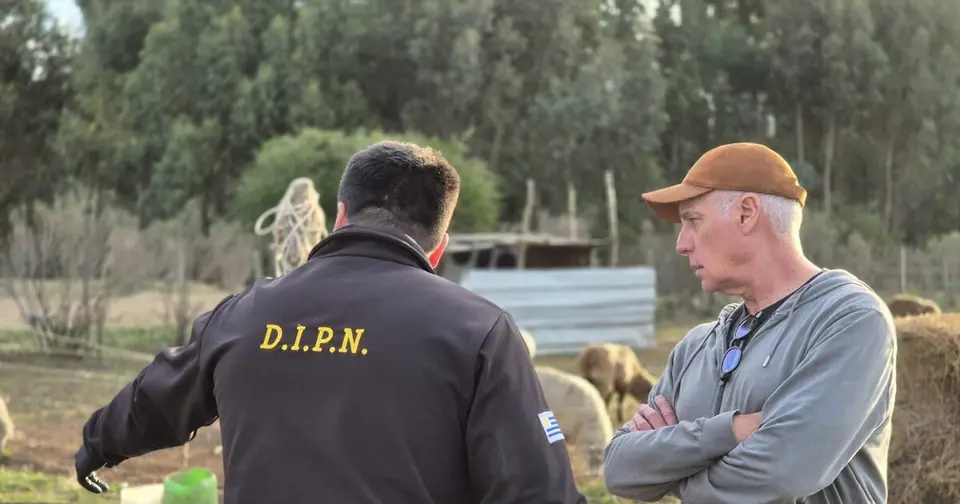
Two attacks in less than two months sound alarm bells in Uruguay
Two attacks against public officials in less than two months have brought the expansion of organised crime in Uruguay to the forefront, according to infobae.com. The most serious was an intrusion into the home of Attorney General Mónica Ferrero, where criminals left a grenade in the patio and fired on several occasions. "Fifteen centimetres and they would have killed her," Ferrero herself declared.
Weeks later, the headquarters of the National Rehabilitation Institute — the agency that manages the country's prisons — became the target of another attack, interpreted as a message directed at its director, Ana Juanche.
"Link" between the attacks and organised crime, according to the minister
Interior Minister Carlos Negro characterised both incidents as "the repercussion of organised criminality" during his appearance before a commission of the Chamber of Deputies on 26 November. Negro, who was a homicide prosecutor before taking office in the government of Yamandú Orsi, stated that there is a "link" between organised crime and the two situations.
The official described Uruguay as a country at an "inflection point" in terms of security, with criminality that in recent decades has become "more violent, more complex and more connected to regional illegal markets".
"We continue to be a country with strong institutions and low levels of corruption. However, the data show a sustained increase in homicides, extortion, cybercrimes, offences associated with drug trafficking, as well as the nascent intervention of gangs in some territories," Negro told legislators, according to the verbatim record of the meeting.
Family clans, local gangs and transnational networks
The minister detailed the profile of active criminal groups. "Organised crime in Latin America, and also in Uruguay, is an extremely varied phenomenon: from family clans and local gangs, as may be the case today in our Uruguay, to bands with regional reach and transnational networks associated with global illicit economies," he said.
For the government, the phenomenon is not exclusive to the country but part of a "regional trend", driven by the manoeuvrability of these organisations and the diversification of their activities.
Structures that mutate and operate as franchises
A second characteristic highlighted by Negro is the adaptability of these organisations. "Criminal organisations fragment, merge, migrate, diversify their operations or change their structure according to market pressures, territorial disputes amongst themselves or state interventions," he stated. He cited as an example the expansion of Brazil's Primeiro Comando Capital into Peru, Ecuador, Venezuela and Chile.
The groups, he added, abandoned "rigid" hierarchical structures to adopt "more flexible networks" based on intermediaries. "Today criminal organisations count on the participation of brokers, that is, elements that operate as hinges, as links in the sale of certain brands, because criminal organisations, at the Latin American level, have brands. Those brands then operate as franchises," the minister explained.
Legal actors infiltrated in the illicit market
A third element that concerns the government is simultaneous diversification into several illegal markets. Negro also flagged as a "worrying" phenomenon the participation of actors from the legal sphere: businessmen — some of "prestige" — professionals "of note" and politicians.
"This interpenetration between the illegal and the legal is one of the most relevant characteristics of the contemporary phenomenon of the drug market and other illicit goods and services," the minister stated.
The assessment was presented by Negro as the foundation for promoting a new national security plan, with which the government seeks to construct a "Uruguay model" to confront the advance of organised crime.
Source: Google News UY — Crime