Police corruption network in San Bernardino: 90 arrested following drug planting and extortion
A merchant's refusal to pay a bribe triggered intervention by the National Bolivarian Police (PNB) command in San Bernardino, Caracas, uncovering a network of evidence planting, extortion and drug trafficking.
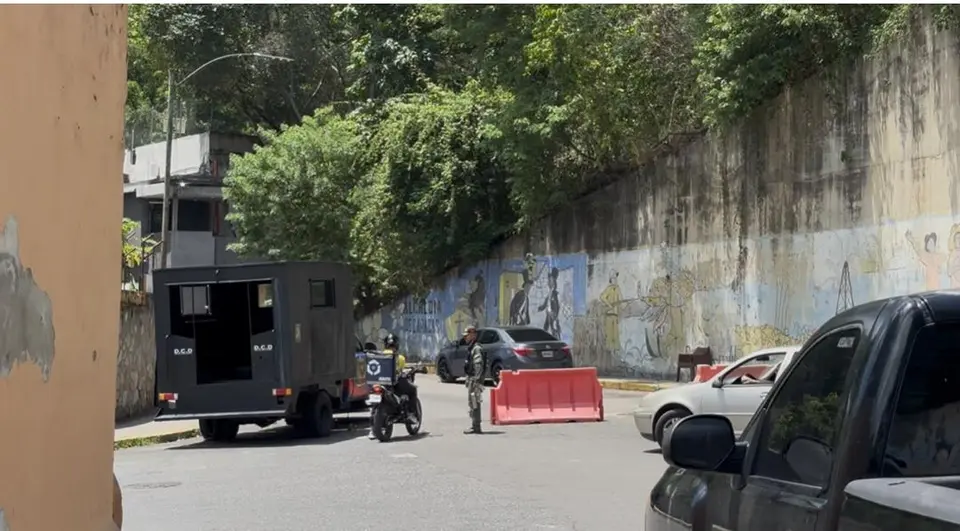
PNB San Bernardino case: how a merchant detonated the collapse of a criminal network within the police
The refusal of a merchant detained in Petare to pay a police extortion payment triggered, according to elpitazo.net, a judicial investigation that ended with the intervention of the National Bolivarian Police (PNB) command in San Bernardino, Caracas, the dismissal of flagrancy prosecutors and the discovery of drug shipments diverted towards the black market. To date there are at least 90 people detained.
Officers arrested the citizen on the accusation of possessing 300 grams of cripy marijuana and demanded money not to process him formally. The detainee refused payment and requested that the case file be transferred to the Public Ministry (MP) to defend his innocence before the courts.
The case reached preliminary hearing on 26 August before the 34th Control Court of Caracas, presided over by judge María Gabriela Cardozo. The defence invoked the doctrine of the fruit of the poisonous tree, arguing that the three custody chain registration forms presented by the PNB lacked witnesses, had procedural defects and violated the Unified Custody Manual.
In the absence of valid evidence, Judge Cardozo issued a definitive stay of proceedings and ordered the merchant's full release, also noting that the Prosecution had failed to remedy the detected errors. The 91st prosecutor of the MP, Wilmer Becerra, appealed the decision in the same courtroom with suspensive effect, freezing the release warrant while the case climbed through the judicial system.
The irregularity that alerted the penal circuit president
The case attracted the attention of Dr Jhon Enrique Parody Gallardo, new president of the Penal Judicial Circuit of the Caracas Metropolitan Area, who assumed office with the backing of the Full Chamber of the Supreme Court of Justice. Upon reviewing the case file, Parody Gallardo detected that the prosecutor was refusing to present a key custody chain form.
Rigorous tracking of that document revealed that dozens of seizure forms processed by the same San Bernardino command shared the same irregular fate: confiscated drugs disappeared from the judicial system without their whereabouts being registered.
As the administrative investigation advanced, Chamber 6 of the Court of Appeals of Caracas—presided over by judge Hennit Carolina López Mesa, together with magistrates Álvaro J. Martínez Flórez and Evelyn Borrego Navarro, with the assistance of clerk Tuval R. Villanueva—resolved the prosecutor's appeal on 28 August. The Court revoked the merchant's release, arguing that errors in completing the forms did not destroy the probative value if chemical expert reports existed that confirmed the substance.
By that point, however, the judicial authorities had already established that the poorly completed forms were not isolated oversights, but a deliberate mechanism to generate legal loopholes in case files, extort citizens and retain drugs for later sale.
Intervention on 19 September: a tonne of cripy and motorcycles with filed-down serials
The seriousness of the findings motivated a deployment that was not delegated to Conas, but to the Strategic Operations Group (Goes), the Anti-Drug Directorate of the Body of Scientific, Penal and Criminalistics Investigations (Cicpc) and the Brigade for Special Actions (BAE).
Upon raiding the PNB headquarters in San Bernardino on 19 September, the commissions found three civilians detained at the command without having been reported to the judges. The investigation confirmed that the officers had previously seized one tonne of cripy in blocks from eight people, but instead of filing the shipment, they concealed the procedure and used the command itself as a distribution centre. By the night of the intervention, they had already sold between 400 and 500 blocks.
The operation forced the evacuation of the command and the arrest of its director, Juan Romero, subsequently subjected to interrogation. At the location the authorities confiscated half a tonne of remaining drugs and 45 motorcycles bearing PNB insignia whose chassis and engine serials were completely filed down, an irregularity that was handed over to the Office of the Comptroller.
Prosecutors dismissed and extension of investigation to strategic materials
The penal intervention resulted in the dismissal of prosecutors assigned to the Flagrancy Chamber of the Penal Judicial Circuit of Caracas. The investigation, conducted by the 7th National Prosecution, determined that those officials operated in direct complicity with the PNB of San Bernardino: they would travel to the police command to take statements from those being investigated and order releases directly after collection of extortion payments, thus preventing the detainees from appearing before the court of justice.
According to elpitazo.net, the Ministry of Interior, Justice and Peace extended investigations upon detecting the disappearance of more than one billion metric tonnes of strategic materials seized since the enactment of its special law, amongst them rebar, cement, steel and aluminium that were required to remain under State custody and whose whereabouts are unknown.
The PNB headquarters in San Bernardino remains in the custody of Cicpc and National Guard commissions whilst the penal process advances towards senior command who would have shielded the network. Authorities have not issued an official public statement on the case.
Source: Google News VE — Caracas