Jamaica's Murder Rate Drops 43% as Foreign Aid Programs Failed for Decades
Jamaica's homicide rate has fallen sharply since 2022, bucking a regional trend. Foreign-funded programmes spanning 25 years produced no measurable impact, almendron.com reports.
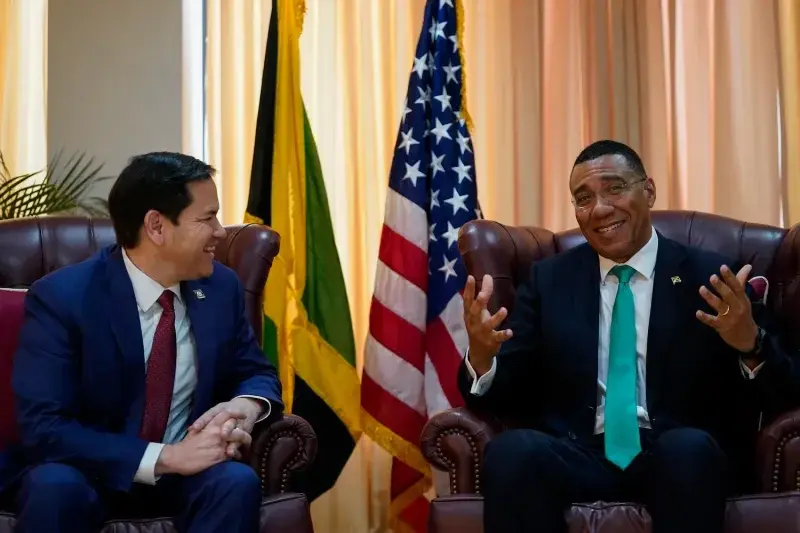
Jamaica cuts homicide rate by nearly half while Caribbean neighbours see surge
Jamaica recorded a 43 percent drop in homicides in the first seven months of 2025 compared to the same period in 2024, according to almendron.com — a decline that stands in sharp contrast to rising violence across much of the Caribbean.
The fall follows an 18.7 percent reduction between 2023 and 2024 and a nearly 8 percent drop between 2022 and 2023. If the trend holds through year-end, Jamaica's murder rate could fall below 25 per 100,000 people — a level not recorded since 1991.
The turnaround is directly linked to Prime Minister Andrew Holness's sustained focus on dismantling organised crime, a strategy he launched when he took office in 2016 and intensified with an aggressive crackdown earlier this year. The declining rate has become a central rallying point for his centre-right Jamaica Labour Party ahead of the September 3 general elections.
Neighbours see the opposite trend
Elsewhere in the Caribbean, gang-linked shootings continue to push homicide rates upward. Barbados recorded a 138 percent surge in its murder rate between 2023 and 2024, rising from 7 homicides per 100,000 people to nearly 18. In 2023, seven of the ten countries with the highest homicide rates in Latin America and the Caribbean were English-speaking Caribbean states.
Decades of foreign programmes, no measurable effect
Over the past quarter-century, the United States Agency for International Development (USAID) financed a series of violence-reduction programmes across the Caribbean. None produced a measurable reduction in national murder rates anywhere in the region.
The programmes carried names that reflected their ambitions. The Peace and Prosperity Project, running from 2001 to 2004, focused on community policing and conflict resolution. Community Empowerment and Transformation — known as COMET — combined civic engagement with community policing between 2006 and 2012. A second iteration, from 2014 to 2019, directed small grants to youth clubs and citizen journalism, adding climate resilience and disaster risk reduction to its remit.
The final years of USAID involvement brought Shoot Hoops, Not Guns, a basketball initiative targeting gang recruitment that ran from 2020 to 2025, and Empower, a five-year, $3 million programme supporting at-risk youth through education and job training.
Jamaica's murder rate was 34 per 100,000 in 2000. By 2024 — the last full year of USAID programming — it had risen to 41 per 100,000. The Trump administration substantially drew down USAID this year. The rebranded operation under the State Department does not appear to have incorporated the lessons of its predecessor.
Shared flaws in approach
These projects shared several structural characteristics: branded identities, delivery through US-based intermediaries, and a consistent refusal to confront the forces driving violence — armed territorial competition between criminal organisations operating in undergoverned spaces. In Jamaica, that primarily means informal communities whose residents lack property titles and access to basic services, communities sustained partly through clientelist politics.
US-backed programming also drew no distinction between different categories of violence — domestic, interpersonal, violence against children, or gang-related — despite gang activity accounting for 70 to 80 percent of Jamaican murders.
The United Kingdom, the Inter-American Development Bank, and Canada co-funded the Citizen Security and Justice Programme between 2001 and 2020, one of Jamaica's largest and longest-running security initiatives. Despite nearly two decades of investment in parenting programmes, entrepreneurship training, skills certification, and conflict resolution, it produced no measurable reduction in the country's murder rate or in the communities where it operated.
$2.5 billion spent, murder rate unchanged
Between 2007 and 2017, foreign donors and Jamaican taxpayers spent approximately $2.5 billion on social interventions designed to divert youth from gangs. These included school safety efforts, life skills training, psychosocial support, job placement, entrepreneurship coaching, and parenting programmes. Jamaica's murder rate in 2007 stood at 58.64 deaths per 100,000 people. In 2017, it was 58.65.
Research challenges the assumptions underpinning many of these initiatives. Data from Jamaica and other high-murder-rate countries indicates that unemployment, inequality, and low education levels are not the primary drivers of gang violence. More decisive factors include gangs' political patronage and territorial control, combined with the state's low detection rates and historical tolerance of informal settlements.
A 2019 study of Jamaica and Barbados found that greater participation in organised sports correlated with increased delinquency — findings that ran counter to the logic of Shoot Hoops, Not Guns. That programme reached 190 primary school children in Jamaican gang strongholds between 2023 and late 2024. Evidence from other countries, including elsewhere in the Caribbean, suggests that such interventions can further entrench criminal organisations by channelling resources into communities where gangs already control access and distribution.
Source: Google News JM — Crime