EU Parliament mission: Malta corruption probes too slow, whistleblowers too afraid to speak
A European Parliament fact-finding mission found Malta's high-level corruption investigations move too slowly and whistleblowers fear retaliation. The country's anti-corruption body has never referred a case for prosecution in nearly 40 years.
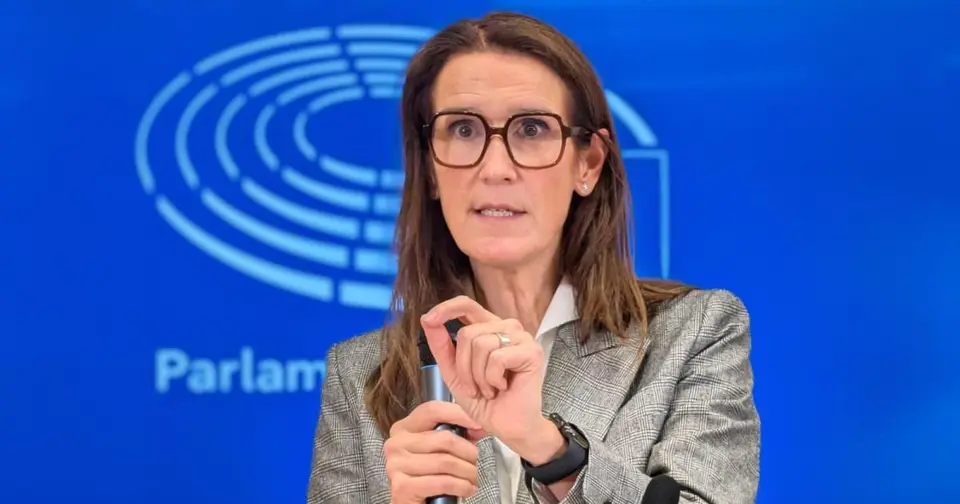
EU mission condemns pace of Malta's corruption cases and inadequate whistleblower protection
A European Parliament fact-finding mission has concluded that high-level corruption investigations in Malta proceed too slowly and that whistleblowers remain too afraid to come forward, Times of Malta reports. The mission, operating under the EP's civil liberties and rule of law committee, also found that Malta's Permanent Commission Against Corruption is largely ineffectual — having never referred a case to the Attorney General since its establishment in 1988.
Sophie Wilmès, the Renew group MEP who chaired the six-person sub-committee, presented the mission's findings on Tuesday evening after two days of meetings on the island.
The mission was prompted by the acquittal of Yorgen Fenech, who was found not guilty on 2 September of conspiring to murder journalist Daphne Caruana Galizia. The verdict shocked Malta and raised questions about the jury system, the Attorney General's handling of the case, and the police investigation that preceded it.
During its stay, the sub-committee met with the government, the opposition, the judiciary, Caruana Galizia's family, and members of civil society.
A verdict the committee declined to revisit
Asked whether the committee believed something had gone wrong on the day of the verdict or in the proceedings leading up to it, Wilmès declined to pass judgment.
"One mandate that we don't have is to judge instead of the judges. We are not doing that," she said. "It is not for us to say anything about the case or how it has been judged. What we know is that nine years after, the person who commissioned the assassination has not been punished for his crime."
Wilmès did note, however, that many witnesses who spoke to the committee said the not-guilty verdict did not reflect the evidence presented.
The jury system under scrutiny
The jury system itself came up repeatedly during the mission's meetings. Under Maltese law, nine jurors drawn from the general public decide the outcome of cases carrying a maximum penalty of life imprisonment.
"Jurors' way of functioning has been brought up in many conversations as something that needs reform, especially in high corruption cases like this one," Wilmès said, adding that a large number of people told the committee the current arrangement does not suit such proceedings.
Wilmès was careful not to present jury reform as a remedy in itself: "Do we believe this is the magical solution to everything? This is not for us to say."
Nine years without a conviction
The mission chair was more direct on the absence of accountability. No one has been convicted of ordering the assassination of Caruana Galizia, nearly a decade after her death.
"With all due respect to the judicial system, this is a shame. Because behind the case, there is a family still waiting for justice and accountability, and there is a population eager to know that their system works. I want to reaffirm today that we stand with them, as we always have, in their fight for justice," Wilmès said.
She cited European Commission data estimating that serious criminal cases in Malta take nearly eleven years to resolve — the longest projected timeframe in the EU.
"Justice delayed means prolonged uncertainty for victims, families and defendants alike," Wilmès said. "Those delays also undermine the effectiveness of proceedings and public trust in the justice system."
Too few judges and outdated procedures
Wilmès identified several structural causes for the delays. Despite recent efforts to enlarge the bench, Malta still has too few judges. She also cited "outdated procedures" and incomplete digitalisation as factors slowing down proceedings.
Pressed to identify which specific procedures she meant, Wilmès declined to single out individual provisions.
"When I'm speaking about outdated court procedures, I am referring to the reforms called for by the profession. All the discussions that we had were pointing to a full reform — no one wanted to point out this part or that part of the system, but more of a total system which needed to be reformed," she said.
No progress on high-level corruption
While acknowledging improvements in Malta's anti-corruption efforts overall, Wilmès said major shortcomings remain, particularly in the speed of investigations and prosecutions.
"There are no signs of speeding up high-level corruption investigations and zero progress in building a strong record of final judgments. Daphne's case is a striking example: nine years after she was assassinated for her investigative work, major corruption cases linked to her reporting remain unresolved in the courts," she said.
Wilmès questioned whether people in Malta felt safe enough to report corruption. New reporting tools have been introduced, she said, but protection for whistleblowers remains insufficient and fear of retaliation continues to suppress disclosures.
"Indeed, a system cannot investigate wrongdoing if those who know about it are afraid to speak," she said.
Anti-corruption body has never prosecuted anyone
The Permanent Commission Against Corruption drew particular criticism. Wilmès noted the body has only three part-time members and has not received any corruption reports, nor established that corrupt practices occurred, since 2023.
"Oddly enough, it has not received any reports on corruption, nor has it established that there had been a corrupt practice since 2023, and it has never referred a case to the Attorney General for prosecution since its establishment in 1988," she said.
Wilmès concluded that if Caruana Galizia's investigations were published today, the current system would still fail to deliver meaningful public protection or proper prosecution.
"Indeed, if some efforts have been made since 2017, they have not led to significant developments," she said.
Source: Times of Malta