Novichok inventor Vladimir Uglev dies aged 80 amid Salisbury poisoning links
Vladimir Uglev, a Russian scientist who helped develop the Novichok nerve agent used in the 2018 Salisbury poisonings, has died aged 80 under unexplained circumstances.
Russian Novichok scientist dies as Salisbury inquiry concludes Putin bore moral responsibility
Vladimir Uglev, one of the scientists who helped develop the Novichok nerve agent later used in the 2018 Salisbury poisonings, died on 26 October aged 80, bbc.com reports. His cause of death has not been established, and the circumstances surrounding his death remain unclear. Uglev had previously accused the Kremlin of deploying the chemical weapon he developed in what he described as a "state-level hit".
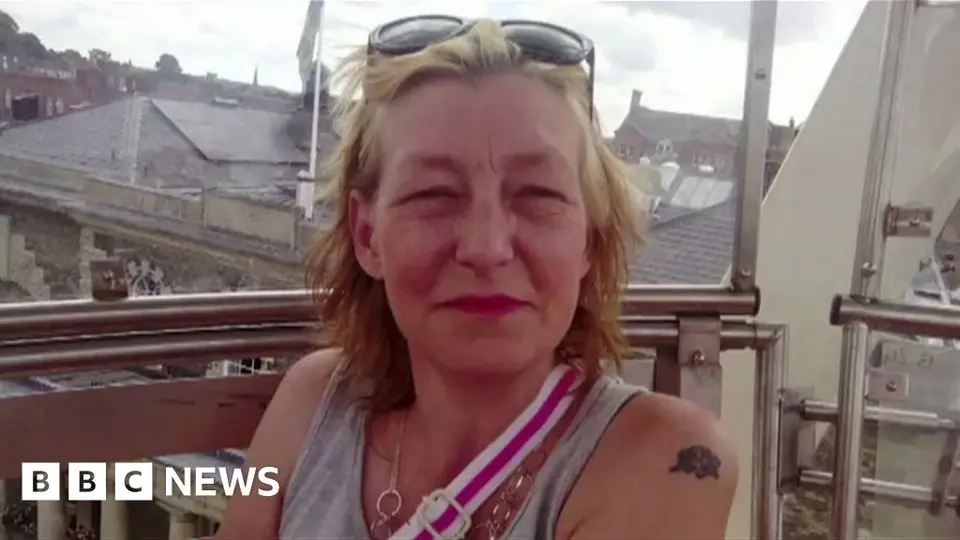
The death comes as the final inquiry report into the killing of Dawn Sturgess — the only person to die as a direct result of the Salisbury Novichok attack — concluded that Russian president Vladimir Putin was "morally responsible" for her death.
Dawn Sturgess: a fatal encounter with a discarded perfume bottle
Sturgess, a 44-year-old mother of three, died at Salisbury Hospital on 8 July 2018 after spraying herself with the contents of a perfume bottle she believed to be a gift. The bottle, found by her partner Charlie Rowley in a charity collection bin on 27 June, contained a "significant amount" of Novichok — enough, the inquiry heard, "to kill thousands".
Sturgess collapsed at Rowley's home in Amesbury, approximately seven miles from Salisbury, on 30 June, shortly after using the perfume. Rowley also fell ill but was discharged from hospital on 20 July. A murder inquiry was launched following her death.
The Skripal attack: a targeted assassination attempt
Sturgess's death was linked directly to the attempted murder of former Russian double agent Sergei Skripal and his daughter Yulia, who were poisoned in Salisbury on 4 March 2018. The pair were found collapsed on a bench in a shopping centre after having lunch in the city. Investigators later established that Novichok had been applied to the doorknob of Skripal's home.
The nerve agent was identified by experts at the Defence Science and Technology Laboratory at Porton Down, Wiltshire. Yulia Skripal was discharged from hospital on 9 April; her father followed on 18 May. Both are believed to have made a full recovery, though their whereabouts have been kept secret for their protection.
Skripal had been convicted in Russia of spying for Britain's MI6 and jailed in 2006 before being pardoned and permitted to settle in the UK in 2010. His wife, son and older brother had all died in the two years preceding the attack.
Detective Sergeant Nick Bailey, the first officer to enter the Skripal house, spent nearly three weeks in hospital. The inquiry also heard that a young boy, to whom Skripal had given bread to feed ducks, also became unwell.
Two intelligence officers identified — and a third suspect named
Then Prime Minister Theresa May identified two suspects who had travelled from Moscow to Gatwick Airport on 2 March 2018, using the names Alexander Petrov and Ruslan Boshirov. CCTV footage placed them in Salisbury the day before the attack; they returned to Moscow on the evening of 4 March.
The men were subsequently identified as Russian military intelligence officers Anatoliy Chepiga and Alexander Mishkin. They appeared on Russian television claiming to have visited Salisbury as tourists interested in the cathedral spire. Downing Street dismissed the account. A third suspect, Denis Sergeev — operating in London under the alias Sergey Fedotov — was later named by investigators.
President Putin denied any involvement at the time.
Inquiry: attack was "astonishingly reckless", intended as a show of Russian power
The inquiry, chaired by Lord Anthony Hughes, took six weeks of public evidence in late 2024, followed by private sessions in January 2025 at which classified material from the UK security services was presented. Its final report was published in December 2025.
Lord Hughes described the circumstances of Sturgess's death as "clear but also quite extraordinary" and said her condition had been "unsurvivable". "I am sure that no medical treatment could in fact have saved her life," he stated. He characterised her death as collateral damage from the plot against the Skripals — an operation designed, he said, as "a public demonstration of Russian power".
The report concluded that all those involved in the assassination attempt — including Putin, who authorised the attack "at the highest level" — bore moral responsibility for Sturgess's death.
Prime Minister Sir Keir Starmer described the case as a "grave reminder of the Kremlin's disregard for innocent lives" and "reckless aggression".
Novichok: a Soviet-era weapon
Novichok — meaning "newcomer" in Russian — refers to a group of advanced nerve agents developed by the Soviet Union during the 1970s and 1980s. The chemicals disable the nervous system and are highly lethal even in minute quantities. They can take the form of powder, gas or liquid; in liquid form, Novichok can penetrate the skin. Transport requires sealed containers and full protective clothing.
Uglev, whose death now adds a further unexplained dimension to the Novichok story, had been one of the few scientists publicly known to have worked on the programme's development.
Source: The Sun