Nuneaton family campaigns to close 10-year murder sentencing gap
The family of Megan Newborough, killed at home in 2021, are pushing for reform of sentencing laws that set a lower starting point for domestic murders.
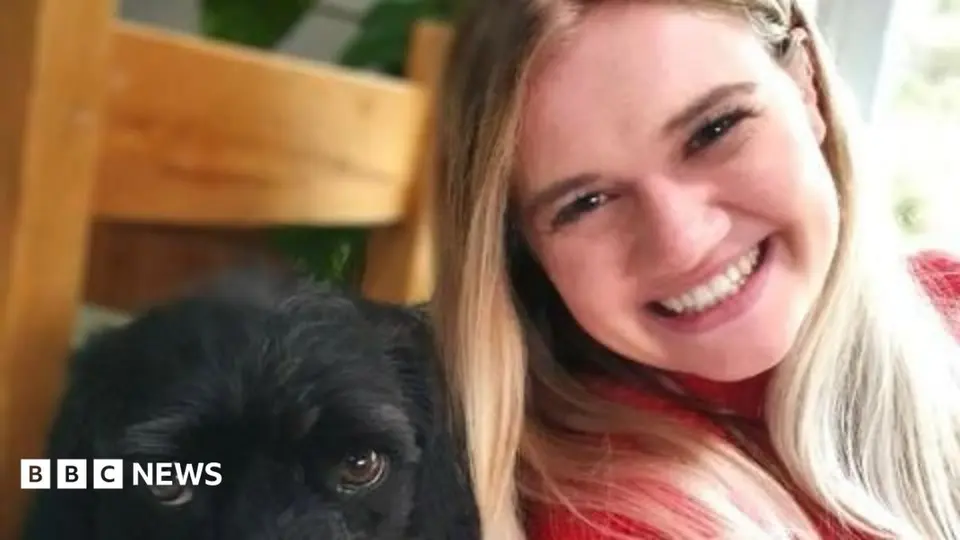
Family of Nuneaton murder victim calls for sentencing law reform
The parents of Megan Newborough, 23, who was killed by her boyfriend at his home in August 2021, are campaigning to close a decade-long gap in sentencing starting points for murders committed inside the home versus on the street, bbc.co.uk reports.
Ross McCullam, 30, was convicted of Megan's murder and handed a life sentence in 2022, with a minimum term of 23 years. Her body was found in the Leicestershire countryside after she was killed at McCullam's home in Nuneaton, Warwickshire. He had initially admitted manslaughter but denied murder.
Her father, Anthony Newborough, told the BBC the family were "hugely shocked by the disparity" in sentencing they discovered after her death. "She was murdered in the home using a knife — strangled, then killed by a knife," he said. "Because it was in the home, the starting point was 15 years. We learned after that if the murder with the knife had happened outside the home, the starting point would have been 25 years."
A gap written into law
Paul Prior, the prosecutor at Leicester Crown Court during McCullam's trial, explained that the framework is set out in Schedule 21 of the Sentencing Act 2020, which establishes three sentencing starting points: 15 years for murder, 25 years where a defendant brought a weapon to the scene, and 30 years for particularly sadistic crimes.
Prior noted that sentencing judges must weigh all relevant factors before adjusting up or down from those starting points. "The argument being made is that that gulf between 15 and 25 years as a starting point is too great," he said.
The Ministry of Justice had previously indicated it intended to close the gap, with the first phase of a review of homicide law set to conclude.
Killed Women campaign
Megan's parents have been working with the group Killed Women, which supports families of women killed by men, to push for legislative change. Anthony Newborough said the goal was to get "these murderers locked away for a lot longer."
"Hopefully other families won't have to go through the pain and suffering — they'll go through pain and suffering, but at least they'll know that the murderers will be locked away for a lot longer," he added.
Elaine Newborough described the daily reality of life since losing her daughter. "Every day you kind of get up, put the mask on and just carry on regardless, basically. But it doesn't take away from the fact that you miss her every second of the day," she said.
She emphasised the importance of victims' families having a voice in shaping policy: "It's great that victims' families like ours and other agencies are able to give a voice to our side of the story — to help influence, or we hope influence, the decision makers and the policymakers."
Foundation and documentary
The Newboroughs have also established the Megan Newborough Foundation to support campaigns against violence against women and the charity Dogs Trust, a cause chosen because Megan had a dog, Frank, whom she "loved very much."
Megan's case was recently featured in a Channel 4 documentary, 999 What Happened Next. Her parents said the programme was part of their effort to "keep her legacy alive and keep talking about her."
"It gives us a focus. It is very difficult," Elaine Newborough said.
Source: Google News UK — Crime (en)