Prince Andrew's legal challenge against Thames Valley Police reaches High Court
The first hearing in Andrew Mountbatten-Windsor's challenge over police search warrants takes place at the British High Court on Thursday. He was arrested in February on suspicion of misconduct in public office.
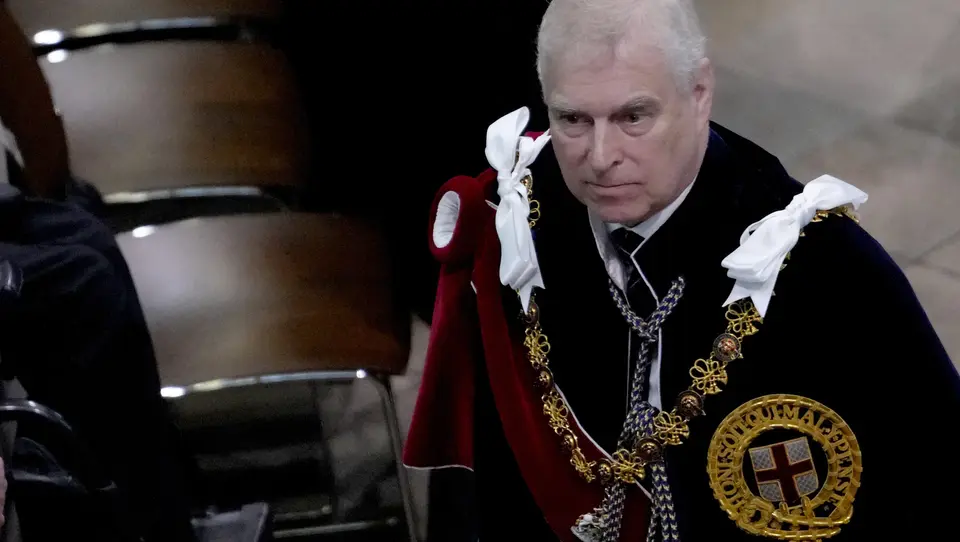
Andrew Mountbatten-Windsor brings search warrant challenge to High Court
The first hearing in Andrew Mountbatten-Windsor's legal challenge against Thames Valley Police is scheduled for the British High Court on Thursday, irishexaminer.com reports.
The former British prince is contesting the lawfulness of search warrants issued by a judge at the Old Bailey. Those warrants authorised officers to raid his residence on the Sandringham Estate and his former Windsor home, Royal Lodge, in February.
Andrew was arrested on 19 February — his 66th birthday — on suspicion of misconduct in public office. The arrest followed allegations that he had shared sensitive information with Jeffrey Epstein during his tenure as the UK's trade envoy. He was interviewed under caution before being released under investigation, and denies any wrongdoing. Thames Valley Police confirmed on 24 February that searches of both properties had concluded.
Access to documents at issue on Thursday
The Royal Courts of Justice will hear Thames Valley Police's application to restrict press and public access to documents relating to the claim. The hearing before Mr Justice Hilliard is scheduled to begin at 2pm. Proceedings will open in private, with a judgment expected to be delivered subsequently in open court.
It is not known whether Andrew will attend. No details of his challenge have been confirmed publicly.
Court rules establish a general principle that members of the public and the press may access certain documents that form part of legal challenges, subject to conditions. However, parties or individuals identified in documents may apply to have that access restricted or limited to edited versions.
Grounds for challenge
Sean Caulfield, a partner at law firm Hodge Jones and Allen, outlined several potential grounds on which the lawfulness of a warrant could be challenged.
"The police may have gone beyond the remit of the search warrant; for example, there could be outbuildings or vehicles or secondary addresses that were not covered in the first grant of the search warrant," he said.
Caulfield added that a judge could have "misconstrued what he was told and gone beyond the test in the legislation in granting the search warrant, and it would therefore be invalid due to a mistake the judge made." Procedural errors relating to dates and signatures could also render a warrant invalid, he noted, though he described all such scenarios as "quite unlikely."
Caulfield said he believed Andrew could receive compensation if successful, and estimated the legal bill had already run into tens of thousands of pounds.
Royal funding ruled out
The legal definition of misconduct in a public office covers a broad range of conduct, including sharing confidential financial information, wilful neglect of duty, sexual misconduct, corruption, perverting the course of justice, and conduct leading to personal gain.
Late last year, King Charles stripped his brother of his right to the title of prince and his dukedom, citing Andrew's association with Epstein. A Buckingham Palace source confirmed on Monday that Andrew had been told he could not use money from the annual stipend drawn from Charles' private funds to finance the legal action.
Source: Google News IE — Crime (en)