Swindon husband drugged wife for 13 years: four men convicted, calls grow for consent law reform
Four men have been convicted of sexually abusing Joanne Young, whose husband drugged and advertised her for sex. Calls are mounting to reform the Sexual Offences Act 2003.
Swindon abuse trial sparks calls to close 'third-party consent' loophole
Four men were found guilty at Winchester Crown Court on Thursday of sexually abusing Joanne Young, a Swindon woman whose husband Philip Young had drugged her and recruited strangers to assault her over a 13-year period, the Evening Standard reports.
Former Tory councillor Philip Young used platforms including Craigslist, Grindr and Fab Swingers to advertise his wife for sex. Each of the four defendants — strangers to one another — argued they had been misled by Young and believed Mrs Young was consenting. Prosecutors said the men had failed to seek her consent at any point.
The CPS described the trial as the first of its kind in the United Kingdom.
---
The verdicts
Norman Macksoni, 48, of Sharnbrook, Bedfordshire, was found guilty of one charge of rape. Richard Wilkins, 62, of Toothill, Swindon, was convicted of one count of rape and one of assault by penetration. Connor Sanderson-Doyle, 32, of Swindon, was convicted of sexual assault by penetration and sexual touching. Mohammed Hassan, 38, of Swindon, was found guilty of one count of sexual touching.
Philip Young himself had already pleaded guilty to 56 charges, including 11 counts of rape, 11 of administering a substance with intent, 14 of voyeurism, seven of assault by penetration and four further charges.
---
"No one should be able to give consent on your behalf"
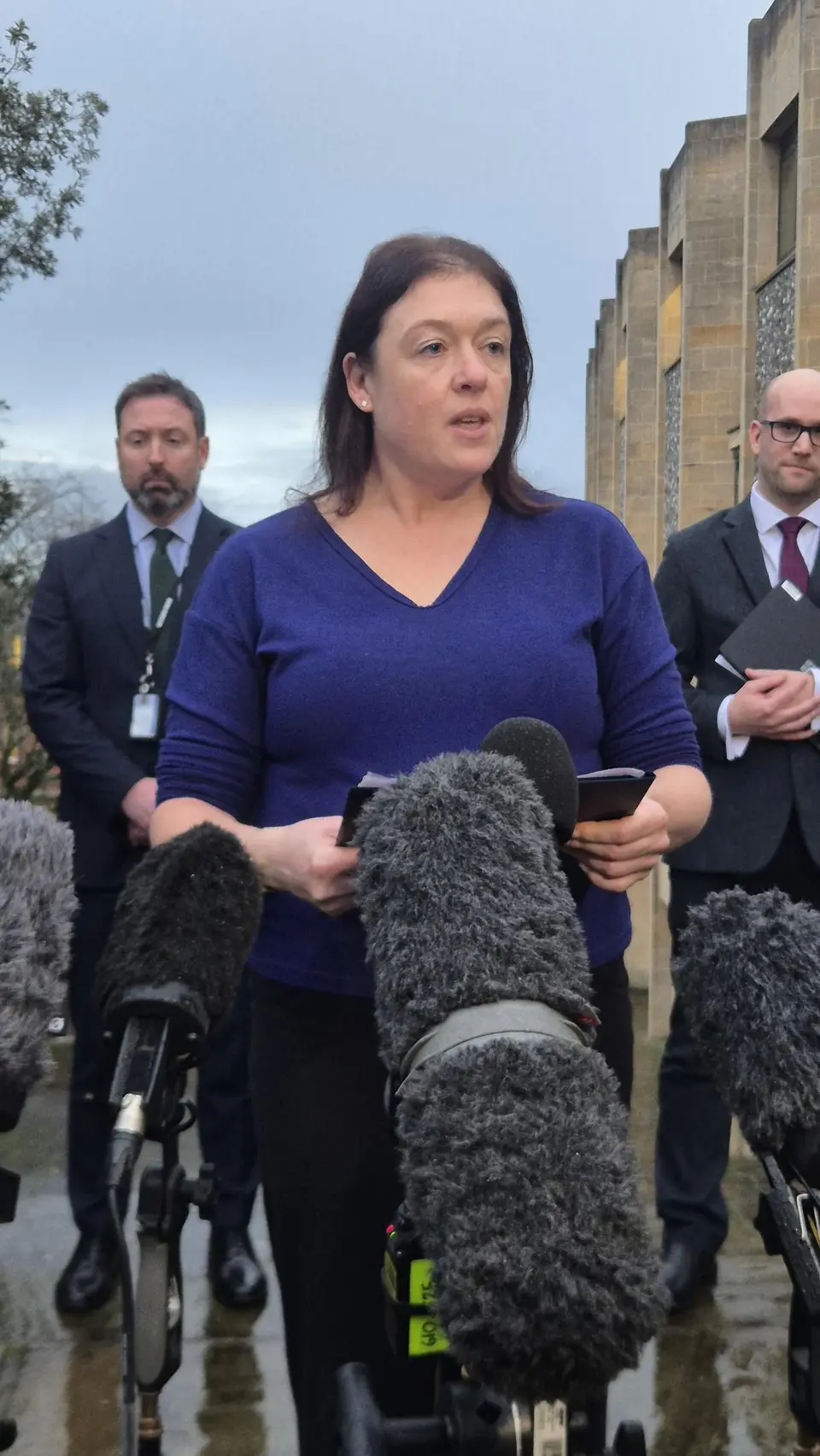
Speaking outside the court after the verdicts, Joanne Young, 49, said: "No one should be able to give it on your behalf. I urge the government to look at this as a priority so that women are properly protected in future."
Her daughter Alex echoed the call in a statement shared on LinkedIn, calling for the Sexual Offences Act 2003 to be reviewed and updated. "We live in a world where there is debate over whether third-party consent is enough to have sex with someone," she wrote. "We live in a world where someone's partner can consent for them, and that is enough to use it as an argument in a court of law. It has been 23 years since this was last updated. Society has progressed, crime has progressed. So why hasn't the law progressed with it?"
The Sexual Offences Act 2003 defines consent as a person agreeing by choice, with the freedom and capacity to make that choice. Critics argue the legislation contains no explicit prohibition on a defendant claiming that a third party — such as a spouse — provided consent on the victim's behalf.
---
Politicians and prosecutors respond
James Foster, the specialist CPS prosecutor who led the case, said after the verdicts that Young "could not consent on his wife's behalf." He added: "None of these defendants was entitled to simply assume that she was willing — consent is personal, it cannot be given by somebody else, it cannot simply be assumed."
Former minister for safeguarding and violence against women and girls Jess Phillips told LBC on Thursday that the case was not isolated. "The ability of these men to find each other on websites that you and I could just log on to now — it just means that these cases are going to keep on coming," she said.
Phillips called for online safety laws to be reinforced, saying: "The state needs to make sure that its online safety laws and regulations are strong enough to stop this from ever being able to happen." She also said every website named in the case should be required to answer whether such abuse was still occurring on its platform, and whether pornographic sites could guarantee that consent had been sought in every video posted.
Asked whether there was a case for legislating against advertising another person for sex online, Phillips replied: "Absolutely," describing such exploitation of adults as "completely and utterly common" across the internet and subject to "very, very little regulation."
---
Charity warnings and echoes of the Pelicot case
Domestic abuse charity Refuge warned that unregulated online platforms had enabled offenders to conspire to commit sexual abuse. "Worryingly, this is not a standalone case," the charity said in a statement, adding that such abuse is "often facilitated by unregulated online platforms which allow abusers to not only commit vile acts, but recruit others."
A Refuge spokesperson drew a parallel with the 2024 French trial of Dominique Pelicot, who drugged his wife Gisele and invited 50 other men to abuse her, and was jailed for 20 years: "Echoing the case of Gisele Pelicot in 2024, the atrocities committed against Joanne by Philip Young and multiple other men are a clear reminder that, in the powerful words of Gisele, shame must change sides."
The Young investigation did in fact draw directly on the French proceedings. Police and prosecutors sought the expertise of the French investigation team, and the CPS engaged the same forensic expert used in the Pelicot case. That expert analysed hair samples from Joanne Young to demonstrate the presence of two sedative drugs her husband had used to incapacitate her.
---
Domestic abuse commissioner calls for a turning point
Dame Nicole Jacobs, the domestic abuse commissioner, said the verdicts should mark "a turning point" in tackling drug-facilitated sexual abuse. "Ultimately this case again highlights that we need to stop treating drug-facilitated sexual abuse as an isolated incident and recognise it for the form of horrific domestic abuse that it is," she said.
Source: Evening Standard