Alabama man jailed 31 years for murder discovers defence lawyer once represented KKK
Robin 'Rocky' Myers, sentenced to death in 1994 despite no DNA evidence, has learned his court-appointed lawyer previously defended the Ku Klux Klan.
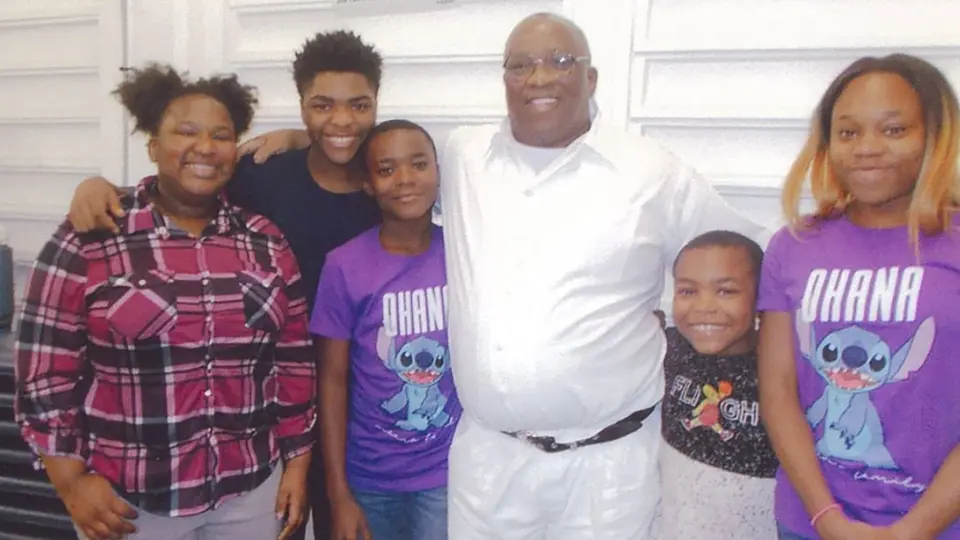
Alabama death row survivor's lawyer had defended the Ku Klux Klan, court papers reveal
Robin "Rocky" Myers has spent 31 years locked in an Alabama prison cell for a murder he says he did not commit. Now, according to abc11.com, the Black man whose death sentence was commuted earlier this year has learned that the attorney appointed to defend him in 1992 had previously represented the Ku Klux Klan in court.
Myers, 31 years into his incarceration at St. Clair Correctional Facility roughly 30 miles northeast of Birmingham, was convicted in 1994 of killing his white neighbour, Ludie Mae Tucker, who had been stabbed in the heart. Court documents confirm there was no DNA evidence linking him to the crime scene.
His conviction rested on circumstantial evidence and testimony from witnesses that Myers' lawyers described as unreliable. One witness later recanted. A nearly all-white jury recommended life without parole, but the presiding judge overrode that recommendation and imposed a death sentence.
Lawyer who defended the Klan
The attorney appointed to represent Myers in 1992 was John Edmond Mays. In the 1970s and 1980s, Mays had publicly defended the Ku Klux Klan in court proceedings. Most notably, he represented the United Klans of America during civil litigation following the 1981 murder of Michael Donald, a Black teenager whose body was found hanging from a tree in Mobile, Alabama. Donald had been kidnapped, beaten and killed by Klansmen — in retaliation for the acquittal of a police officer's killer, a case Donald had no involvement in — and to intimidate Black jurors.
In 1987, a court ordered the United Klans of America to pay seven million dollars to Donald's family. Richard Cohen, then president of the Southern Poverty Law Center and one of the lawyers representing the Donald family, confirmed that Mays had acted for the Klan in that case.
During proceedings, Mays described Donald's killing as a "gross and horrible atrocity" but argued the organisation itself bore no legal responsibility, according to a 1987 report in The Buffalo News.
Mays declined to speak directly to CNN but passed a statement through fellow attorney Richard Jaffe. "I took Rocky's case because I hate the death penalty and I felt I could provide him with effective representation," Mays said. Jaffe, who said he has Mays' permission to speak on his behalf, argued that Mays' earlier Klan representation does not diminish what he described as the "effective and passionate" advocacy Mays provided for Myers and other Black clients throughout his career. "It was not a popular thing for him to do in that small town. Think 'To Kill a Mockingbird,'" Jaffe told CNN. He added: "Rocky deserves a new trial, but not because of John."
Myers' son, LeAndrew Hood, offered a starker assessment. "He had a lawyer that didn't care about him," Hood told CNN.
Clemency granted, freedom still denied
For years Myers sat on death row as appeals failed. Then, in 2025, with his execution approaching, Alabama Governor Kay Ivey granted him clemency, commuting his sentence to life without parole. Ivey, a Republican and a staunch supporter of capital punishment, said sufficient uncertainty surrounded Myers' guilt that she could not allow the execution to proceed.
Clemency, however, did not amount to exoneration. Myers remains imprisoned, and his legal team has continued to pursue a full overturning of his conviction.
On 24 August, the Morgan County District Attorney filed a brief opposing Myers' petition to overturn his conviction. Four days later, Morgan County Circuit Court Judge Charles Elliott sided with the prosecution and rejected the petition. Myers' attorneys filed an appeal to the Alabama Court of Criminal Appeals on 8 October. No ruling date has been announced.
"I know I might live in prison until I die here," Myers wrote in a letter following the denial. "But I hope and pray for something more."
Trail of failures
Kacey Keeton, one of Myers' attorneys in his federal habeas proceedings — who represented him from 2007 until clemency was granted in 2025 — said the case revealed not a single isolated error but a sequence of systemic failures. "A Black person on trial for their life would not make that choice for that to be their lawyer," Keeton said, referring to the appointment of Mays.
Myers himself spoke to CNN by phone from the prison recreation yard, describing three decades reduced to the same walls and the same cell. "I've been locked up in one cell for 31 years. I don't want to be inside no more. When I get out, I don't want a house. I don't want an apartment. I want a car where I can drive everywhere," he said.
His case sits at the intersection of race, capital punishment and the enduring legacy of the Jim Crow era. When Myers was arrested, America was barely a generation past the formal dismantling of segregation. The Klan, though diminished, was still active — still organising, still appearing in court with legal representation.
Whether Alabama's courts will ultimately order a new trial for Myers remains unanswered. His appeal is pending. His family is waiting.
Source: Google News MT — Crime (en)