Black Dahlia murder: documentary team claims to know killer's identity and crime scene
A five-year investigation by filmmaker Jeff Thomas claims to have identified the Black Dahlia killer and the room where Elizabeth Short was murdered in 1947.
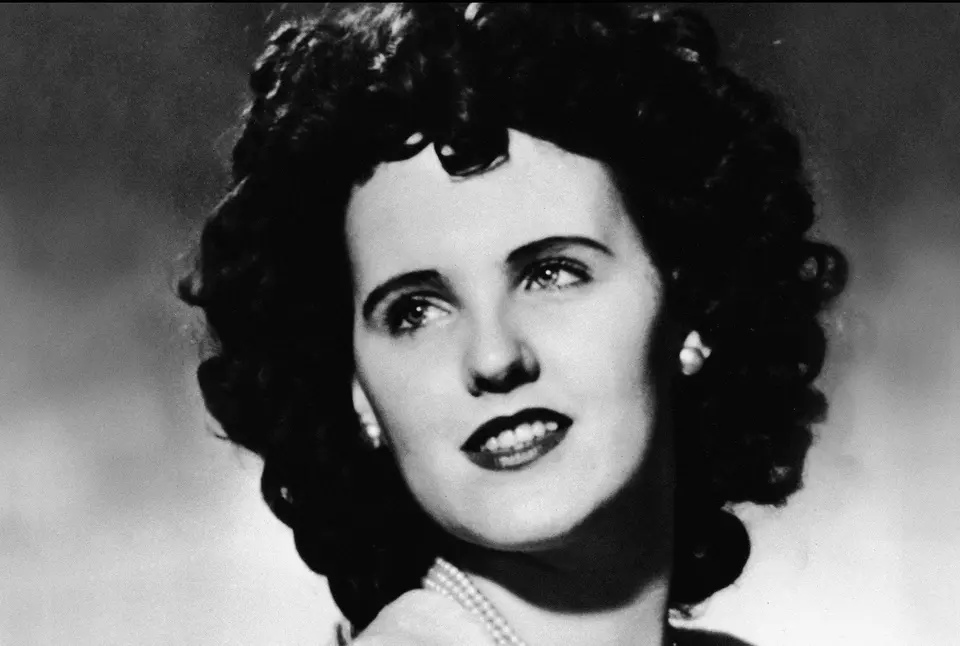
Documentary team says Black Dahlia case is close to being cracked
A documentary team led by producer Jeff Thomas of Talestorm Productions claims to have identified the killer of Elizabeth Short — known for generations as the "Black Dahlia" — and the precise location where she was murdered in 1947. Toronto Sun Crime reports that the findings are the result of a five-year investigation involving former homicide detectives, forensics experts and a retired district attorney.
"Her body was found on Jan. 15, 1947, and unfortunately a lot of heinous stuff had been done to her. It was a very brutal crime. It was a very ghastly crime," Thomas told the Toronto Sun. "She'd been drained of all her blood. She had massive trauma done to both her breasts, massive trauma to her face. And the big sucker punch is that she was bisected at the waist."
Short was 22 years old, originally from Medford, Massachusetts, and had moved to postwar Los Angeles with aspirations of making it in Hollywood. Her body was found dumped in plain sight on January 15, 1947, with no attempt at concealment. The case was never solved and became America's most infamous unsolved murder.
"Politically connected" suspect identified, name withheld
Thomas said his team assembled what he describes as an all-star group of investigators, including former Los Angeles County sheriff homicide detective Karen Shanka, who told him early on that the killer's name would surface in the files — and it did.
"Once we started getting all these files in, especially the ones that had not been released or seen the light of day in over 80 years, yes, it became quickly apparent there was one particular person of interest we wanted to focus on," Thomas said.
The suspected killer is described as politically connected and "a person of significance." Thomas said politics played a role in the original investigation from the outset, and that the LAPD detectives leading the probe — Harry Hansen and Finis Brown, described as the department's two best homicide investigators at the time — knew who was responsible. The team is not releasing the suspect's name at this stage.
Thomas added that the team believes the killer murdered others as well, and that nothing about the crime was accidental.
Crime scene found in a motel room still in operation
The investigation zeroed in on a specific motel — still in operation — as the location where Short was killed. Thomas said his team identified the correct room, and after removing decades of drywall, found what appeared to be blood evidence dating to the 1940s.
"On the walls we found a lot of blood evidence from the '40s," he said, attributing access to the decades-old material to the team's law enforcement connections.
Among the key claims: investigators believe they have identified the blunt-force instrument used to kill Short, who died of a brain haemorrhage. They also say they know the motive and have shared their evidence with the Los Angeles Police Department. Short's family co-operated with the team for DNA comparison purposes.
"We know where the scene of the crime was because where her body was found is not where she was killed. She was left there. She was posed there on purpose. We know the reason why she was posed that way as well. And we also know what the murder weapon was," Thomas said.
Petition demands LAPD release autopsy report
Thomas's team, together with Short's family, has launched a petition calling on the LAPD to release the long-sealed autopsy report and full case files. More than 10,000 people have signed it.
The findings will form the basis of an upcoming docuseries titled Deconstructing Dahlia, currently in production.
Thomas acknowledged that Short has often been misrepresented in earlier books, films and documentaries, which portrayed her variously as a vixen, a prostitute or a grifter. His team's portrait of Short, drawn in part from interviews with relatives in New England, was markedly different.
"I don't want to know anything more about the Black Dahlia. I just want to know about Elizabeth Short," Thomas said. The picture that emerged was of a friendly, warm young woman who was independent and travelled frequently — someone who, in Thomas's words, simply did not fit the postwar mould of returning to hearth and home.
Thomas said he is not typically drawn to true crime, but the Black Dahlia case is an exception. He described it as a cautionary tale rooted in the contradictions of postwar America, where Hollywood dangled the promise of stardom while young women navigated a world with few safeguards.
"Think about it in postwar America 1947," he said.
Source: Toronto Sun Crime