Duane 'Keffe D' Davis convicted of Tupac Shakur murder faces sentencing in Las Vegas
Duane 'Keffe D' Davis, the only person ever charged in the 1996 killing of Tupac Shakur, faces life in prison without parole at Tuesday's sentencing.
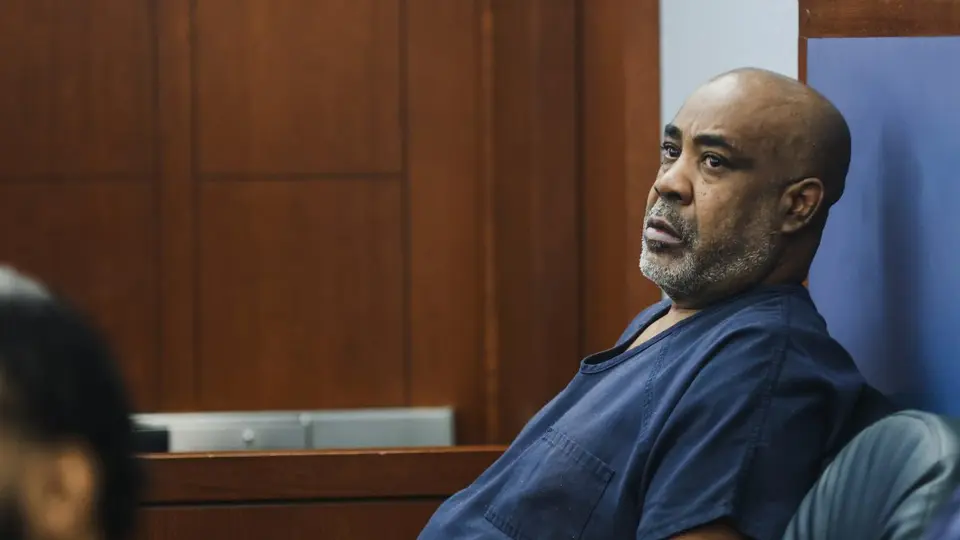
Las Vegas court to sentence sole defendant in Tupac Shakur's 1996 murder
Duane "Keffe D" Davis stood before a Las Vegas courtroom Tuesday for sentencing after a jury convicted him in August of first-degree murder for orchestrating the killing of rapper Tupac Shakur nearly three decades ago, nbclosangeles.com reports. Davis, 63, faces a maximum sentence of life in prison without the possibility of parole.
The verdict was returned just hours after closing arguments concluded in the roughly two-week trial held in a Nevada courtroom. A panel of ten women and six men heard testimony from 24 prosecution witnesses and three for the defence before reaching its decision. Following the verdict, Judge Carli Kierny ordered Davis held without bail pending sentencing.
Davis is the only person ever to face charges in connection with Shakur's death on 13 September 1996, six days after the rapper was shot multiple times while riding in a BMW near the Las Vegas Strip. Shakur, then 25, had attended the heavyweight bout between Mike Tyson and Bruce Seldon at the MGM Grand that evening. A white Cadillac pulled alongside the BMW at a red light and gunfire erupted. The driver, Death Row Records co-founder Marion "Suge" Knight, survived.
Davis was not accused of firing the shots himself. Prosecutors argued he was the "shot-caller" who orchestrated the attack as retaliation for a brawl in a casino lobby earlier that night involving Shakur, his entourage and Davis' nephew. Chief Deputy District Attorney Binu Palal told jurors that Davis acquired a gun and "went hunting" for Shakur and Knight. Palal also argued the drive-by was planned — pointing to testimony that the group first searched for Shakur before spotting him on the road and making a U-turn near the Strip — which supported the first-degree murder charge requiring proof of premeditation.
NBC4 legal analyst Royal Oakes explained the legal threshold: "Under California and Nevada law, if you are the shot-caller, if you hand the gun to somebody, even if you didn't pull the trigger, it's all the same."
Much of the prosecution's case rested on Davis' own statements. A 2008 police interview played for jurors had Davis saying he provided the gun and that his nephew, Orlando "Baby Lane" Anderson, opened fire. The other men in the Cadillac have since died, limiting the available eyewitness testimony. Prosecutors also screened clips of Davis' YouTube interviews, in which he urged viewers to purchase his book for what he called "the real truth," and referenced his 2019 memoir, which helped revive scrutiny of the case after it had gone unsolved for decades. Closing arguments featured recordings the prosecution described as evidence that the case is "drenched in circumstantial evidence."
Davis' attorneys fought to have those statements excluded, without success. Attorney Michael Sanft described his client's words as braggadocio intended to sell books rather than an accurate account of events, and pointed to a lack of physical evidence placing Davis in the Cadillac alongside the shooter. Sanft argued earlier in the trial that law enforcement had not previously charged Davis because investigators knew he was "full of crap."
Prosecutors countered by calling a former Compton gang detective, Robert Ladd, who characterised Davis as a high-ranking shot-caller within the South Side Compton Crips. Ladd testified that younger gang members would not have opened fire on Shakur in Davis' presence without his authorisation. He also testified that the shooting triggered a ten-day conflict in Compton between the South Side Crips and the Mob Piru Bloods — a gang with which both Knight and Shakur were affiliated — resulting in three killings and ten attempted murders.
Other prosecution witnesses included the first officer to respond to the scene, the photographer believed to have taken the last image of Shakur before the shooting, and a former Mob Piru member who assisted Knight with security.
Shakur's family shed tears and embraced after the verdict was announced on 31 August. The rapper remains a cultural touchstone. He was nominated for six Grammy Awards, inducted into the Rock & Roll Hall of Fame in 2017, and received a posthumous star on the Hollywood Walk of Fame in 2023. A street in Oakland bears his name, and he is set to appear as a character in the forthcoming video game "Stranger than Heaven."
Source: Google News MT — Crime (en)