Florida executes former police officer for 1987 rape and murder of 11-year-old girl
James Aren Duckett, 68, was put to death at Florida State Prison on Tuesday in the first of two executions planned for a single day. It is the 11th execution in Florida this year.
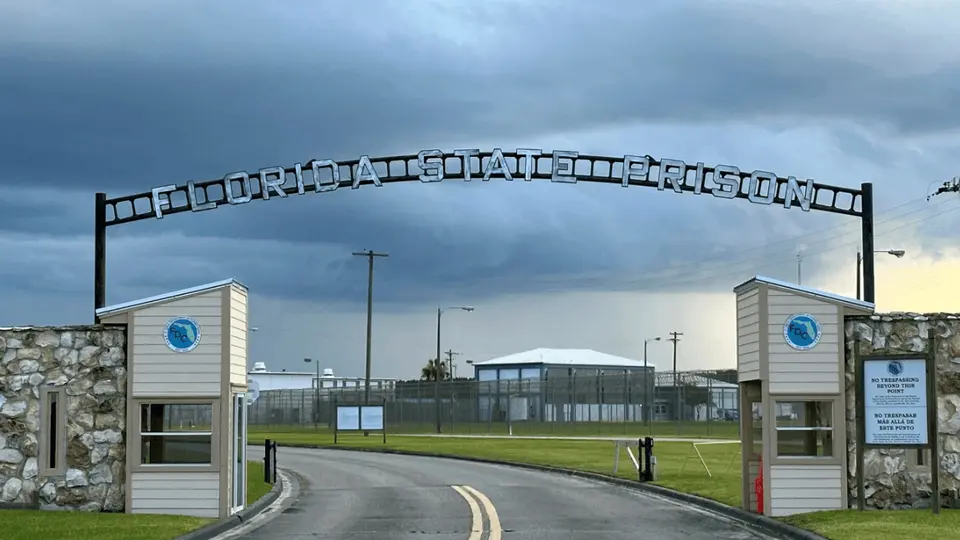
Florida carries out double execution — former officer dies first for 1987 child murder
A former police officer convicted of raping and drowning an 11-year-old girl while on duty was executed in Florida on Tuesday, krcgtv.com reports, in what became the first of two lethal injections carried out on the same day in the state in more than six decades.
James Aren Duckett, 68, was pronounced dead at 1:19 p.m. at Florida State Prison near Starke following a three-drug injection. He was the 11th inmate executed in Florida this year. Duckett had been convicted of raping and drowning the young girl in 1987 while working as a police officer in a small central Florida city.
Hours later, 80-year-old Dominick Anthony Occhicone was scheduled for execution at 6 p.m. — a killing that would make him the oldest prisoner put to death in Florida's modern history. Occhicone was convicted of murdering his ex-girlfriend's parents in 1986.
Last-ditch appeals rejected
Both men had appealed to the U.S. Supreme Court, and last week the Florida Supreme Court denied separate intervention requests from each. Duckett's attorneys had argued his innocence and claimed the state's handling of DNA evidence was responsible for inconclusive test results. Judges allowed the original jury verdict to stand.
Occhicone's legal team contended that several age-related ailments — including kidney and prostate problems — could make his execution particularly painful, constituting cruel and unusual punishment under the U.S. Constitution.
Governor Ron DeSantis has not publicly explained why he scheduled the two executions six hours apart. Florida prison officials have not addressed whether the timing presented logistical challenges. All Florida executions are carried out by injection of a sedative, a paralytic agent and a drug that stops the heart, according to the state Department of Corrections.
Record pace under DeSantis
Tuesday's double execution marks the first time since Arkansas in April 2017 that a single U.S. state has conducted two executions on the same day. It also continues a pace of capital punishment in Florida that has accelerated sharply since DeSantis began stepping it up 18 months ago — the busiest rate in the state since the U.S. death penalty was reinstated in 1976.
DeSantis, who leaves office in January, oversaw a record 19 executions in 2025 alone, more than any other Florida governor in a single year since 1976. The previous single-year high was eight, set in 2014. If Tuesday's second execution proceeded as planned, total executions in DeSantis's final two years in office would reach 31, compared with just nine during his first six years. Prior to Tuesday, Florida had already carried out more executions than all other U.S. states combined this year.
A further execution is scheduled for 2026, which could also set a record.
Advocacy group Floridians for Alternatives to the Death Penalty called on DeSantis ahead of Tuesday to halt both executions. "July 28 represents an unprecedented escalation of Florida's use of the death penalty," executive director Grace Hanna said in a statement. "These are two profoundly different cases, but they point to the same troubling reality: Florida continues to expand the use of capital punishment, despite mounting evidence that it is not what Floridians want."
DeSantis has rarely commented on the pace of executions, but said at a news conference last year that his aim is to deliver justice to victims' families who have waited decades. "Some of these crimes were committed in the '80s," he said. "Justice delayed is justice denied. I felt I owed it to them to make sure this ran very smoothly. If I honestly thought someone was innocent, I would not pull the trigger."
Duckett's execution delayed by DNA review
DeSantis had initially signed a death warrant for Duckett in February, scheduling his execution for 31 March. The Florida Supreme Court issued a stay days before that date to allow DNA testing of evidence that could not be analysed at the time of the original trial due to technological limitations. The results came back inconclusive — neither exonerating Duckett nor definitively linking him to the crime.
After the Florida Supreme Court lifted Duckett's stay on 8 July, DeSantis signed a new death warrant on 14 July, adding Duckett to the same execution date as Occhicone — something that had not been done in Florida in more than 60 years. State Department of Corrections records show that multiple executions on a single day were more common in earlier decades, with the last previous instance on 12 May 1964.
If executed as scheduled, Occhicone would also become the second-oldest prisoner put to death in modern U.S. history, behind 83-year-old Walter Moody Jr., who was executed in Alabama in 2018 for a series of mail bombings in 1989 that killed a federal judge and wounded a Black civil rights attorney.
Texas last executed two prisoners on the same day in 2000, the year the state put 40 inmates to death.
Source: Google News MT — Crime (en)