Former Sarasota Officer Arrested Over Flock Plate Reader Misuse, 335 Searches Flagged
A former Sarasota police officer faces criminal charges after searching the same licence plate 335 times in two months using Flock camera data, raising Fourth Amendment concerns.
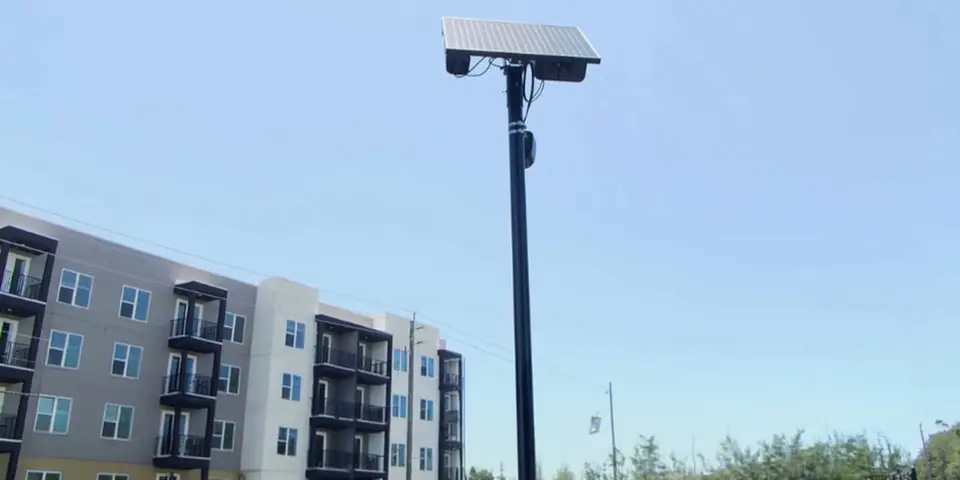
Ex-Sarasota officer charged after Flock licence plate data found misused
A former Sarasota police officer has been arrested following an investigation into his use of Flock licence plate reader data, mysuncoast.com reports, as the case prompts wider questions about surveillance, privacy and the limits of law enforcement access to real-time vehicle tracking technology.
Flock cameras record licence plates and vehicle details as cars pass fixed points. Designed to assist law enforcement in solving crimes, the system allows officers to trace a vehicle's movements from one camera to the next. It was data from that system that drew the attention of journalists — and ultimately led to the officer's arrest.
335 searches of one plate in two months
USA TODAY reporter Jack Lemnus and a team of journalists were reviewing Flock search records from law enforcement agencies across the country when they identified unusual patterns. They were specifically looking for officers who had repeatedly searched the same licence plate.
The Sarasota officer stood out from the data. According to Lemnus, the officer had searched the same plate 335 times over a two-month period. On a single day, that plate was queried 121 times. Many of those searches took place outside normal working hours, including in the middle of the night.
The journalists identified the officer and contacted the Sarasota Police Department. The department launched its own investigation, which resulted in the officer's arrest.
Fourth Amendment concerns raised
Criminal defence attorney Bryant Camareno, who spoke to mysuncoast.com about the broader legal implications, said Flock technology raises constitutional questions under the Fourth Amendment, which protects against unreasonable searches and seizures.
"Defence attorneys and civil libertarians are against the Flock cameras because it does track your movement from the minute they first pick you up with the first Flock camera that's available throughout the whole process," Camareno said.
He was careful to distinguish the technology from more intrusive forms of surveillance. "They're not tapping into our phones. They're not listening to our conversations. They're not looking into our bedrooms. They're tracking where we go out in the open, out in public," he said.
Camareno compared Flock cameras to an eyewitness observing a vehicle pass through a neighbourhood — but noted the critical difference is the volume of data that can accumulate over time.
When does tracking become an abuse of power?
The case, Camareno said, illustrates the tension between public safety and individual privacy rights. Flock cameras can legitimately assist investigators — helping police establish who was near a crime scene or identify a vehicle linked to a suspect. The concern, he said, lies in the potential for misuse.
"The issue is, in the case of the officer, that he may have abused his power," Camareno said. "The real privacy issue is whether or not this actually violates your right to privacy."
He added that repeatedly tracking a person without a legitimate criminal investigation may carry its own legal consequences for the officer involved.
Civil lawsuit possible, but damages hard to prove
Camareno said a person who could establish that their rights were violated might have grounds for a civil lawsuit. However, he noted that proving damages presents a significant challenge.
If a person is improperly tracked but suffers no other tangible harm — such as wrongful arrest or job loss — a jury may find it difficult to assign a monetary value to the privacy violation alone.
Little recourse for drivers
For drivers who object to having their movements recorded by licence plate readers, Camareno said there is little they can practically do while driving on public roads.
"I don't think there's anything we can do to stop from being followed. And when I say followed, I mean tracked — our movement tracked from one camera to another," he said.
He predicted that surveillance technology would continue to expand as communities weigh privacy concerns against demand for safer streets. "I think many of us expect that and maybe even welcome it because we want to live in a free and safe society," Camareno said.
Flock announces AI-powered audit measures
Flock, the company behind the camera network, has announced new measures designed to flag potentially abnormal search behaviour, including AI-powered audits for agencies using its technology.
Lemnus said greater transparency will be essential as more law enforcement agencies adopt the cameras.
The legal and ethical debate around Flock technology now extends well beyond this individual case, as courts, lawmakers and civil liberties groups consider how much of a person's everyday movement should be accessible to law enforcement simply because it occurs on a public road.
Source: Google News MT — Crime (en)