Jury deliberates in Tupac Shakur murder trial as closing arguments conclude
Jurors began deliberations Monday in the trial of Duane "Keffe D" Davis, 63, charged with orchestrating Tupac Shakur's 1996 Las Vegas killing.
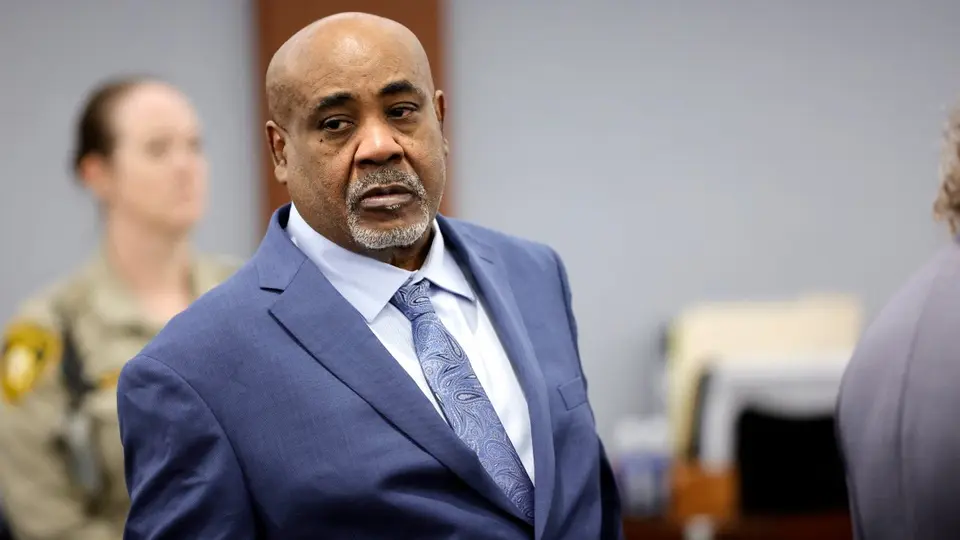
Jury retires to deliberate after closing arguments in Shakur case
Jurors in the Tupac Shakur murder trial began deliberations Monday afternoon following closing arguments from both prosecution and defence, Google News MT — Crime (en) reports, marking a pivotal moment in a case that went unsolved for nearly three decades.
Duane "Keffe D" Davis, 63, faces one count of first-degree murder with a deadly weapon and gang enhancements in connection with the September 7, 1996 drive-by shooting in Las Vegas that killed the rap icon at age 25. Davis is not accused of firing the gunshots himself, but prosecutors have portrayed him as the shot-caller who organised the attack.
The panel of 10 women and six men heard testimony from two dozen prosecution witnesses and three called by the defence over the course of the trial.
Prosecution: 'drenched in circumstantial evidence'
Chief Deputy District Attorney Binu Palal told jurors during closing arguments that the case is "drenched in circumstantial evidence," and that Davis acquired a weapon and "went hunting" for Shakur and Death Row Records co-founder Marion "Suge" Knight.
Palal acknowledged that Davis' public account of events changed over the years, but argued that one element remained consistent — Davis placing himself inside the white Cadillac from which the shots were fired. He characterised the shooting as planned and premeditated, pointing to testimony suggesting the group initially searched for Shakur before spotting him near the Las Vegas Strip and executing a U-turn to intercept his vehicle.
"It's a plan, not an impulse," Palal said.
Prosecutors also played clips from Davis' YouTube interviews during closing arguments, in which Davis urged viewers to purchase his memoir for what he described as "the real truth." In a 2008 police interview shown to jurors, Davis said he supplied the gun and that his nephew, Orlando "Baby Lane" Anderson, fired the shots. The other men reportedly present in the Cadillac have since died, leaving the case heavily reliant on Davis' own statements.
"Now, 30 years later, we're going to ask you to finally hold Duane Davis accountable," Palal told jurors.
Defence: braggadocio, not confession
Defence attorney Michael Sanft argued during his closing that his client's statements were exaggerated boasts designed to sell books and generate notoriety, not accurate accounts of events. Sanft pointed to an absence of physical evidence placing Davis inside the Cadillac at the time of the shooting.
Earlier in proceedings, Sanft stated that law enforcement had not previously charged Davis because they recognised he was "full of crap." He contended that inconsistencies across Davis' various accounts — given to police in 2008 and 2009, in his 2019 memoir, and in podcast interviews — undermined their reliability as evidence.
NBC4 legal analyst Royal Oakes noted that Davis' decision not to testify may have worked in his favour. "Very smart move for him not to testify because in this situation the prosecution was unable to come up with any corroborating evidence of his guilt," Oakes said. "They can't really establish that he was in Las Vegas, much less that he was in that car."
Oakes added that the inconsistencies in Davis' own stories gave the defence room to argue fabrication. "Critically, there were inconsistencies in the stories he told that allowed the defence to argue he was just making it up, he wanted street cred," he said.
Legal framework and jury's scope
During jury instructions, the presiding judge noted that the indictment carries an open charge of murder, meaning jurors may return a verdict of either first- or second-degree murder should they find Davis guilty. The distinction rests on whether they accept the prosecution's premeditation argument.
Oakes explained the legal standard applied under California and Nevada law: "If you are the shot-caller, if you hand the gun to somebody, even if you didn't pull the trigger, it's all the same."
Background to the killing
Shakur was in Las Vegas on the night of September 7, 1996, to attend a heavyweight boxing match between Mike Tyson and Bruce Seldon at the MGM Grand. Earlier that evening, a brawl broke out in the casino lobby involving Shakur, his entourage, and Davis' nephew Anderson. Prosecutors argue that confrontation motivated the subsequent attack.
Shakur was riding in a BMW driven by Knight when a white Cadillac drew alongside at a red light near the Strip and opened fire. Shakur was shot multiple times and died six days later. Knight survived.
The shooting, prosecutors contend, was rooted in a long-running feud between the Mob Piru Bloods — with whom Knight and Shakur were affiliated — and the South Side Compton Crips, of which Davis was a prominent leader. Former Compton gang detective Robert Ladd, one of the final prosecution witnesses, testified that Davis held high-ranking authority within the gang, meaning younger members would not have opened fire on Shakur in Davis' presence without his authorisation. Ladd also testified that Shakur's killing triggered a ten-day conflict in Compton resulting in three deaths and ten attempted murders.
The case remained dormant for decades before Davis' public statements and his 2019 memoir renewed investigative scrutiny and ultimately led to his indictment.
Source: Google News MT — Crime (en)