Lindsay Clancy back in court after mistrial — double jeopardy motion filed
Lindsay Clancy returns to a Plymouth courthouse Tuesday for the first time since a mistrial was declared in her murder case. Defence motions, including a double jeopardy claim, are set to be heard.
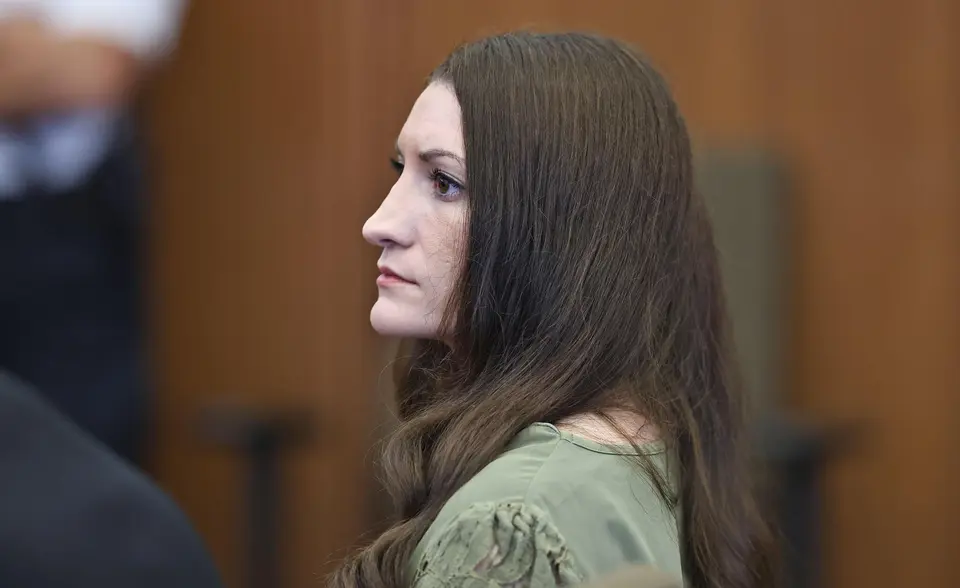
Clancy case resumes as judge weighs defence motions after hung jury
Lindsay Clancy is set to appear at Plymouth County courthouse on Tuesday — her first court appearance since Judge William Sullivan declared a mistrial in her murder case earlier this month, wbur.org reports.
Sullivan declared the mistrial more than three weeks ago after jurors failed to reach a unanimous verdict on first-degree murder charges connected to the deaths of Clancy's three children at the family home in Duxbury in 2023.
Clancy's attorneys do not dispute that she strangled her children. Their defence rests on the argument that she should not be held criminally responsible due to severe postpartum mental health issues.
Plymouth County District Attorney Timothy Cruz has not indicated whether he intends to retry the case.
Double jeopardy motion at the centre of Tuesday's hearing
The defence has filed several motions ahead of Tuesday's hearing. The most consequential, according to legal experts, is a motion to dismiss the case entirely on double jeopardy grounds.
The motion contends that Judge Sullivan erred in declaring a mistrial. Rather than discharging the jury, the defence argues he should have questioned a single juror whom fellow jurors had identified as not following the law as instructed.
During the trial, the jury foreperson reported that one juror expressed doubt about whether Clancy was criminally responsible — yet still believed she should be convicted. Sullivan reiterated instructions requiring acquittal if a juror had reasonable doubt, but the jury still could not reach a unanimous verdict. Defence attorney Kevin Reddington said 11 of the 12 jurors were prepared to find Clancy not criminally responsible.
"Where the court receives information indicating that one or more jurors is not fulfilling his duty to apply the law as instructed, the Court has an obligation to inquire," the defence motion reads.
Boston University law professor emeritus David Rossman described the double jeopardy motion as the most significant issue before the court. "Either side's going to appeal whichever way the double jeopardy motion gets decided," Rossman said. "So an appellate court's going to look at it either way, or at least one appellate judge."
He noted that double jeopardy is one of the rare grounds on which a defendant is entitled to appellate review before any retrial takes place.
Inquiry into 'holdout juror' also sought
A separate motion requests a formal investigation into the so-called holdout juror, who has since retained legal counsel. Reports have emerged that the juror may not have disclosed involvement in the criminal legal system when prospective jurors were questioned at the start of the trial. Because juror questionnaires are impounded, it is not clear how the juror responded. Such involvement would not automatically disqualify a juror, but a false answer on the questionnaire could result in a fine.
Rossman said the investigation motion faces a steep climb unless the court holds additional undisclosed information about the juror. Most legal experts do not expect Sullivan to agree to the request.
"It's going to be a hard road for the defendant because it is not in the public interest to interfere with jury deliberations in the way that the defence is asking," said retired judge and Boston College law school lecturer Jack Lu.
Boston College law professor R. Michael Cassidy described the defence motions as "a bit of a Hail Mary pass." He also indicated he does not expect the judge to rule from the bench on Tuesday, but said Sullivan "will rule on them quickly thereafter."
Prosecutors hold the key decisions
Whether Clancy faces another trial — and on what charges — ultimately rests with the Plymouth County district attorney. Should prosecutors opt for lesser charges such as second-degree murder or manslaughter, a jury trial would not be required.
Cassidy said prosecutors are likely already weighing the pending motions and the prospect of a lengthy appeals process. "One of the things all these post-trial motions does is it alerts the prosecutor to the fact that, 'Geez, even if we retried this on first-degree murder, even if we were successful, that conviction could be overturned because there are a lot of legal issues for an appellate court to decide,'" Cassidy said.
He was direct about where decision-making authority lies in the criminal justice system. "Some people think that the judge has the most discretion in the criminal justice system, but I strongly feel it's the prosecutor," Cassidy said. "If the judge denies these motions and the prosecutor insists on going forward with another first-degree murder indictment, there's absolutely nothing the judge can do."
Legal experts also suggested that the high public profile of the case and the resources required for another extended, emotionally charged trial could push both sides toward a plea arrangement — one in which Clancy pleads guilty while continuing to receive mental health treatment at the state hospital where she is currently held.
Whatever the outcome of Tuesday's hearing, a resolution to the Clancy case is not expected any time soon.
Source: Google News MT — Crime (en)