Lindsay Clancy murder trial ends in mistrial after jury deadlock in Massachusetts
A judge declared a mistrial in the Lindsay Clancy murder trial after jurors failed to reach a unanimous verdict. Prosecutors must now decide whether to retry the case.
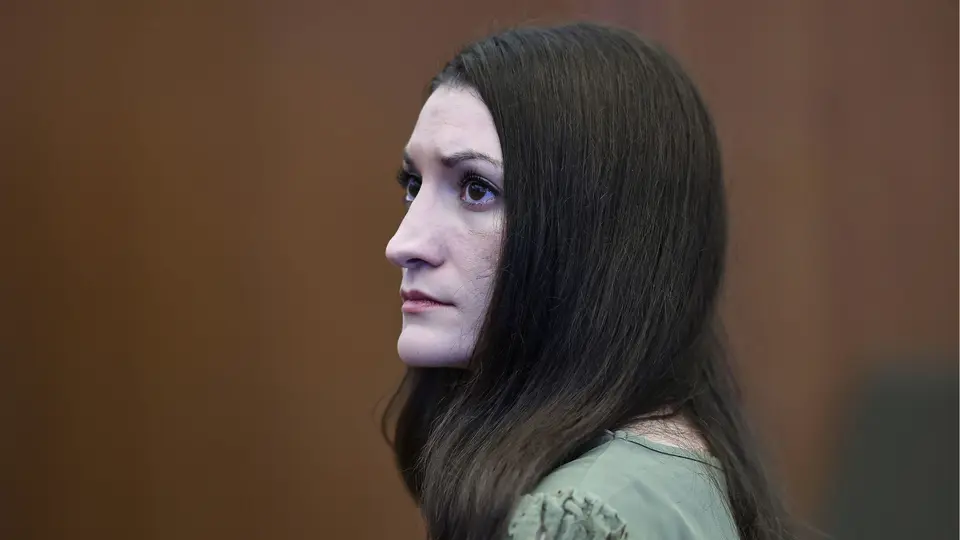
Mistrial declared in Lindsay Clancy case after seven days of jury deliberations
A judge in Plymouth, Massachusetts declared a mistrial in the Lindsay Clancy murder trial on Friday after jurors said they were unable to reach a unanimous verdict, abc7news.com reports. The case centres on whether Clancy, a 36-year-old former labour and delivery nurse, was criminally responsible for killing her three young children on 24 January 2023.
The deadlock came on the seventh day of deliberations. Prosecutors must now decide whether to retry Clancy, drop the charges, or pursue a plea agreement. Clancy showed no visible emotion as Judge William Sullivan announced the mistrial, nor did the jury or her family members present in court.
The deliberations took an unexpected turn late in the week when Judge Sullivan signalled he intended to declare a mistrial before abruptly changing course, offering the defence an opportunity to file an emergency appeal to the Massachusetts Supreme Judicial Court. That appeal was swiftly denied, and the mistrial was subsequently declared. The judge set 29 September as the date to determine next steps.
What prosecutors alleged
Prosecutors argued that Clancy acted deliberately when she strangled her three children — 5-year-old Cora, 3-year-old Dawson, and 8-month-old Callan — using exercise bands at the family's home in coastal Duxbury, Massachusetts. According to the prosecution, she arranged for her husband to leave the house by sending him to collect medicine for one of the children and dinner for the family. The bodies were later found in the basement of the home.
Clancy jumped from a second-storey window immediately after the killings and remains paralysed from the waist down.
The defence: postpartum psychosis
Clancy's lawyer, Kevin Reddington, never disputed that she killed the children but argued she should not be held criminally responsible due to postpartum psychosis — a rare and severe mental illness linked to the hormonal changes, sleep deprivation and psychological stress that can follow childbirth.
Over 21 days of testimony, jurors heard how Clancy's mental health had deteriorated sharply following the birth of her youngest child. Deeply anxious about a planned return to work and experiencing what she described as a severe brain fog, Clancy sought treatment from specialists in postpregnancy mood disorders, who prescribed multiple psychiatric medications. In early January 2023, she admitted herself to a psychiatric hospital for intensive treatment, but her stay was brief. She killed the children 19 days after her discharge.
Family members testified about her decline. Her former mother-in-law, Susan Clancy, described her as a "very nurturing, very loving mother" who was "begging for help."
Competing expert testimony
The trial's final phase became a contest between forensic experts. Kirk Heilbrun, a forensic psychologist engaged by prosecutors, testified that he did not believe Clancy had been experiencing acute psychosis at the time of the killings. He suggested she killed the children so they would not "suffer" after she took her own life, and he disputed her account of hearing a commanding male voice.
Dr Phillip Resnick, a forensic psychiatrist testifying for the defence, disagreed. He assessed Clancy as "clearly psychotic" and not in control of her actions at the time. "It was almost like she was a puppet and someone else was pulling the strings," Resnick said, having spent hours interviewing Clancy after the killings. He also indicated she was likely experiencing bipolar disorder.
Prosecutors conceded that Clancy had suffered from severe mental illness but maintained she retained the capacity to understand and control her actions. They highlighted that, despite claiming to have heard a voice commanding her to kill her children, she had never reported hearing voices to her mental health providers before the killings took place.
Patrick Clancy's statement
At the outset of the trial, Clancy's ex-husband Patrick Clancy described discovering his children's bodies upon returning home. Prosecutors played a seven-minute 911 call in which he could be heard finding them. Patrick Clancy has previously stated publicly that he has forgiven his former wife and believes her actions were a consequence of mental illness.
Following Friday's mistrial declaration, his attorney released a statement on his behalf:
"Patrick Clancy is grateful to the Court and to the jurors for their hard work, their commitment, and their perseverance. The loss of Patrick's children is something from which he will never recover and from which there will never be closure. The prospect of reliving this tragedy through another trial is extraordinarily painful — for Patrick, for his family, and for all of us."
Background: a case that divided public opinion
The trial attracted sustained national attention throughout its course, drawing focus to the broader issue of maternal mental health in the period following childbirth. The defence's argument that postpartum psychosis can strip a person of criminal culpability proved deeply divisive among observers.
The case remains unresolved pending the prosecution's decision on next steps, with a further court date scheduled for 29 September.
--- If you or someone you know needs support, the national suicide and crisis lifeline in the US is available by calling or texting 988.
Source: Google News IE — Crime (en)