Lindsay Clancy murder trial: why false social media theories are spreading
Lindsay Clancy is on trial in Massachusetts for killing her three children. Unsupported theories naming her husband as suspect are spreading rapidly on TikTok and Instagram.
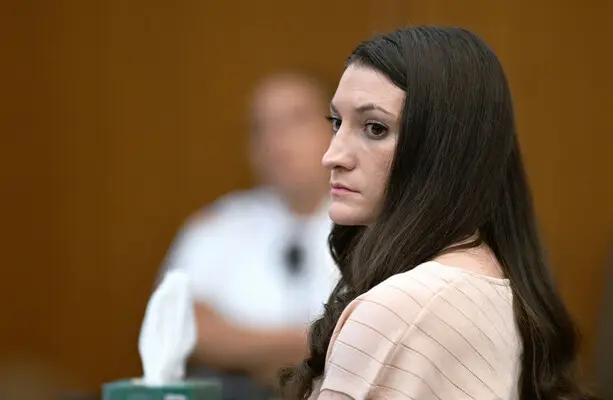
Online sleuths push unfounded theories as Lindsay Clancy trial grips social media
On 24 January 2023, Lindsay Clancy strangled her three children in her home in the US state of Massachusetts while her husband Patrick was out running an errand. Her live-streamed trial, which has been under way since late July, has gripped social media users who have spent hours poring over court testimony in search of alternative explanations for what happened that night.
TheJournal.ie reports that the basic facts of the case are not in dispute. Clancy, 36, does not contest that she killed her children — eight-month-old Callan, three-year-old son Dawson, and five-year-old daughter Cora. Following the killings, she attempted to take her own life by jumping from a window of her home, leaving her paralysed from the waist down.
Her defence does not seek acquittal outright. Instead, her lawyers argue she cannot be found guilty of murder because she was suffering from postpartum psychosis at the time — a rare condition estimated to affect one or two people in every 1,000 after giving birth, during which a person experiences delusions, hallucinations or severe confusion. It differs from postpartum depression, a mood disorder primarily marked by persistent sadness, anxiety and difficulty functioning.
Under Massachusetts law, the jury must determine whether a mental disease or defect left Clancy without the substantial capacity to appreciate the criminality or wrongfulness of her actions at the time of the killings. A diagnosis alone does not determine the verdict.
Prosecutors, however, claim that Clancy deliberately planned the murders, understood they were wrong, and attempted to conceal her actions by faking her suicide attempt. Clancy could be found not guilty by reason of insanity if the jury accepts her defence.
Patrick Clancy named as suspect online without evidence
Patrick Clancy, the father of the three children, has not been accused of any involvement by prosecutors, nor implicated in the deaths in any way. He has publicly stated that he forgives his wife. That has not prevented him from being named as a possible suspect by a significant number of those following the trial on social media.
Some of that suspicion draws on the documented prevalence of male intimate-partner violence and high-profile cases in which men have killed their families. The trial has also raised legitimate questions about the medical care, medication and support Lindsay received in the period before the killings. But, as TheJournal.ie notes, neither population-level patterns nor possible failures in her treatment constitute evidence that Patrick killed his children. Instead, they are being used to fill a gap between what has been heard in court and an alternative narrative developing online.
On TikTok and Instagram in particular, some creators have taken fragments of trial testimony and assembled alternative theories around them. Questions have been raised about why Patrick moved to help Lindsay after finding her injured outside the house — rather than immediately checking on the children. Others have scrutinised his account of the evening in question, his demeanour while giving evidence in court, and the fact that he remarried three years after the killings.
Bratz dolls, smartwatch data and 'just asking questions'
One viral TikTok video using Bratz dolls — since deleted, though its claims have been repeated elsewhere — incorrectly suggested that Lindsay's bedroom had been "staged" after she jumped from the window. Occasionally, theories have been presented in the manner common to conspiracy theorists: not by asserting facts, but by posing pointed questions without substantiation.
A separate line of speculation has focused on data from Lindsay Clancy's smartwatch, with users suggesting her recorded heart rate was inconsistent with the physical exertion required to strangle three children. One version of this theory, circulated on Instagram, presents events from the evening of 24 January in an AI-generated timeline graphic asking: "What happened between 5.15 and 5.38pm? 23 minutes. Multiple data points. A lot of questions."
This type of sleuthing has led a large cohort of social media users to the conclusion that Patrick, not his wife, is responsible for the children's deaths — a theory unsupported by any evidence presented in court.
Short-form video and the mechanics of online misrule
Short-form video is particularly effective at turning isolated details into what appears to be a coherent alternative case. Each day of testimony gives creators new material — footage and evidence that can be reframed as perceived inconsistencies. When these videos are served consecutively by the recommendation algorithms of TikTok and Instagram, the cumulative effect can make a baseless theory feel like an established account.
The Clancy case is the latest high-profile criminal trial to be transformed into a social media whodunnit, as amateur detectives assemble their own versions of events in ways that generate harmful levels of suspicion toward individuals who have not been charged with any crime. The pattern — fragments of real evidence, population-level statistics deployed as insinuation, and questions framed to imply guilt — has become a recognisable feature of how online audiences engage with live criminal proceedings.
The trial continues.
Source: TheJournal.ie