Palisades Fire Arson Trial: ATF Lighter Test Failed to Ignite Brush, Jury Sees Video
A video of an ATF lighter test shown at Jonathan Rinderknecht's federal arson trial revealed the torch failed to ignite brush three times. The second trial follows a hung jury that voted 10–2 for acquittal.
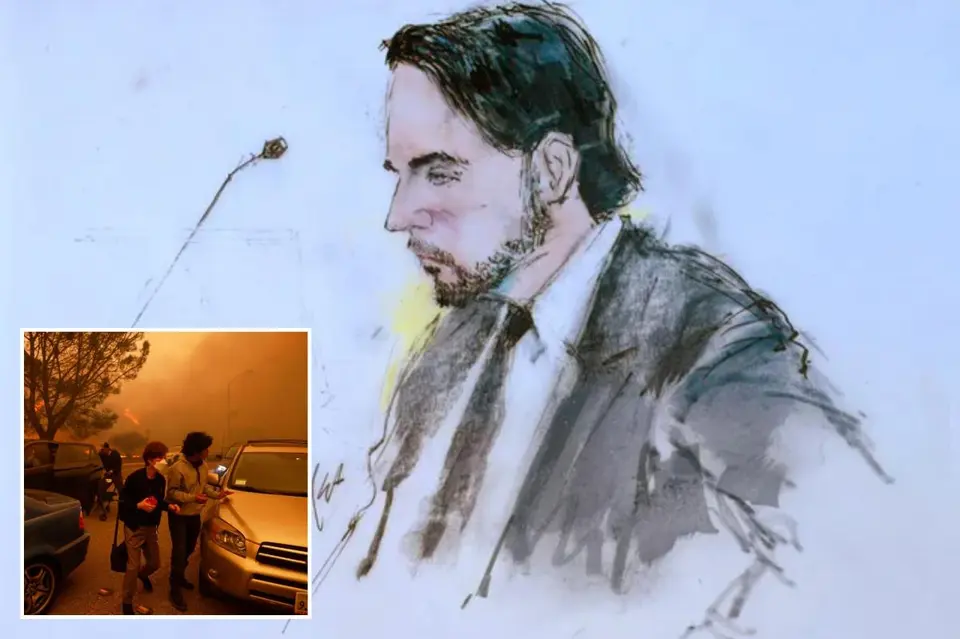
ATF Test Video Centers Opening Arguments in Palisades Fire Arson Retrial
A federal jury in California watched video footage Wednesday showing a green barbecue lighter fail to ignite dead vegetation three separate times — evidence presented on the first day of the second arson trial of Jonathan Rinderknecht, 30, the man accused of starting the devastating Palisades Fire, NY Post Metro reports.
Defense attorney Steve Haney played the roughly one-minute clip during opening statements. It showed an ATF-conducted test using a lighter similar to one recovered from Rinderknecht's car. The flame made contact with brush in a foil oven pan filled with dead vegetation from Pacific Palisades, briefly caught each time, then extinguished.
"Based on that video, that lighter does not have the ability to start the fire on January 1st," Haney told the California Post after the opening statements concluded.
The Charges and Timeline
Rinderknecht is charged with two counts of arson. Prosecutors allege he used the lighter on New Year's Eve 2024 to ignite what became known as the Lachman Fire, which smoldered for several days before reigniting as the Palisades Fire on January 7, 2025.
The green lighter was found in the glove compartment of his vehicle on January 24, 2025 — more than three weeks after the fire tore through the Palisades. The ATF lighter test was ordered by prosecutors 11 months after Rinderknecht was charged.
Defense: Fireworks, Not a Lighter
Haney argued that the Lachman Fire could be spotted from five miles away just moments after it ignited — an indication, the defense suggested, that the lighter could not have been the cause.
"That fire couldn't get across a baking pan," Haney said, referencing the test footage.
The defense also signaled that an upcoming witness will testify he heard an explosion moments before the fire broke out. That witness, Haney said, lived at the foot of the hill where the New Year's blaze is believed to have originated and ran to his backyard to investigate the sound. The defense maintains fireworks caused the initial blaze. "We all know what it's like on New Year's," Haney told the jury.
Prosecution: Phone Data and ChatGPT Query
The government's opening argument largely mirrored the case presented at Rinderknecht's first trial, which ended in a hung jury that voted 10 to 2 in favor of acquittal.
Prosecutors told jurors that cell phone data placed Rinderknecht as the only person in the area when the fire started. They also said he called 911 to report the fire 16 times and recorded himself doing so — allegedly to construct an alibi.
"He made a screen recording of what he was doing with his phone, which was calling 911, to create an alibi," prosecutors said.
A separate piece of digital evidence drew particular attention: a question Rinderknecht allegedly typed into ChatGPT between his 911 calls — "Are you at fault if a fire is lit because of your cigarettes."
"He appeared to be admitting he lit the fire," prosecutors said, though they also presented an additional ATF test showing cigarettes did not start the blaze.
Haney pushed back on the digital evidence angle. "Things Jonathan typed into his phone will take the place of direct evidence of him starting the fire," the defense attorney said.
Second Trial Expected to Last Two Weeks
Rinderknecht, who appeared in court wearing a gray suit and blue tie, watched the opening statements from the defense table. Haney closed his remarks to the jury with a direct appeal.
"They keep calling him the defendant — his name is Jonathan Rinderknecht. He will be judged by you, and only you. This is your case," Haney said.
The second trial is expected to run for nearly two weeks.
Source: NY Post Metro