San Diego Police used Flock cameras to track officer and domestic violence victim
SDPD's Internal Affairs used automated licence plate readers to surveil an officer and a domestic violence victim in a misconduct investigation, raising policy concerns.
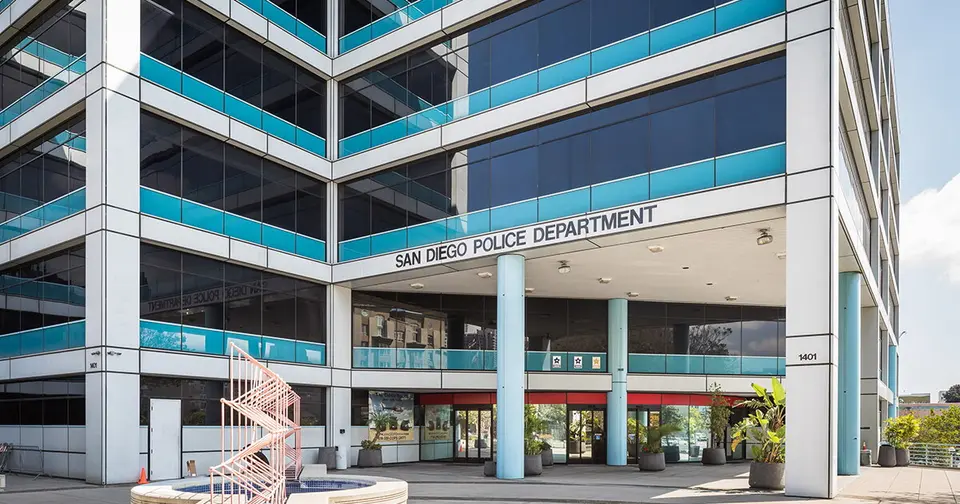
SDPD used Flock surveillance network to track officer accused of misconduct and his victim
San Diego police investigators used the city's automated licence plate reader network to surveil one of their own officers and a domestic violence victim he was suspected of having a sexual relationship with, kpbs.org reports.
Internal Affairs detectives ran the searches in August 2025 as part of a misconduct investigation into Officer Miguel Gonzalez. It was not an isolated incident: a department spokesperson confirmed the technology has been used in internal officer investigations a total of six times.
Officer accused of exploiting domestic violence victim
Colleagues had reported that Gonzalez began a sexual relationship with a woman he met while responding to a domestic violence call. An internal investigation document, quoted by kpbs.org, states that Gonzalez "went to her home while on duty, and had sexual intercourse with her on March 6, 2025," and that prior to travelling to her address he left a separate victim waiting 51 minutes for his arrival.
The investigation ultimately substantiated six allegations against Gonzalez. These included taking the victim's number from field interview notes, contacting her during his shift and engaging in sex with her while another victim — whose car had been stolen — waited for him to respond.
Flock data pulled on victim's personal vehicle
As the internal probe advanced, investigators wanted to establish whether Gonzalez's car and the domestic violence victim's car had ever appeared at the same location. They turned to the city's network of approximately 500 Flock-enabled automated licence plate readers, which capture vehicle plates and allow police to map the movements of vehicles across San Diego.
Sergeant C. Evans, then-supervisor of the department's Real Time Operations Center, conducted the search on the victim's and Gonzalez's personal vehicles. The query returned no evidence the cars had been near each other — possibly because the system retains footage for only 30 days.
Watchdogs and council member call programme into question
Ted Womack Jr., vice chair of San Diego's Privacy Advisory Board, said the surveillance of the domestic violence victim appeared to breach the city's use policy for Flock.
"That domestic violence victim was in no way in a circumstance or situation where they were some sort of suspect or subject of any kind of investigation where they would need to be surveilled," Womack said. "This definitely sounds like a violation of the use policy. This isn't the first time and I'm sure it won't be the last that it's not being used properly."
On Thursday, Councilmember Raul Campillo, who had previously backed SDPD's use of Flock cameras, announced he was withdrawing that support. "Learning that the Police Department used ALPRs inappropriately to surveil one of their own and a member of the public calls the entire programme into question," Campillo wrote. He called for the programme to be immediately suspended and for an audit of its use within the department.
SDPD defends searches as policy-compliant
Department spokesperson Ashley Nicholes argued that both licence plate searches — on the victim and on Gonzalez — were permissible under existing policy and procedures. The technology is governed by two documents: a use policy that permits access for "legitimate purposes" and a procedures document that authorises use for "official investigations."
"Those purposes are not limited to criminal matters," Nicholes wrote. "The department's position is that investigating specific allegations of officer misconduct also falls within those authorized uses."
Critics note, however, that the governing documents are broadly worded. They list specific sanctioned uses — such as locating stolen vehicles, tracking suspects' cars, responding to active shootings and assisting in missing persons cases — but neither explicitly includes nor explicitly excludes internal officer misconduct investigations.
Six internal searches in total; one led to discipline
Of the six times SDPD has used its automated licence plate network for internal investigations, three searches returned no relevant information, two corroborated officers' accounts and one substantiated misconduct, resulting in disciplinary action against an officer, according to Nicholes.
"The Department is committed to thoroughly investigating allegations of officer misconduct, and that includes using available investigative tools such as ALPR when appropriate and consistent with policies," she wrote.
The disclosures arrive as San Diego's city council weighs whether to cancel its contract with Flock, amid a broader debate over the reach and oversight of the surveillance network that spans the city.
Source: Google News MT — Crime (en)