Trump fights on two fronts to erase hush money conviction in New York
Trump's legal team pressed both federal and state courts to nullify his 34-count felony conviction over a $130,000 payment to Stormy Daniels. No ruling has been issued yet.
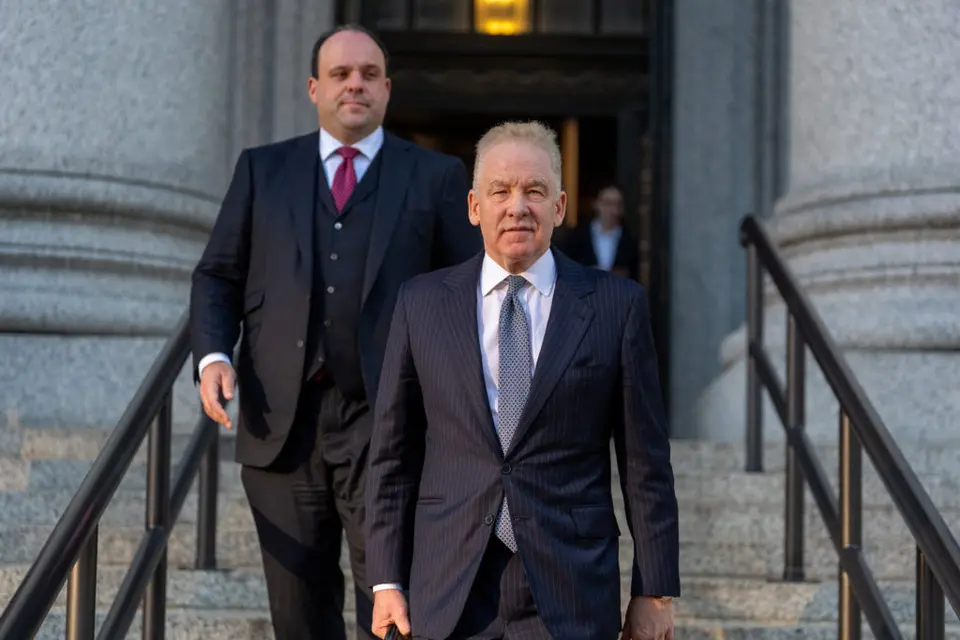
Trump pursues twin legal strategy to wipe out historic criminal verdict
President Donald Trump is simultaneously pressing state and federal appellate courts to overturn his hush money conviction, pbs.org reports, as his legal team pursues a two-pronged strategy to erase what remains a singular mark in American political history.
A three-judge panel of the 2nd U.S. Circuit Court of Appeals spent more than an hour on Monday questioning Trump's lawyer and a state prosecutor about the president's bid to transfer the case from state court to federal court — where it could potentially be dismissed on presidential immunity grounds. The panel issued no immediate decision.
The hearing came 11 days after the New York State Appellate Division heard oral arguments in Trump's separate, traditional state appeal. That court has also yet to rule.
Trump was convicted in May 2024 on 34 felony counts of falsifying business records to conceal a $130,000 payment to adult film performer Stormy Daniels. He was given no sentence. He denies any wrongdoing.
Lawyer urges immediate order before state court rules
Trump's attorney, Robert Giuffra Jr., urged the 2nd Circuit to act quickly — issuing an order even before completing a written decision — to take control of the proceedings and halt the Appellate Division's deliberations. Without federal intervention, Trump "will likely have to wait years" for state courts to rule before he can bring the matter before the U.S. Supreme Court, Giuffra wrote in a letter previewing his argument.
The panel's two judges were sceptical. Judge John M. Walker Jr., appointed by President George H.W. Bush, questioned how such a transfer would function in practice, noting that briefs had already been filed and arguments heard before the state appellate panel. Chief Judge Raymond J. Lohier Jr., appointed by President Barack Obama, was equally unconvinced.
"You're asking us to embrace an entire procedural mechanism that I don't see anywhere authorized by Congress," Lohier said.
Giuffra countered that a statutory provision permitting post-verdict transfer petitions constitutes "a safety valve that's intended to protect against exactly the gamesmanship that's gone on here." He proposed that the case would first go to a federal district judge, who would adopt the state court verdict, before being argued before the 2nd Circuit on immunity grounds.
Immunity ruling at the core of the federal argument
The push to move the case to federal court accelerated following the U.S. Supreme Court's July 2024 ruling that presidents and former presidents cannot be prosecuted for official acts, and that evidence of official acts cannot be used to support charges relating to unofficial conduct.
Giuffra argued before both appellate panels that prosecutors had relied on precisely the kind of official-acts evidence now barred by that ruling — including testimony about Oval Office conversations, White House workflow, and social media posts made during Trump's first term.
He also challenged prosecutors' characterisation of the hush money payment as an illegal campaign contribution under the Federal Election Campaign Act, arguing that such a question falls within federal, not state, jurisdiction.
Trump first sought to shift the case to federal court shortly after his indictment in March 2023. He renewed that effort after his conviction and again after the Supreme Court's immunity decision. Federal Judge Alvin K. Hellerstein denied the request three times before his death last month at the age of 92. In one ruling, Hellerstein wrote that "paying hush money to an adult film star or engaging in a cover-up of an embarrassment are not subsumed in presidential immunity."
After Trump appealed Hellerstein's second denial, the 2nd Circuit — in a panel that included Lohier — ordered the judge to reconsider, finding he had not adequately weighed issues relevant to the immunity question. The court said it expressed no view on the outcome but instructed Hellerstein to closely examine which evidence Trump claimed was tied to official acts.
Prosecution urges court to leave verdict intact
Steven Wu, chief of the appeals division at the Manhattan District Attorney's Office, urged the 2nd Circuit to uphold Hellerstein's final ruling and leave the conviction in state court. Even if Trump were to prevail on the transfer question, Wu argued, the state appellate court would remain free to issue its own ruling.
Trump, with roughly two years left in his second term, has been steadfast in seeking to remove the distinction of being the first U.S. president convicted of a crime. The case proceeded to trial while he was actively campaigning for the presidency, and no court has yet moved to set aside the verdict.
Source: Google News MT — Crime (en)