Tupac Murder Trial: Duane Davis's Conflicting Statements Played for Jury in Las Vegas
Recordings show Davis denied knowing the shooter in 2017, contradicting a 2008 police interview in which he named his nephew Orlando Anderson.
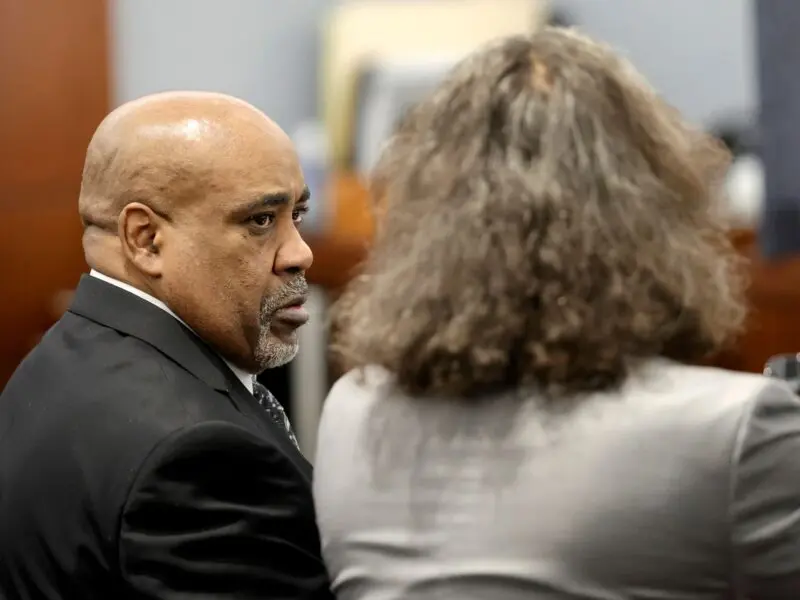
Davis's Shifting Stories Take Center Stage in Tupac Shakur Murder Trial
A recording played Monday in a Las Vegas courtroom captured Duane "Keffe D" Davis, the man on trial for the 1996 murder of rapper Tupac Shakur, flatly denying that his nephew fired the fatal shots — a position that directly contradicts what he told law enforcement nearly a decade earlier.
According to Courthouse News Service, the 2017 clip came from Davis's participation in the documentary "Death Row Chronicles." In it, Davis described ducking after hearing gunfire on the night of September 7, 1996 — the night Shakur, a Death Row Records artist, was shot while riding in a vehicle near the Las Vegas Strip. Shakur died six days later.
"Who's closest? Who had the gun?" an interviewer asked Davis in the recording.
"I don't know, sir, to tell you the truth," Davis, now 63, replied. "All I was ducking."
A different account in 2008
Jurors also heard a 2008 police interview in which Davis gave markedly different details. In that session, Davis said he was riding in a car with three other men, including his nephew, Orlando Anderson. The group spotted Shakur and Death Row CEO Marion "Suge" Knight in a nearby vehicle on the Strip.
Davis told officers he had been furious after his nephew was beaten at the MGM Grand earlier that evening. Evidence presented at trial indicates Shakur took part in that altercation. Davis said he handed a firearm to Deandre "Dre" Smith, who passed it to Anderson. Anderson then opened fire.
"How many times did, ah, Orlando fire, approximately?" an officer asked.
"Think about five or six," Davis said.
Anderson was killed in a 1998 shooting in Compton, California, and is therefore unavailable to testify.
Denial on camera
In the 2017 documentary interview, Davis reversed course entirely when pressed on his earlier account.
"So, you're denying that you ever said that Orlando was ever the shooter?" the interviewer asked.
"Yes, I'm denying it," Davis said.
Asked to clarify his version of events, Davis said shots came from the backseat of his vehicle but insisted he could not identify the source. When interviewers pushed him one final time — naming Anderson and Smith by their monikers and asking directly who shot Tupac — Davis invoked a familiar refrain.
"I'm going to keep it for the code of the streets," he said. "It just came from the backseat, bro."
Trial enters second week
The case, now in its second week, has drawn testimony from multiple witnesses present near the shooting scene. Leonard Jefferson, who took what is believed to be the last known photograph of Shakur alive, testified last week that he was following the rapper's convoy when the gunfire erupted.
"I see Suge getting out of the car," Jefferson told jurors. "You hear Suge yell, 'My man Pac is shot. Pac is shot.'"
Prosecutors have argued that Davis's rage over his nephew's beating directly motivated the attack on Shakur. Jurors have also been presented with testimony about the well-documented rivalry between Death Row Records and Bad Boy Records, the label run by Sean "Puff Daddy" Combs.
Davis has claimed that Combs offered $1 million to have Shakur killed. Combs, currently held on prostitution-related charges, faces no accusations in connection with Shakur's death and has denied Davis's claims.
Defense challenges prosecution's case
Defense attorney Michael Sanft has acknowledged that his client was prone to exaggeration, characterizing Davis as someone who would "bullshit." Sanft has also argued that prosecutors cannot definitively place Davis in Las Vegas at the time of the shooting — a central pillar of the defense strategy.
Despite the conflicting interviews, one detail remained consistent across both accounts: Davis placed himself in Las Vegas that night and in a vehicle at or near the scene of the shooting.
Shakur's 1996 killing has generated numerous books and documentaries over the decades. Davis's decision to speak on camera for "Death Row Chronicles" in 2017 has now supplied prosecutors with material that, they argue, undermines his credibility before the jury.
Source: Courthouse News Service