Internal documents expose 'radicalized' subculture at Montreal North police station
Police documents reveal a radicalized subculture among officers at Station 39 in Montreal North, linked to allegations of racist and discriminatory behaviour.
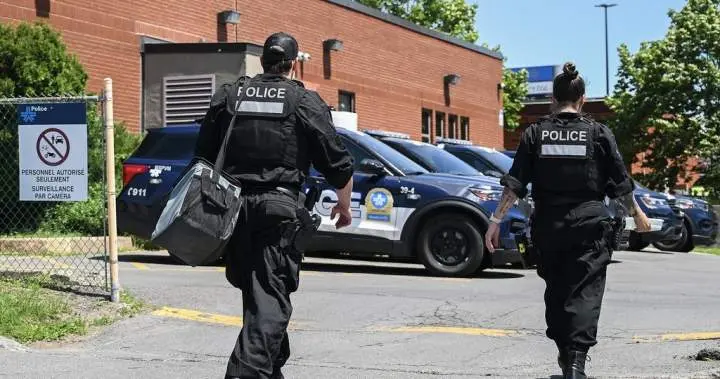
Montreal North police station under scrutiny over alleged officer radicalization
Internal Montreal police documents obtained through an access-to-information request point to a radicalized subculture among officers at Station 39 in Montreal North, Global News Crime reports. The documents are tied to an investigation into alleged racist and discriminatory acts at the station.
The documents, first obtained by The Canadian Press, describe the radicalized subculture in connection with an investigation that became public in June, after officers came forward with allegations involving members of a patrol team. A team of 16 officers was removed from duty and several were suspended in response.
Among the most striking allegations: officers in the unit reportedly kept the hair of racialized citizens as trophies.
That specific allegation prompted psychiatrist and McGill University researcher Dr. Myrna Lashley — who has worked closely with police on anti-racism initiatives and conducted research on radicalization — to raise concerns directly with police officials.
"I was talking to a senior officer and I said to that person, you should look and see if you've got supremacists or something akin to that in your department, because this doesn't make sense to me," Lashley told Global News.
She described the alleged trophy-collecting as a particularly troubling act. "That's an act that people who really are into setting up hierarchies of superiority and inferiority. That's something that I would expect them to do," she said.
Experts have raised questions about the precise meaning of "radicalization" as used in the documents. Fo Niemi, executive director of the Centre for Research-Action on Race Relations, said the term's scope remains unclear. "You don't know to what extent they can contaminate not only the organization but the immediate workplace," he said.
Montreal police Chief Fady Dagher publicly disclosed the allegations and internal investigations in June but made no mention of radicalization at that time. When Global News asked in August whether the officers under investigation had any links to white supremacy, Dagher declined to comment, citing evidentiary concerns. "This is criminal behaviour that we're talking about, so I gotta be very careful not to contaminate the evidence," he said.
The SPVM announced Monday that evidence has been forwarded to the Le Directeur des poursuites criminelles et pénales (DPCP), which will determine the appropriate next steps. Quebec's Crown prosecution service declined to say how long it might take to decide whether criminal charges will be laid.
Niemi called on authorities to handle the matter openly. "Authorities must be transparent and must act, because it's their credibility in the eyes of many people in Quebec and the rest of the country that is on the line," he said.
Source: Global News Crime