Biochemist arrested in Esquel for confining wife and children for four years
Miguel Edgardo Battista, 72, was arrested in Esquel, Patagonia, accused of unlawfully confining his family. His wife was admitted to hospital and the three children were placed under judicial custody.
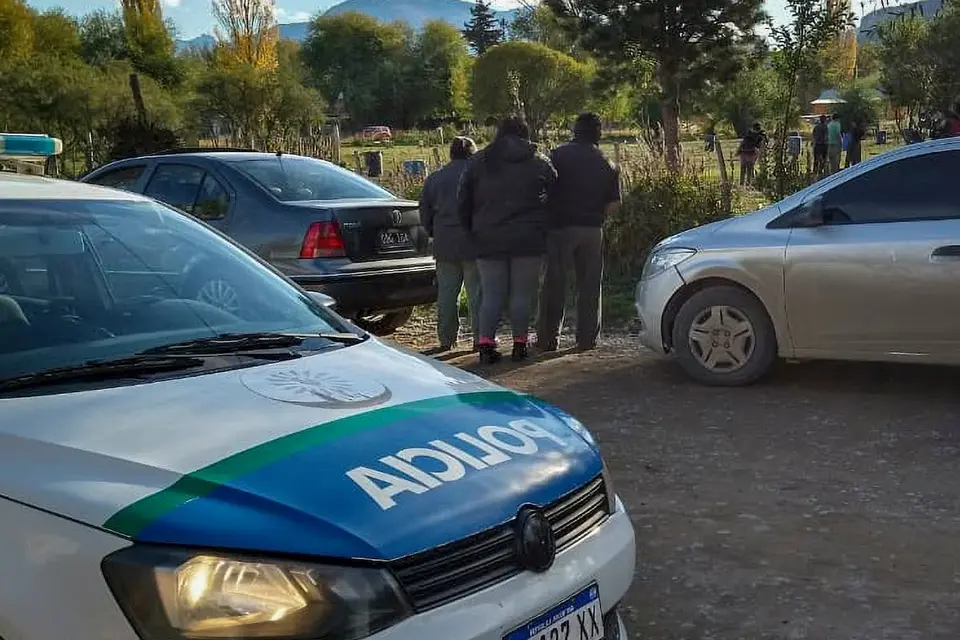
Arrest in Esquel: biochemist accused of keeping family captive for years
A 72-year-old biochemist was detained last Thursday in Esquel, a Patagonian city nestled in the Andes mountain range, accused of keeping his wife and three children locked up for at least four years. According to elpais.com, the case came to light following a series of complaints from neighbours who alerted authorities to unusual behaviour at the residence in the La Cascada neighbourhood.
Who is Miguel Edgardo Battista
The defendant, Miguel Edgardo Battista, works in the development of foodstuffs and dietary supplements. In the back of his house he had set up a laboratory where he extracted plant essences which he sold in dropper bottles. He met his wife—41 years old—when he worked in a pharmacy in San Martín, on the outskirts of Buenos Aires. The couple has three children, currently aged 19, 17 and 13: two girls and one boy.
The family moved to the Patagonian province of Chubut in 2020, during the covid-19 pandemic. According to Battista's defence lawyer, Daniel Sandoval, the biochemist gained public notoriety during that period when he was invited to appear on television to present a product he had allegedly developed against the virus. Following that media exposure, according to the defence's account, he began to receive threats from people who claimed his products lacked approval from health authorities.
From Trevelin to Esquel: progressive confinement
Battista decided to move with his family to Trevelin, 25 kilometres from Esquel. There, in 2022 and according to his lawyer, a group physically attacked him. After that episode, they moved to a new residence in Esquel. The defence maintains that, as a consequence of those perceived threats, the family "adopted self-confinement as a way of life" and progressively deepened their isolation as they noticed neighbours looking at them.
"Their life developed at the opposite time to normal because they felt harassed by neighbours' stares. They lived at night and during the day they kept the windows closed," explained Sandoval. The house windows appeared covered with cloth or paper; only Battista occasionally went outside; the children did not attend school.
Neighbours' complaints
In 2024, residents of the neighbourhood filed an initial complaint. They reported hearing desperate cries coming from inside the house and observing that the woman and children never left. An adjacent neighbour stated she had put up a shade mesh to block the view between both gardens, and that the woman insulted anyone who passed by or repeated everything they said. In the days immediately before the search, the wife had begun wearing a turban after shaving her head, due to itching she attributed to fungal infection, according to the lawyer's account.
After that initial complaint, police visited the residence but took no action. The decisive intervention came after a second neighbours' complaint, filed on 10 October. The Family Court sent an interdisciplinary team to the residence, but Battista did not permit entry or interviews with family members. Faced with a technical report indicating "imminent risk", the Public Prosecutor's office acted of its own motion and requested an urgent search warrant.
The search and conditions found
"Upon entering the property, authorities found a scenario of profound vulnerability," stated public prosecutors Cecilia Bagnato and Mónica Caveri at a press conference. The same officials limited themselves to describing the interior situation as "disorderly". Neighbours, for their part, had reported unsanitary conditions, lack of hygiene and accumulation of rubbish in a residence of approximately 130 square metres with a garden and architecture typical of the region, with wood and natural stone.
The court ordered ten days of preventive detention for Battista, charged with unlawful deprivation of liberty and abandonment of a person. His wife was admitted to the Mental Health section of Esquel's regional hospital. The three children—along with one of their pets, from which they refused to be separated—were placed in temporary custody with a protective foster family by judicial order.
The defence version
Lawyer Sandoval rejected rumours of malnutrition: he stated that none of the minors showed signs of it and that only the eldest daughter recorded "mild dehydration". According to the defence, the three teenagers received home education and "expressed their life through science". Sandoval avoided commenting on the possible existence of mental health disorders among family members, though he considered that prolonged isolation and a nocturnal lifestyle could have had physical and psychological consequences. To illustrate the point, he drew a comparison with the film in which a castaway played by Tom Hanks establishes a bond with a volleyball ball after years of solitude.
A hearing in camera Gesell was scheduled for Tuesday, a procedure that allows testimony to be taken from children and adolescents in a protected environment.
Rumours in a shaken city
Esquel, a quiet locality in Argentine Patagonia, has been shaken since Thursday. Versions circulate about dead dogs and the neglected appearance of the minors, though none of those accounts have been corroborated. "There is a lot of gossip," acknowledged a city resident, who also recounted that the owner of the first house the family inhabited in the area decided to evict them for considering their behaviour strange. "They said there was a black hole in the house through which you could see hell," she said.
The judicial investigation continues as the city processes a case which, given its characteristics, has no recent precedent in the region.
Source: Google News AR — Crime