Argentine Supreme Court endorses nine extraditions for drug trafficking, homicide and theft
Argentina's Supreme Court confirmed nearly ten extraditions to countries including the US, Brazil, Chile and Peru for crimes ranging from money laundering to aggravated homicide.
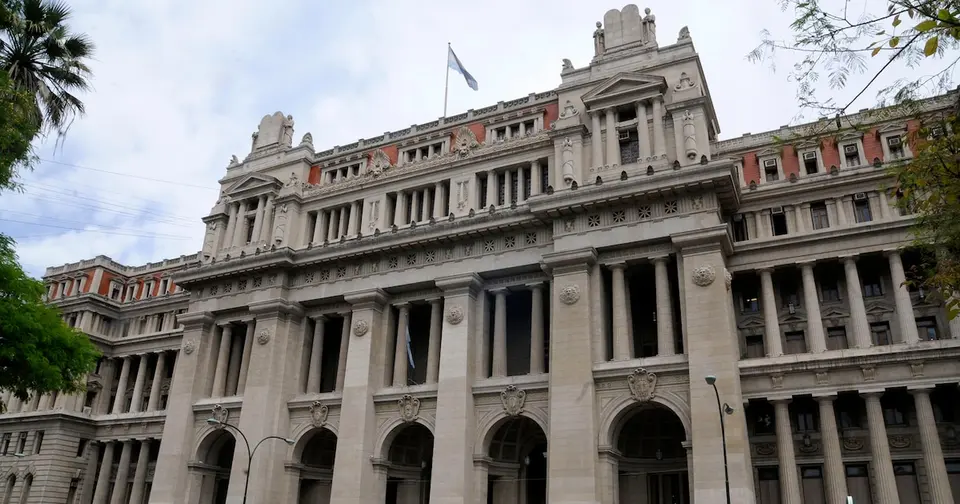
Nine extraditions confirmed by Argentine Supreme Court
Argentina's Supreme Court of Justice confirmed, according to infobae.com, almost a dozen extraditions in cases involving money laundering, drug trafficking, homicides, sexual abuse, kidnapping and theft. The requests come from the United States, Russia, Venezuela, Chile, Brazil, Paraguay and Peru, although the final decision on each transfer falls to the Executive Branch.
Case of highest value: more than USD 50 million laundered
Among the confirmed cases is that of Benjamín Daniel Levy, requested by the United States to be tried in New York for conspiracy to launder money. He is alleged to have whitewashed more than USD 50 million from drug trafficking between 2018 and 2020. The extradition of Juan Carlos Argüello Villalba, sought for unlawful association and electronic fraud, was also authorised.
Extraditions to Chile for pending sentence and robbery with violence
The highest court approved the extradition to Chile of Agustín Felipe O'Ryan Soler, who had fled to Argentina to evade a seven-year sentence for rape and aggravated sexual abuse. It also approved the delivery of Aníbal Adrián García García, sought for robbery with violence and to serve 2,380 days of imprisonment related to vehicle theft and handling of stolen goods.
Cases to Peru, Venezuela and Brazil
The Court also enabled the extradition of Cristhian Harold Aguayo Tafur, requested in Peru for aggravated homicide, and that of Enrique Gonzales Román, a Peruvian citizen sought for kidnapping and aggravated theft following a red notice from Interpol. Luis Ángel Gotopio, sought in Venezuela for drug trafficking and unlawful association, was likewise included in the rulings.
To Brazil, the judges declared the extradition of Mónica Soledad De Oliveira as admissible; she must serve a sentence of 10 years and three months' imprisonment, plus 1,268 days of fines, for unlawful association and international drug trafficking.
Russian case: rejection of torture argument
In the case against the defendant identified as I.G., requested by Russia for a drug-related matter, the judges rejected the argument that he could suffer torture or cruel treatment. The ruling took into account guarantees offered by that country, including the possibility of Argentine diplomatic authorities overseeing his security and legal defence conditions.
Uniform case law criterion
The nine rulings share a consistent line of case law: the extradition procedure does not function as a new criminal trial on the facts alleged, but as a limited check of the legal and conventional requirements to enable cooperation with the requesting State.
The Court verified in each case the double incrimination principle, that is, that the facts attributed constitute a crime both in the requesting country and in Argentina. As a complementary measure, the tribunal ordered that the Argentine judge inform the requesting State of the time the extradited person remained detained in Argentina, so that it can be counted towards the process or corresponding sentence. In some cases it also ordered communication of complaints about detention conditions so that foreign authorities can adopt protective measures.
Source: Google News PE — Crime