First Italian-Argentine Anti-Mafia Seminar in Congress: laws and experience against organised crime
The Chamber of Deputies hosts the first joint seminar between Italy and Argentina on combating transnational organised crime. Italian prosecutors and lawmakers share decades of anti-mafia experience.
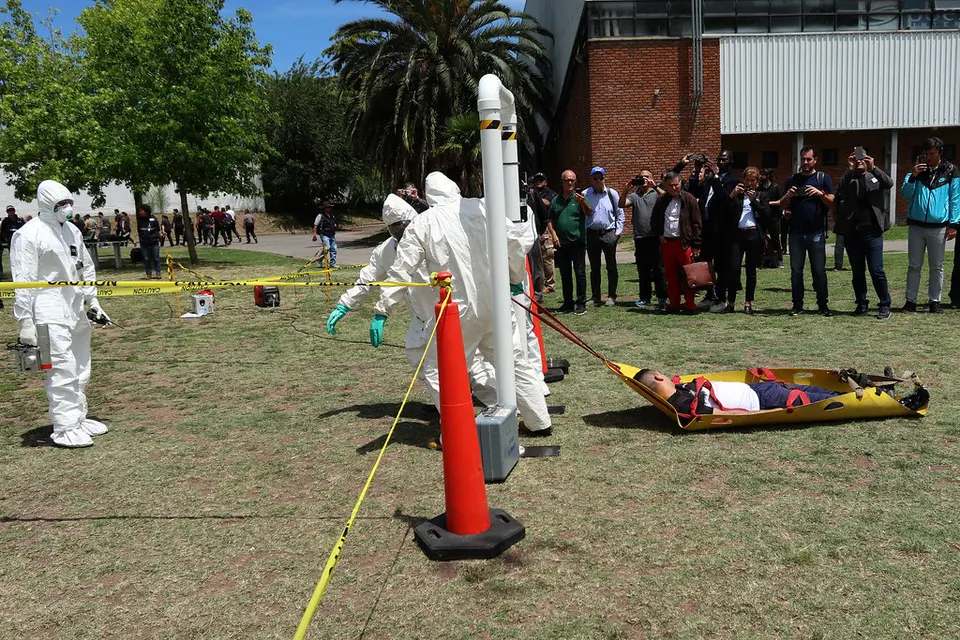
Italy and Argentina exchange tools against organised crime in Congress
The National Chamber of Deputies hosts the First Italian-Argentine Anti-Mafia Seminar, according to diputados.gov.ar. The meeting brings together national and provincial officials, ministers, lawmakers, judges, prosecutors and court support staff from both countries to share experiences in combating transnational organised crime.
Activities take place in the auditorium of the Deputies annex. Among the speakers are authorities from Italy's National Anti-Mafia and Counter-Terrorism Directorate (DNA), as well as members of the main commissions of the Italian Parliament dedicated to fighting mafia and organised crime.
Two parallel working axes
The seminar articulates two distinct thematic lines. The first is oriented towards the transfer of expertise accumulated by the Italian DNA, with the participation of National Anti-Mafia Prosecutor Federico Cafiero De Raho, his deputy prosecutor and substitute prosecutors Elisabetta Pugliese, Antonino Di Matteo, Michele Del Prete and Cesare Sirignano. It is aimed mainly at officials of the Executive and Judicial branches.
The second line is led by parliamentarians from the Italian Chamber of Deputies and Senate, who report on legislation applied for decades in their country: mafia-type criminal association, protected witness, and criminal proceeds forfeiture, amongst others. Its main recipients are national and provincial lawmakers working in the field.
The Italian DNA: 26 coordinated prosecutors' offices since 1991
At the opening, national deputy Fernando Iglesias (PRO), in charge of the organisation, highlighted the role of the DNA in Italy and "the Mauricio Macri government's commitment to advancing against the mafias".
Cafiero De Raho spoke about the function of the Directorate, created in 1991 to coordinate the work of 26 district prosecutors' offices specialising in mafia associations. "The mafia does not operate in a single territory. It does not act only in Naples, it moves in other territories of the country and also in foreign countries such as France, Canada or the United States," the prosecutor stated.
Exceptional legislation in the face of century-old crime
Deputy Prosecutor Elisabetta Pugliese centred her presentation on the particularities of Italian anti-mafia legislation, characterised by its exceptionality with respect to ordinary law. "Nowhere else does the mafia have the capacity for penetration and subjugation that it has in Italy," she noted.
Pugliese explained that ordinary legislation proved insufficient to prosecute the heads of criminal organisations. The figure of mafia-type association was established following the assassination of a deputy and a prefect in Palermo, and the first comprehensive anti-mafia legislation dates from 1982.
Political corruption and special prison regime
The second day of the seminar began with a presentation by Cafiero De Raho on political and economic corruption, which he defined as "the principal damage facing public administration". The prosecutor emphasised the importance of transparency, clear laws and control mechanisms both internal and external.
He also highlighted judicial independence and freedom of the press as essential conditions. "Freedom of the press has to do with the right to information, which is not a right of the journalist but of the citizen," he emphasised.
Deputy Prosecutor Cesare Sirignano spoke about the Italian penitentiary system and, in particular, about the Article 41 bis regime, which permits more severe isolation of detainees with the ability to maintain contact with free members of the criminal organisation. The stated objective of the mechanism is to definitively sever the bond between the inmate and the criminal structure. Sirignano also highlighted systems of collaborating defendants and witness protection as fundamental tools.
Presidential opening and closing in Congress
The seminar was formally opened by President Mauricio Macri at an event held on Tuesday at the Kirchner Cultural Centre. The closing, scheduled for Thursday at 16.30, was left in charge of the president of the Chamber of Deputies, Emilio Monzó, and the Minister of Foreign Affairs.
The meeting falls within the framework of the Parliamentary Friendship Group with Italy and aims to lay the groundwork for a possible adoption of legislative tools similar to those in Italy within the Argentine sphere.
Source: Google News AR — Crime