Empty-bottle theft in East Styria: 37-year-old avoids conviction without criminal record
An Austrian man fed 13 beer crates into a deposit machine and collected 91 euros. Via diversion, he escaped conviction.
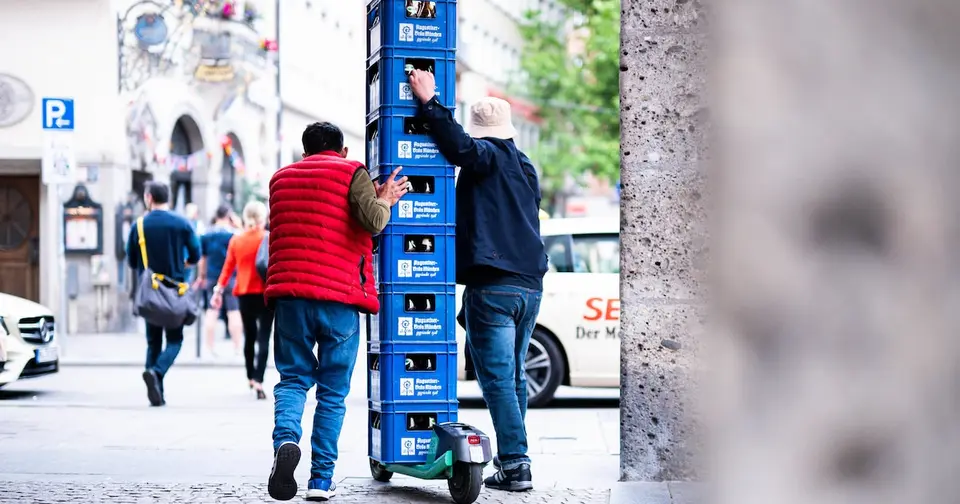
13 crates of empties, 91 euros in deposit – and peculiar conduct before the judge
As Google News AT — Crime (de) reports with reference to the "Kleine Zeitung", a 37-year-old Austrian from East Styria had to answer charges before the Weiz district court. The allegation: he had fed 13 crates of empty beer bottles into a deposit machine, although they did not belong to him. The crates were stored directly next to the machine outside a grocery shop. The man collected 91 euros for this.
Even before the court hearing, the defendant attracted attention. A security guard observed him urinating against a tree and rummaging through a waste bin. In the courthouse itself, loud music blared through the corridors – before the man put on sunglasses. "I'm putting on my glasses because it's too bright for me," he explained according to the "Kleine Zeitung".
When asked by the judge whether he had been drinking, the defendant replied that he had "drunk a bit" but was sober. He summed up the reason for his court visit briefly: "Because of 13 crates of beer." He admitted to the deed. Since then he has been banned from the affected shop.
Because the 37-year-old had no prior convictions, the proceedings were concluded via diversion – without formal conviction. He must remain crime-free for two years and pay flat-rate costs of 180 euros. If he fulfils these requirements, the proceedings will be discontinued and he will remain without a criminal record.
The case falls into the initial phase of Austria's single-use deposit system: since 1 January 2025, a 25-cent deposit applies in Austria to single-use PET bottles and aluminium cans – analogous to the German system, which has been in place since 2003.
Source: Google News AT — Crime (de)