Attack on Brussels police station: seven shootings in five days
Drug crime is escalating in Brussels: within five days there have been seven shootings – including the first attack on a police station in Anderlecht.
Attack on Anderlecht police station – drug gangs testing boundaries
Two masked individuals arrived on a motorscooter at the police station in Brussels's Anderlecht district shortly before midnight last Friday. One of them pulled out a Kalashnikov assault rifle and fired twelve rounds at the entrance door. The other filmed the attack on a mobile phone – a surveillance camera captured both. No one was injured because the police officers had previously been relocated to a new station. "A line has been crossed," said a police spokesperson, but they would not be intimidated.
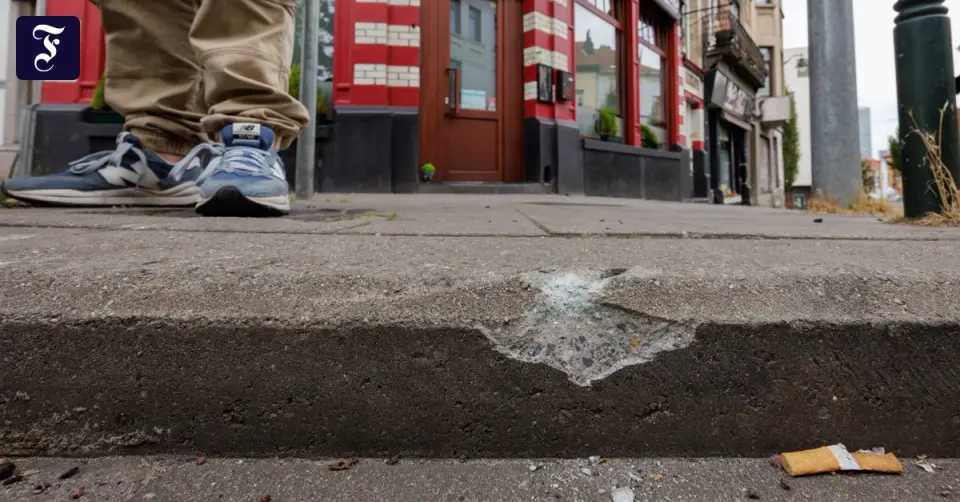
According to the Frankfurter Allgemeine Zeitung, this attack was the provisional peak of a wave of violence: in just five days, the Belgian capital experienced seven shootings linked to organised drug crime. Three of them occurred in Saint-Gilles, a desirable residential district with turn-of-the-century townhouses that borders the South Station – from which the drug scene is increasingly spreading. One person was injured, several bullets hit a residential building, one through a window. The affected resident, an elderly woman, said that one is not even safe in bed.
Mayor explains violence through returning holiday-makers
Jean Spinette, Socialist mayor of Saint-Gilles, had an explanation ready. "Many young dealers are now returning from holiday," he said. "On Monday they have to go back to school, but they also need to reclaim their traditional territory." He described the situation of residents as "terrible". He rejected accusations of insufficient initiative: "Every day I go to the dealers to ask them to stop." A short video clip circulating in this context shows Spinette addressing a group of young men who are apparently dealing drugs through a fence. Most of them respond to the camera by fleeing.
Spinette blamed the conservatives for the conditions: they had closed reception centres for migrants and thereby driven those affected into the hands of criminals.
Anderlecht at the centre of the drug war
The attack on the police station took place in Anderlecht – a district with social housing estates and a high proportion of migrants, which is regarded as the centre of the struggle over sales points and market share. Brussels is internally divided: in the wealthier east, where EU institutions are also based, there is relative calm. In the precarious west, drug gangs have taken hold. When violence reaches Saint-Gilles, it crosses this invisible boundary – which attracts particular attention.
Experts view the attack on the station as retaliation for raids in the summer in which police arrested dozens of suspects.
Interior minister defends repressive approach
The incident also put pressure on the right-liberals, who hold the interior ministry in the four-party federal coalition. Bernard Quintin pointed to measures already implemented: the criminal police had been strengthened, local police were being supported, soldiers are now deployed in stations. There had been "unprecedented successes," with "thousands" of suspects arrested and drugs, weapons and black money seized, according to Quintin.
The figures tell a different story. This year, Brussels has already registered 66 shootings with 25 injured and two dead. Last year's record – 101 shootings, 43 injured, eight dead – could be reached again. The organised gangs are apparently not easily deterred, even by the deployment of soldiers, with which the right-liberals wanted to signal a harder line.
Since spring, mixed teams of police officers and soldiers have been patrolling stations and underground stations. A maximum of 45 soldiers are deployed at any one time. Originally there was talk of hundreds of soldiers equipped with executive powers to be actively deployed in problem areas such as the Peterbos social estate in Anderlecht. However, military law would first need to be changed for this: soldiers are currently not permitted to take their own initiative in checking individuals, searching them or making arrests.
Government negotiates expansion of army powers
The federal government wants to expand the powers of the armed forces in the interior for cases of "serious disruption of public order" as well as in hybrid threats. Negotiations with unions and parliament on the precise arrangements are still ongoing. As a rule, the existing division of responsibilities between police and military is to be maintained.
The umbrella organisation of Brussels citizens' and neighbourhood associations issued an open letter to the public on Wednesday, criticising an "increasing loss of control" in the capital. It states that warnings have long been made about the growing influence of criminal networks. However, the political response has often been limited to drawing up plans and setting up working groups – coupled with "constant shifting of responsibilities."
Source: Frankfurter Allgemeine Zeitung