Major Cities Plan: 7,300 arrests and 2 million euros seized in Belgium
Since September 2025, the plan of Minister Quintin has led to more than 7,300 arrests and 345 kg of drugs seized in seven major Belgian cities.
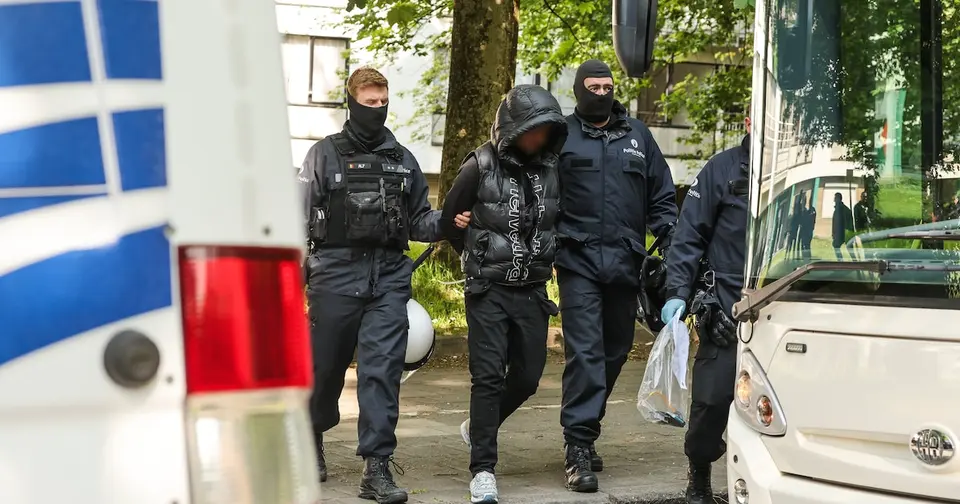
Drug trafficking: results of "shock" operations in major Belgian cities
More than 345 kg of drugs, 315 weapons and approximately 430 vehicles linked to trafficking seized: DHnet publishes the first detailed results of the "shock" operations conducted as part of the Major Cities Plan since September 2025.
The plan was launched by Interior Minister Bernard Quintin (MR) to combat organised crime in Brussels, Antwerp, Ghent, Mons, Charleroi, Namur and Liège. More than 14,300 local and federal police officers took part in the operations.
In total, more than 7,300 people were arrested, including 4,500 judicial arrests out of approximately 30,000 people checked. Among them, nearly 1,710 were in an illegal situation on the territory. Two million euros in illegal money was also seized.
More than 5,000 offence reports were drawn up for drug-related offences. Hundreds of immediate transactions represented more than 80,000 euros in fines. Approximately 25,000 vehicles were checked, and nearly 500 shops were inspected, particularly to combat money laundering.
"These results demonstrate that the actions taken by our federal and local police forces are bearing fruit. The era of impunity is over," declared Bernard Quintin, while warning that "the struggle will be long and difficult".
As part of the plan, 25 million euros were allocated to police zones for camera installation: 7.5 million for Brussels and Antwerp, and one million for each of the five other cities involved.
Since April 2026, military personnel have been deployed in Brussels railway stations and metros, identified as sensitive points for trafficking. MR party president Georges-Louis Bouchez indicated on Tuesday evening on LN24 that he was in favour of a similar deployment in airports. Minister Quintin is not opposed, although no decision or timeline have yet been finalised. "We are in favour of military support reinforcing the police in strategic locations and certainly in places with high footfall," his spokesperson specified.
Jean Spinette, mayor of Saint-Gilles, praised the efforts of Minister Quintin and Crown Prosecutor Julien Moinil, but emphasised that considerable work remains to be done to reach the heads of the networks. He considers strengthened coordination with Justice Minister Annelies Verlinden and Youth Assistance Minister Valérie Lescrenier essential so that the criminal justice chain can keep pace with the rate of arrests.
"The recreational drug dealing points have decreased but people in great precarity continue to be drawn into criminal networks as soon as a person is arrested. The judicial chain must be able to keep up, with young offenders being placed in IPPJ and not released after their crimes," he explained.
The socialist official also expressed an expectation regarding the Quintin standard for police zone refunding, hoping it "will truly enable an increase in personnel on the ground".
Source: DHnet