Bolivia becomes operations hub for international drug cartels, says UN
UNODC warns that cartels from Mexico, Brazil, Peru and Colombia operate in Bolivia alongside local structures. Coca crops grew by 7% in 2025.
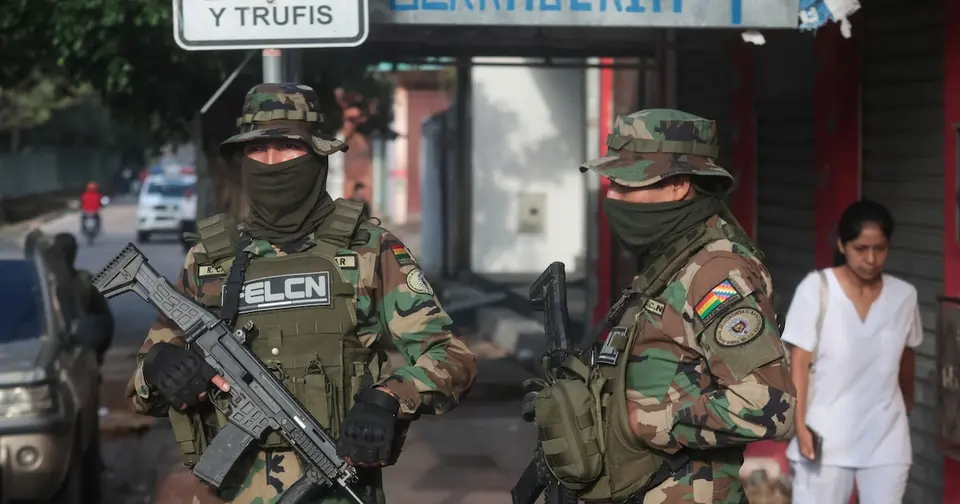
Bolivia transformed into transnational drug trafficking hub, warns UN
The representative of the United Nations Office on Drugs and Crime (UNODC) in Bolivia, Mónica Mendoza, stated in an interview with news agency EFE that the country has ceased to be exclusively a raw material producer and transit route. According to infobae.com, Mendoza described a convergence of drug trafficking, smuggling, human trafficking, corruption and illegal mining under a coordinated dynamic.
"There is indeed a presence of cartels. We are not talking about Bolivian cartels, we are talking about organisations (...) from other countries that operate with the consent, with the consensus of local organisations," Mendoza declared.
Mexican and Brazilian cartels with confirmed presence
Mendoza highlighted the expansion of the Jalisco New Generation Cartel, originating from Mexico, and of the Brazilian organisations First Command of the Capital and Red Command. She also identified the activity of groups from Peru and Colombia. As evidence, the official indicated that Bolivian prisons hold detainees of those nationalities linked to the command structures of those networks.
The representative linked that presence to an increase in contract killings, particularly in border areas with Brazil. The attacks, repeated over recent months, led the Bolivian Government to deploy the Army and elite units to reinforce security in those areas. According to Mendoza, the facts reveal disputes over territorial control: the groups "are in confrontation" and "are fighting over territories."
Coca crops increasing and Bolivia in world rankings
The latest UNODC report on coca crops recorded an increase of 7%, from 34,000 hectares in 2024 to 36,400 hectares in 2025. Bolivia ranks third worldwide among coca leaf producers, behind Colombia—with 261,000 hectares in 2024—and Peru, which reported 84,546 hectares in 2025.
Mendoza acknowledged that coca leaf maintains traditional and ancestral uses in Bolivia, but warned that the growth in crops occurred in a context in which transnational networks expanded their operations. The official described that convergence of crimes as a type of criminal "holding company," with interconnected activities and resources.
A shift from the official discourse of previous governments
During the administrations of Evo Morales, between 2006 and 2019, and Luis Arce, between 2020 and 2025, the authorities rejected the notion that cartels or major drug trafficking bosses operated in Bolivian territory. The official discourse then placed illegal activity in the hands of emissaries and local clans.
The administration of President Rodrigo Paz recognised the presence of transnational organised crime and highlighted measures adopted against those structures. Among the results cited was the detention, in March, of Uruguayan Sebastián Marset, who was subsequently extradited to the United States.
For Mendoza, the Marset case demonstrated that drug trafficking does not operate on a small scale. The representative stated that the capture broke a "narcopeace," a term with which she described a period in which organisations distributed routes, tasks and zones of influence without visible confrontations for the population.
Institutional infiltration and call for harsher measures
Mendoza also warned about the penetration of these networks into the judicial system. "In South America there is a policy of expansion and infiltration of organised crime," she stated, and added that such penetration forms corruption networks designed to halt investigations and criminal prosecution.
Her statements came after the dismissal and imprisonment of former Attorney General Roger Mariaca, accused by the Executive of allegedly protecting "narcoterrorism." Mendoza maintained that denying institutional infiltration would facilitate the establishment of drug trafficking and would subsequently complicate the recovery of those institutions.
The United Nations representative called for a comprehensive response: actions against the structures, finances and operational capacity of organisations. She also requested the approval of measures against money laundering and asset forfeiture, in addition to more judicial sentences in cases linked to drug trafficking.
Source: Google News BO — Crime