UN: Bolivia has become an operations centre for foreign drug cartels
The Unodc representative in Bolivia claims the country hosts operations by the CJNG, the PCC and the CV. Coca crops increased by 7% in the past year.
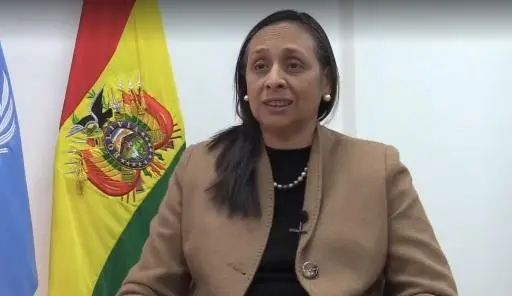
Bolivia, an operational base for international cartels according to the UN
Bolivia has become in recent years an operations centre for foreign drug cartels, according to Mónica Mendoza, representative in the country of the United Nations Office on Drugs and Crime (Unodc), as reported by urgente.bo.
In statements to the EFE agency, Mendoza identified the presence of the Jalisco New Generation Cartel (CJNG) from Mexico, the First Command of the Capital (PCC) and the Red Commando (CV) from Brazil, as well as criminal groups from Peru and Colombia. As evidence of that presence, she cited the number of people of those nationalities held in Bolivian prisons.
"They are related to the command operations structure," Mendoza said. The representative linked the expansion of these organisations with an increase in murder-for-hire cases, a signal that the groups "are in conflict" and "are fighting over territories", a situation that is reflected especially in the violence recorded in Santa Cruz.
"Yes, there is a presence of cartels. We are not talking about Bolivian cartels, we are talking about organisations from other countries that operate with the knowledge, with the consensus of local organisations," she stressed.
Mendoza warned that Bolivia can no longer be classified solely as a raw material producing country or transit territory. The problem, she explained, is "much more complex" and involves a "confluence" of crimes—smuggling, human trafficking, corruption and illegal mining—that function as an "umbrella" for organised crime.
Added to this is the increase in coca leaf cultivation. According to the latest Unodc report, presented in September, the cultivated area increased by 7%, rising from 34,000 hectares in 2024 to 36,400 in 2025.
The representative also warned about possible drug trafficking infiltration in judicial institutions, with reference to the case of former attorney general Roger Mariaca. Denying that penetration would be very "complex", she argued, because it would allow criminal organisations to "establish themselves" to the point of making "very difficult" the recovery of those entities.
Mendoza also questioned the idea that drug trafficking operates at a "low level" in Bolivia and mentioned the detention of Uruguayan Sebastián Marset, captured in March and extradited to the United States. In her view, that arrest marked the end of "narco-peace", a tacit truce between organisations that coexisted without visible confrontations because they had distributed routes, functions and territories.
Regarding measures by the Government of Rodrigo Paz, Mendoza valued positively the capture of alleged ringleaders and the restoration of cooperation with the United States Drug Enforcement Administration (DEA), which was expelled from the country in 2008 during the presidency of Evo Morales. Bolivia also signed an agreement with Washington and joined the Shield of the Americas.
However, Mendoza considered that fighting these organisations requires an integral strategy, given that it is "impossible" to tackle large-scale drug trafficking "unilaterally or only bilaterally". She argued for pursuing criminal activities, their finances and their operational capabilities, whilst demanding the approval of anti-money laundering and asset forfeiture laws, and more judicial sentences in drug trafficking cases, which until now have been, according to her, "very few".
Source: Google News BO — Crime